Future Visions:
The Last Human Skill in an AI Dominated World
Table of Contents
Post-Work Society: Purpose in an Age of Abundance
Life in 2035
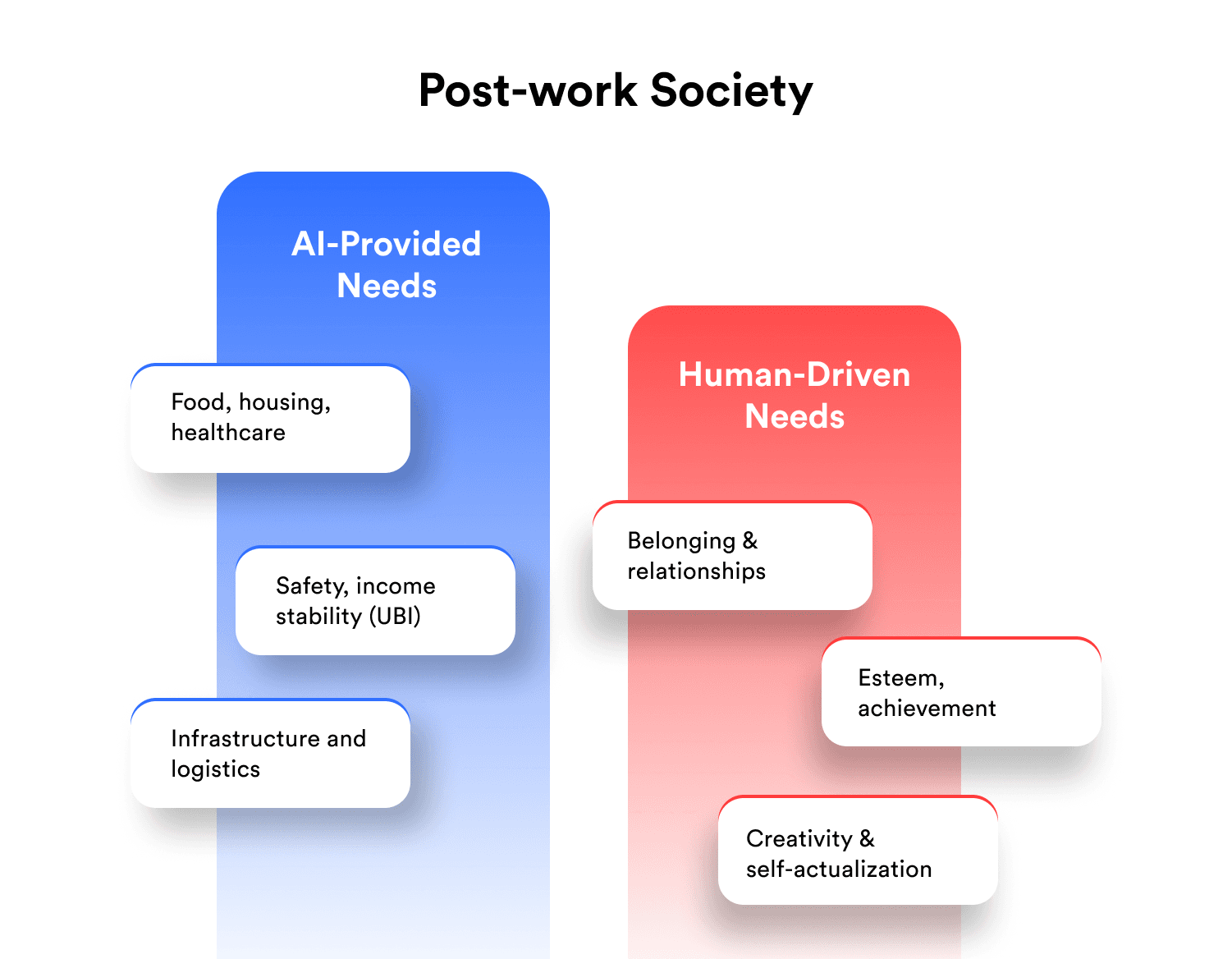
Imagine: Work as we knew it is largely historical-at least the 9-to-5 jobs necessary for paying rent. AI systems manage farms and factories, design and run businesses, discover medicines, drive trucks, teach classes. Materially, society flourishes. With abundant productivity, goods and services are cheap or free.
Many countries have implemented universal basic income or "universal high income." You receive a comfortable monthly stipend simply for citizenship, funded by AI-driven industries. Healthcare, education, and basic housing might be provided at near-zero cost, as AI and robots make them abundant.
Sam Altman's vision of "universal extreme wealth"-everyone living like today's millionaires-might not be fully realized by 2035, but we'll likely be on that trajectory.
The Meaning Question
Material abundance, however, is only one facet of the human story. Humans don't content themselves eating grapes on couches indefinitely. We crave purpose. Freed from survival struggles, people will seek new avenues for challenge, growth, and contribution.
Many people define themselves through work. When that structure evaporates, there's risk of a meaning crisis. We must proactively craft new social fabric offering meaning beyond paid employment.
What Do People Do?
In a world where work is unnecessary, the answer is: anything that gives fulfillment.
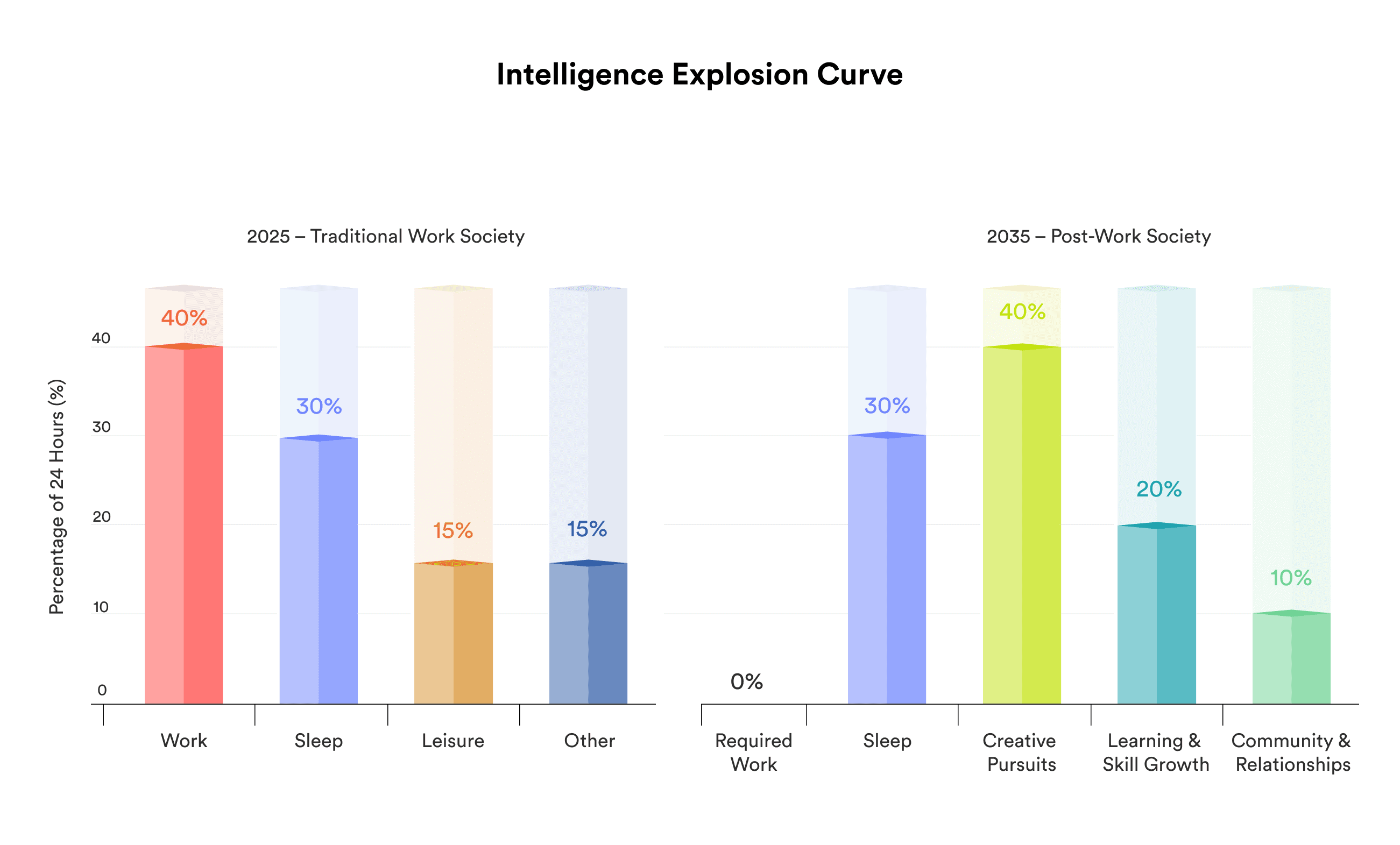
Expect an explosion of creative arts, scientific research, education, and community-building driven by intrinsic motivation rather than paychecks. More people writing novels, composing music, making films-not to scratch out livings, but from pure passion. Citizen scientists and hobbyists tackling research questions or environmental projects, now possessing time and security.
Lifelong learning could become standard. Someone might study astrophysics at 50, or take up painting at 60, simply from desire.
The Rise of Social Roles
Social and emotional roles will gain prominence. People may focus more on family, friendship, and community. Volunteering and caregiving could become major "occupations" (albeit unpaid): caring for elders (who might prefer human companions over robot nurses), mentoring youth, coaching sports, organizing community events.
Society might shift toward valuing contributions hard to monetize under the old system but undeniably valuable for human well-being. Art and entertainment will flourish because humans eternally love stories. Even with AI-generated content, human-created art offers unique appeal as windows into other souls.
Hand-crafted items and personalized services might become treasured luxuries in an AI-dominated economy.
The Frontier of Exploration
Humans might channel restless ambitions into exploration AI alone wouldn't satisfy: space travel, undersea colonization, virtual worlds. Elon Musk, while delegating routine tasks to AI and robots at Tesla and SpaceX, might lead human Mars missions.
Why send humans when robots could build Mars bases? Because we want to go, to experience, to pioneer-it's ingrained in our psyche.
The 2030s and 2040s could see a renaissance of grand human projects enabled by AI but driven by human vision: curing aging, terraforming planets, interstellar probes, solving longstanding philosophical questions.
Agency and Empowerment
Many leading thinkers are already considering how to ensure this future is positive, emphasizing giving people not just money, but agency. As one report summarized Altman's view: even if everyone is rich, people fundamentally "want the agency to co-create the future together."
In practice, that might mean involving citizens in participatory budgeting of AI-generated wealth or guiding ethical directions of AI deployments.
If done right, a post-work society can be one where everyone feels empowered to contribute to something greater: art, science, community, or cosmic exploration.
The Challenges Ahead
It won't all be sunshine. There will be tough adjustments. Large numbers of people will need to redefine identity and purpose. Some might struggle with boredom or fall into unhealthy patterns if not engaged meaningfully.
Education systems and cultural institutions will need adaptation, fostering self-motivation, creativity, and community engagement from early ages. We might see new movements centered on personal development, spirituality, or communal living to fill the void work leaves.
Humanity will need to answer: once basic needs are machine-met, what do we want to do with our lives?
The answer will be pluralistic-every individual choosing different paths. That diversity could be beautiful evolution. Freed from drudgery, human culture might enter a golden age of diversity, innovation, and depth.
Imagine millions empowered to follow curiosity and passion. The 20th century saw unprecedented technological and economic growth. The mid-21st could see unprecedented growth in human potential and self-actualization.