Future Visions:
The Last Human Skill in an AI Dominated World
Table of Contents
The Last Human Skill – Trust and the Art of the Sale
The Persistence of Human Connection in AI-Powered Sales
In a future where 99.9% of work is automated, one domain may remain a human stronghold: sales. Not because AI can't sell, but because people still prefer dealing with people when trust and relationships are at stake.
As co-founder of Jeeva AI, an AI agent platform that builds sales automation tools and decision intelligence systems, I have direct insight into this dynamic. Our AI agents can source leads, write outreach emails, handle basic customer questions, schedule meetings, and follow up with cold prospects. The platform automates repetitive sales tasks while gathering insights that help teams make better strategic decisions. Yet when it comes to closing deals - earning genuine client trust and commitment - the human element makes all the difference.
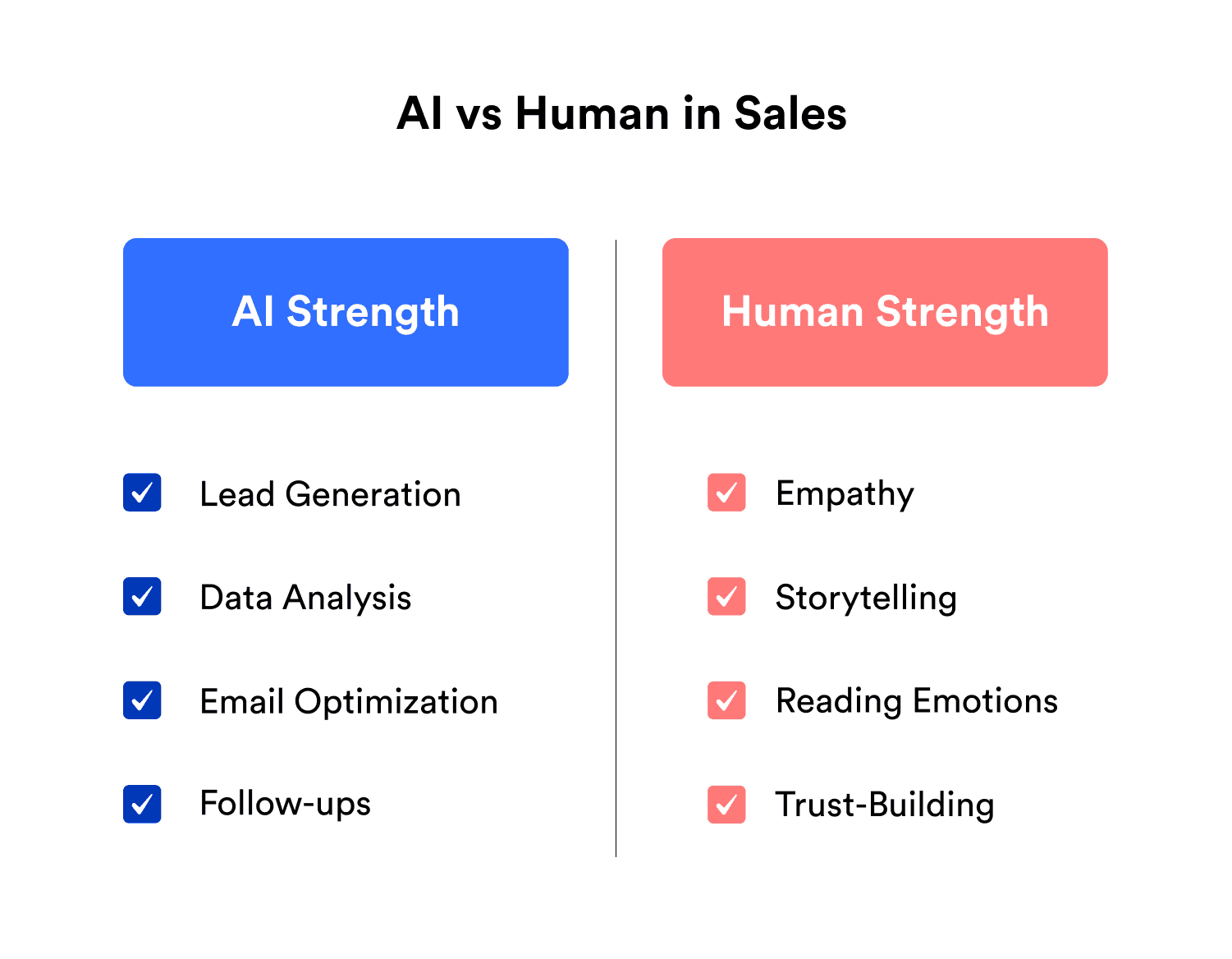
Something fundamentally human emerges when looking someone in the eye (even via Zoom), gauging emotions, telling stories, and building rapport. AI excels at the science of selling - optimizing email subject lines, determining optimal call timing, analyzing which features to pitch based on data. Platforms like Jeeva AI can process thousands of data points to recommend the best approach for each prospect.
What AI lacks is the art of selling: the subtle empathetic and psychological elements that generate trust. This is why Jeeva AI focuses on augmenting human decision-makers rather than replacing them - providing the data intelligence and automation that frees salespeople to focus on what matters most: authentic human connection.
Why Human Connection Matters
Gaurav Bhattacharya, another AI entrepreneur in sales technology, articulated this well: AI can "free salespeople from tedious tasks so they can focus on what AI still can't do: build trust through authentic human connection."
The salesperson of the future works with AI copilots but leans heavily into human-exclusive skills: empathy, storytelling, and relationship-building.
Consider major purchases or partnerships-a customer buying complex enterprise software, for example. An AI agent could educate them about features and handle algorithmic negotiations. Yet many buyers feel more comfortable knowing a human is accountable and understands their unique concerns.
Emotions play significant roles in decision-making. Humans possess intuitive nuance: sensing when clients aren't truly convinced, lightening moods with humor, going off-script when necessary. Top salespeople succeed through authenticity and empathy-qualities machines only simulate, at least for now.
The Evolution of Sales
The most successful sellers in the AI age will double down on their humanity. They'll excel at reading rooms, listening actively to client needs, and weaving compelling narratives. These "soft" skills are timeless. As one sales leader noted: "The most successful sellers still master timeless skills like empathy, reflective listening, and human-centric stories to build their business."
These attributes build trust, and trust remains difficult to earn from a machine.
Even as AI sales bots proliferate, many companies find conversion rates spike when human salespeople join conversations at critical junctures. The AI might screen 1,000 prospects to identify 50 qualified leads, nurture those leads with automated sequences - but then a human salesperson engages the top five interested buyers to seal the deal.
This is the philosophy behind Jeeva AI's approach to sales automation: let AI handle the high-volume, repetitive tasks while empowering human sales professionals to focus on high-value relationship building and decision-making. Our AI agents work as tireless assistants, but humans remain the closers.
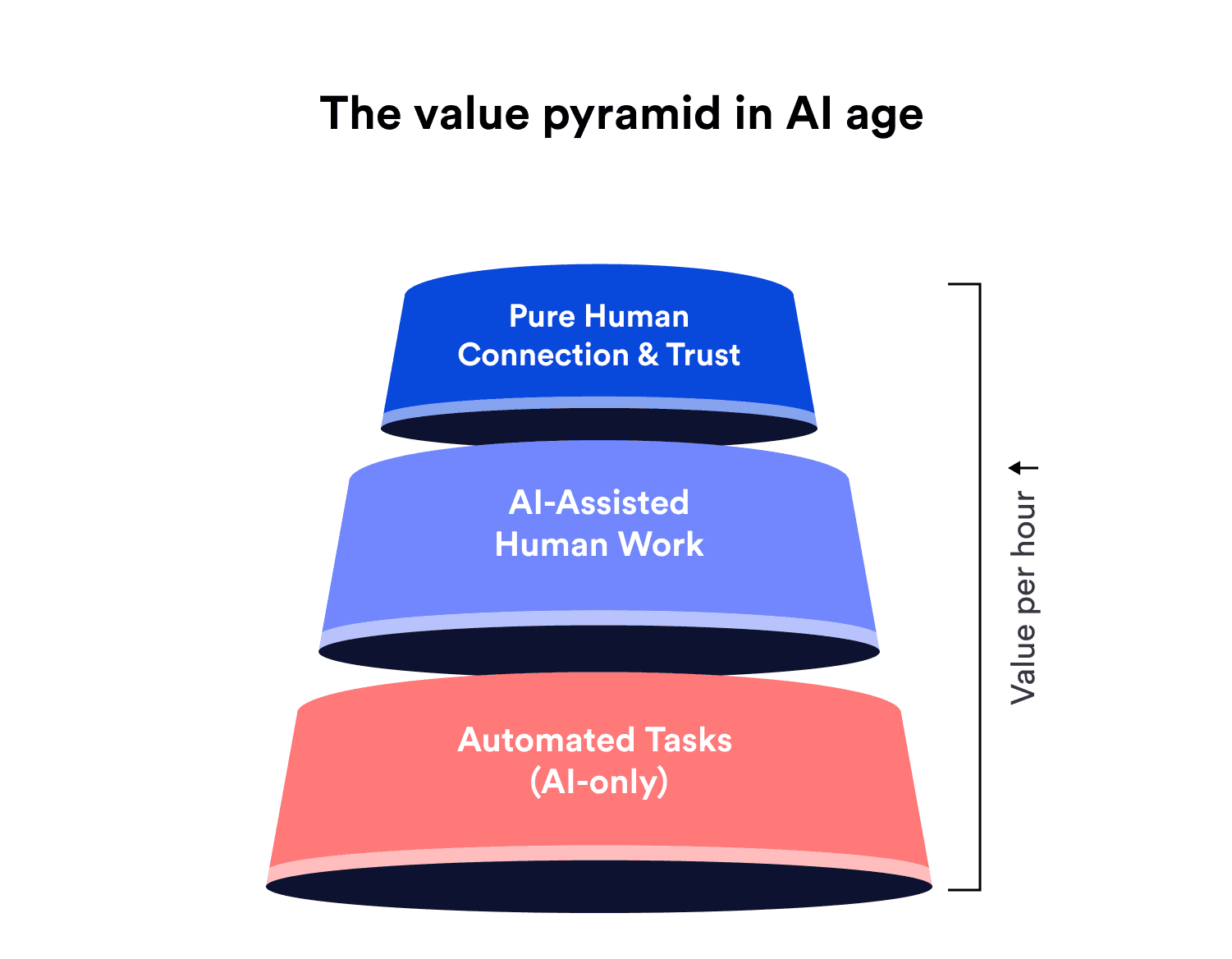
Sales won't remain a high-volume profession - one person with AI assistance can handle what previously required an entire team - but it can remain deeply human. The nature of sales work shifts from repetitive outreach (AI-handled) to relationship management.
Future salespeople become consultants or advisors, guiding customers through the final mile with personal assurance.
The Broader Pattern
Sales, in its larger sense, concerns persuasion and influence-convincing someone of a vision or solution. This skill extends to leadership, politics, teaching, even friendship: any context requiring inspiration of confidence and shaping of human beliefs or behavior.
These areas will likely continue relying on human charisma and credibility. An AI might write a perfect political speech, but a human still needs to deliver it authentically (at least until robots achieve indistinguishable charisma-possible, but not imminent).
As AI spreads into every office function and factory floor, the last jobs for humans may simply be being human-connecting with others emotionally, telling stories, creating meaning. In business, that's sales and customer success. In communities, that's leaders and counselors. In the arts, that's performers engaging live audiences.
The Paradox of Automation
We may reach a point where human labor is choice, not necessity-but human connection becomes more valuable than ever. Paradoxically, when automation is ubiquitous, authentic human interaction might become a premium service.
We already see hints: people seek "handmade" products or personal coaches despite cheaper automated options, purely for the human experience. In the coming decade, your "job" might be to be a trusted human face amid algorithmic seas.