Introduction to AI Lead Generation
AI lead generation enables B2B teams to identify and engage prospects while enriching them with accurate, real-time data at the moment of discovery. Instead of relying on static lead lists, modern AI systems continuously capture verified contact details, firmographics, technographics, and intent signals as new leads enter the pipeline.
By integrating lead generation with real-time enrichment, sales teams eliminate manual research, reduce data decay, and act on complete buyer profiles immediately.
In 2026, this combined approach powers faster outreach, more relevant personalization, and higher conversion rates by closing the gap between lead discovery and buyer engagement.
What Is AI Lead Generation?
AI lead generation is the use of artificial intelligence to automatically identify, qualify, and prioritize potential buyers based on real-time data, behavioral signals, and predictive models. Instead of relying on static lists or manual research, AI systems continuously discover high-fit prospects and enrich them with accurate context as they enter the sales pipeline.
Unlike traditional approaches, AI lead generation adapts dynamically. It learns from engagement patterns, updates lead quality as data changes, and surfaces prospects who are most likely to convert at a given moment.
How AI Lead Generation Differs from Manual and Rule-Based Lead Generation?
Manual and rule-based lead generation rely heavily on predefined filters, spreadsheets, and human research. These methods are slow, difficult to scale, and prone to data decay, especially in fast-moving B2B markets.
AI lead generation replaces static rules with adaptive decision-making. Instead of fixed criteria, AI models evaluate multiple signals simultaneously such as role changes, company growth, technology usage, and intent activity to determine lead relevance in real time.
Key difference: Manual and rule-based systems react after data becomes outdated, while AI systems operate continuously and update lead quality as conditions change.
Why AI Lead Generation Matters in High-Volume B2B Environments?
High-volume B2B sales environments generate more leads than human teams can realistically qualify or research. As lead volume increases, manual processes break down, and sales teams spend more time filtering low-quality prospects than engaging real buyers.
AI lead generation solves this by automating discovery and qualification at scale. It ensures that only high-fit, high-intent leads reach sales teams, reducing wasted outreach and improving pipeline efficiency.
Result: Sales teams focus on fewer, better opportunities, leading to higher conversion rates, faster deal cycles, and more predictable revenue growth.
How Real-Time Enrichment Improves Sales Outreach Performance?
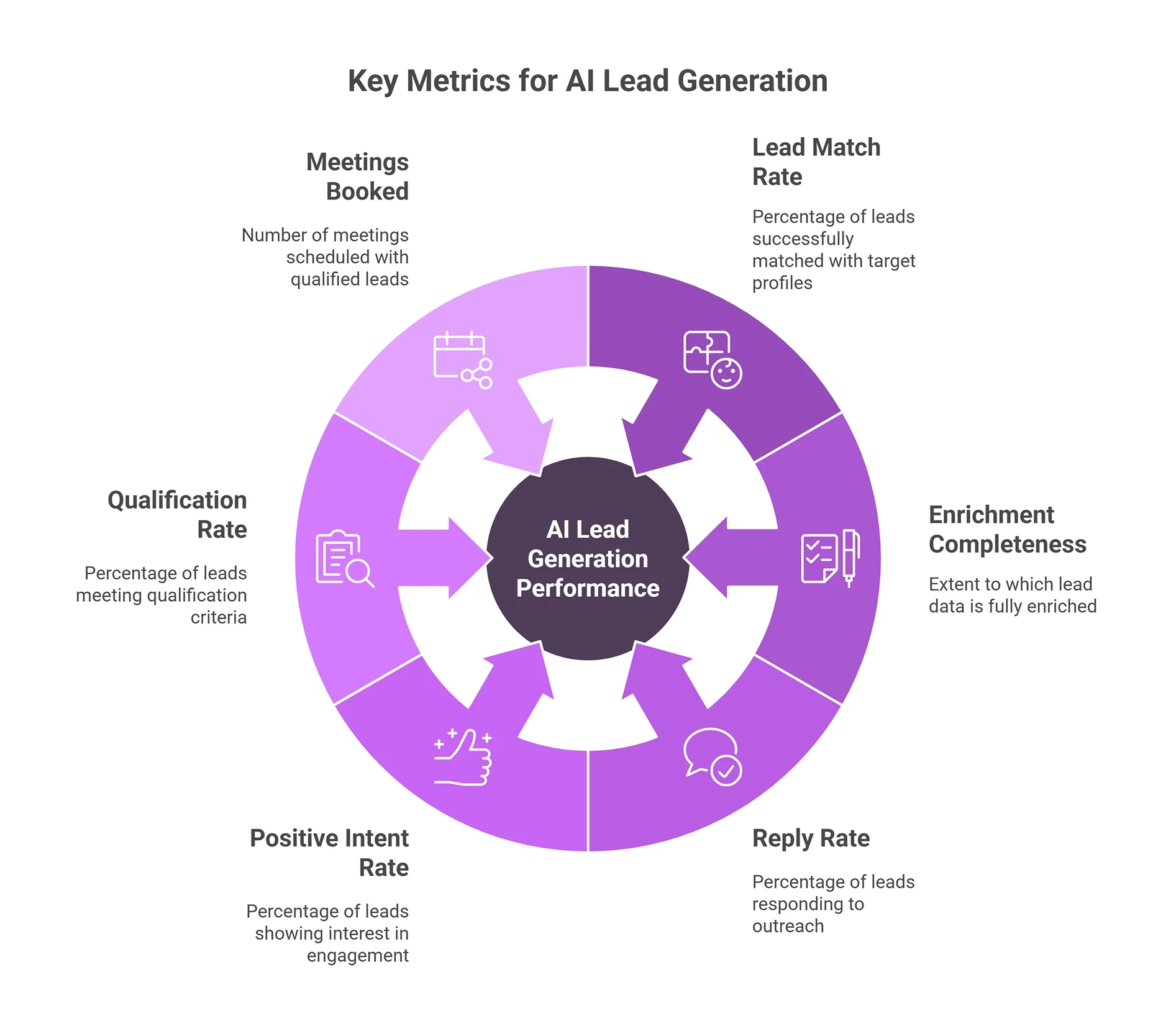
Real-time lead enrichment improves sales outreach performance by ensuring every outbound message is based on accurate, up-to-date buyer context at the moment of engagement. When contact details, roles, and company signals are continuously refreshed, sales teams replace generic outreach with relevant, timely communication that aligns with buyer intent.
This impact shows up across three core outreach dimensions: personalization accuracy, timing and relevance, and engagement outcomes.
How Does Real-Time Enrichment Improve Personalization Accuracy?
Real-time enrichment improves personalization accuracy by validating who the buyer is and what matters to them right now. Enriched data such as job role, seniority, company size, technology stack, and recent activity ensures outreach messages reflect the recipient’s actual responsibilities and priorities.
Why this matters: Accurate personalization increases message relevance and prevents outreach failures caused by outdated roles, incorrect assumptions, or targeting the wrong stakeholder.
How Does Real-Time Enrichment Improve Timing and Relevance?
Buyer context changes rapidly in B2B sales. Real-time enrichment captures signals such as job changes, funding events, technology adoption, and engagement behavior as they occur, allowing sales teams to engage prospects at the moment interest or urgency is highest.
Why this matters: Timely, context-aware outreach is more likely to be read, considered, and acted on than messages sent based on stale or delayed data.
How Does Real-Time Enrichment Improve Reply Rates and Meeting Conversions?
When outreach is both personalized and well-timed, engagement metrics improve measurably. Real-time enrichment reduces email bounce rates, increases reply rates, and leads to higher-quality conversations that convert into meetings and qualified opportunities.
Result: Sales teams spend less time chasing unresponsive leads and more time booking meetings with buyers who are ready to engage.
How to Integrate AI Lead Generation with CRM and Sales Workflows?
Integrating AI lead generation with CRM and sales workflows ensures that enriched leads are captured, qualified, and activated automatically without manual handoffs. Instead of treating lead generation as a standalone activity, modern GTM teams embed AI directly into their revenue systems so insights immediately translate into action.
This integration typically spans three layers: CRM data flow, workflow automation, and sales execution.
How Does AI Lead Generation Integrate with CRM Systems?
AI lead generation platforms integrate with CRMs by automatically creating, updating, and enriching lead and account records in real time. As new prospects are identified, their contact details, firmographics, and intent signals are synced directly into the CRM.
Why this matters: Clean, continuously updated CRM records ensure lead scoring, routing, and reporting are based on accurate data rather than outdated or incomplete entries.
How AI Automates Sales Workflows After Lead Creation
Once leads enter the CRM, AI-driven workflows trigger the next best actions automatically. These workflows can include lead scoring, prioritization, assignment to sales reps, and activation into outreach sequences.
By removing manual steps between lead discovery and engagement, AI ensures that high-intent prospects are contacted immediately, when conversion likelihood is highest.
Why this matters: Faster activation reduces response time and prevents high-quality leads from going cold.
How AI Lead Generation Connects to Sales Execution
Advanced AI systems extend beyond CRM updates and directly support sales execution. Enriched leads flow into personalized outreach, follow-ups, and meeting scheduling without requiring reps to research or re-enter data.
AI continuously updates lead context as buyers engage, allowing sales teams to adapt messaging and prioritize opportunities dynamically.
Result: Sales teams operate from a single, unified workflow where discovery, enrichment, and engagement happen in one continuous loop.
Why This Integration Is Critical in 2026
In high-volume B2B environments, disconnected tools create delays, data decay, and lost opportunities. Integrating AI lead generation with CRM and sales workflows eliminates these gaps and turns real-time data into immediate revenue impact.
Outcome: Higher pipeline velocity, improved conversion rates, and more predictable sales execution.
How AI Platforms Activate Enriched Leads Instantly
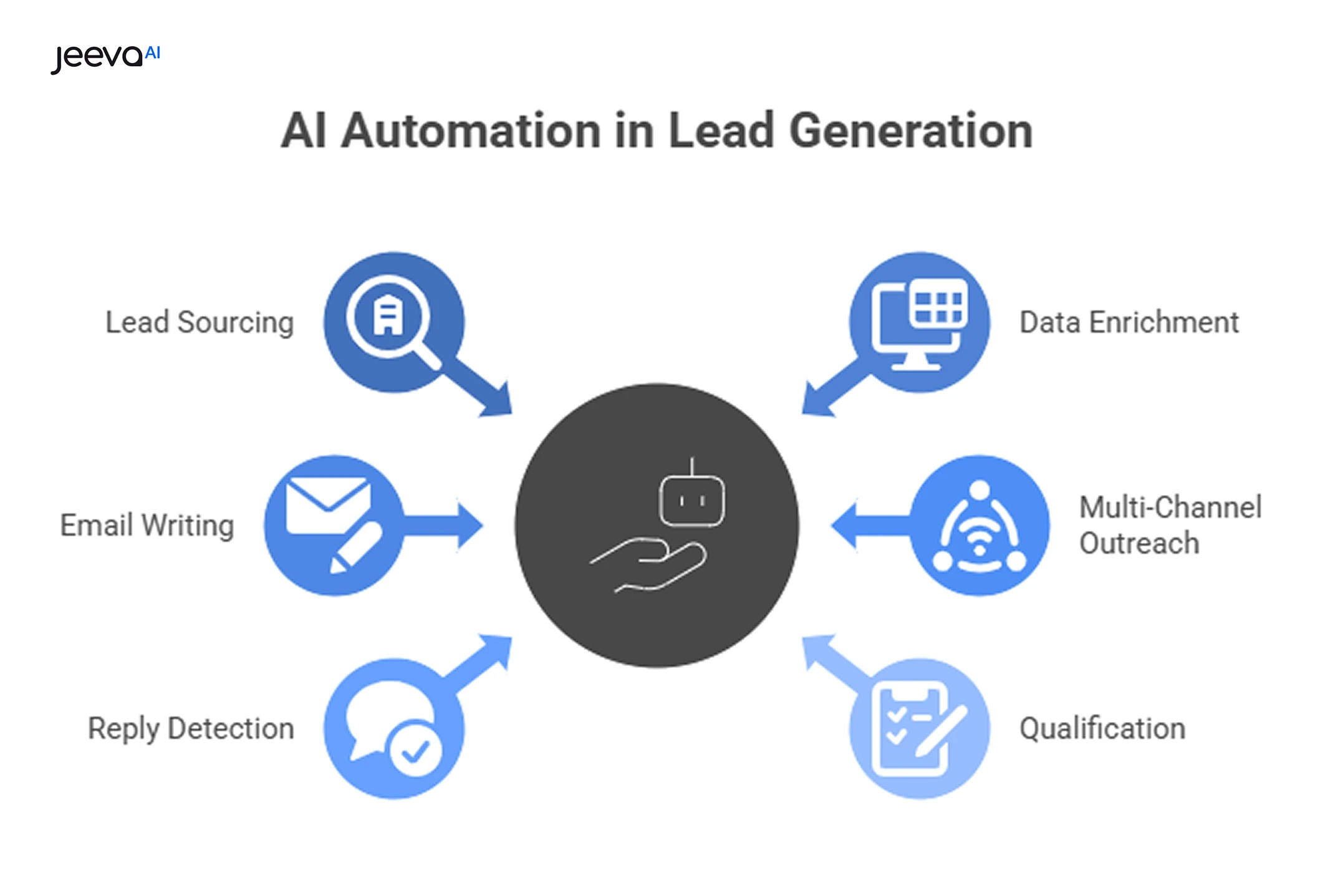
AI platforms activate enriched leads instantly by connecting real-time data enrichment directly to sales execution workflows. Instead of storing enriched data for later use, modern AI systems trigger outreach, prioritization, and scheduling actions the moment a lead is identified or updated.
This immediate activation removes delays between lead discovery and engagement, which is critical in high-intent B2B buying moments.
From Enrichment to Action in Real Time
Once a lead is enriched with verified contact details, role accuracy, firmographics, and intent signals, AI platforms automatically determine the next best action. This can include assigning the lead to the right owner, placing it into a personalized outreach flow, or triggering a meeting request.
Why this matters: Speed matters in B2B sales. The faster enriched leads are activated, the higher the likelihood of engagement before buyer interest fades.
Personalized Outreach Without Manual Handoffs
AI platforms use enriched data to generate personalized messages immediately. Messaging is tailored based on role, industry, company context, and recent activity without requiring sales reps to research or rewrite content.
Why this matters: Removing manual handoffs ensures personalization happens consistently and at scale, not just for a small subset of leads.
Automated Follow-Ups and Meeting Scheduling
After the first touchpoint, AI systems continue to monitor engagement and automatically trigger follow-ups or meeting scheduling based on buyer responses. Enriched context is updated continuously, allowing outreach to adapt as buyer signals change.
Result: Leads move seamlessly from discovery to conversation, increasing reply rates, meeting conversions, and pipeline velocity.
Why Instant Activation Is a Competitive Advantage in 2026?
In modern GTM environments, delays caused by manual routing, research, or approval workflows create lost opportunities. AI platforms that activate enriched leads instantly transform data accuracy into real revenue impact.
Outcome: Faster engagement, higher-quality conversations, and more predictable pipeline growth.
Best Practices for Scaling AI-Powered Enrichment in 2026
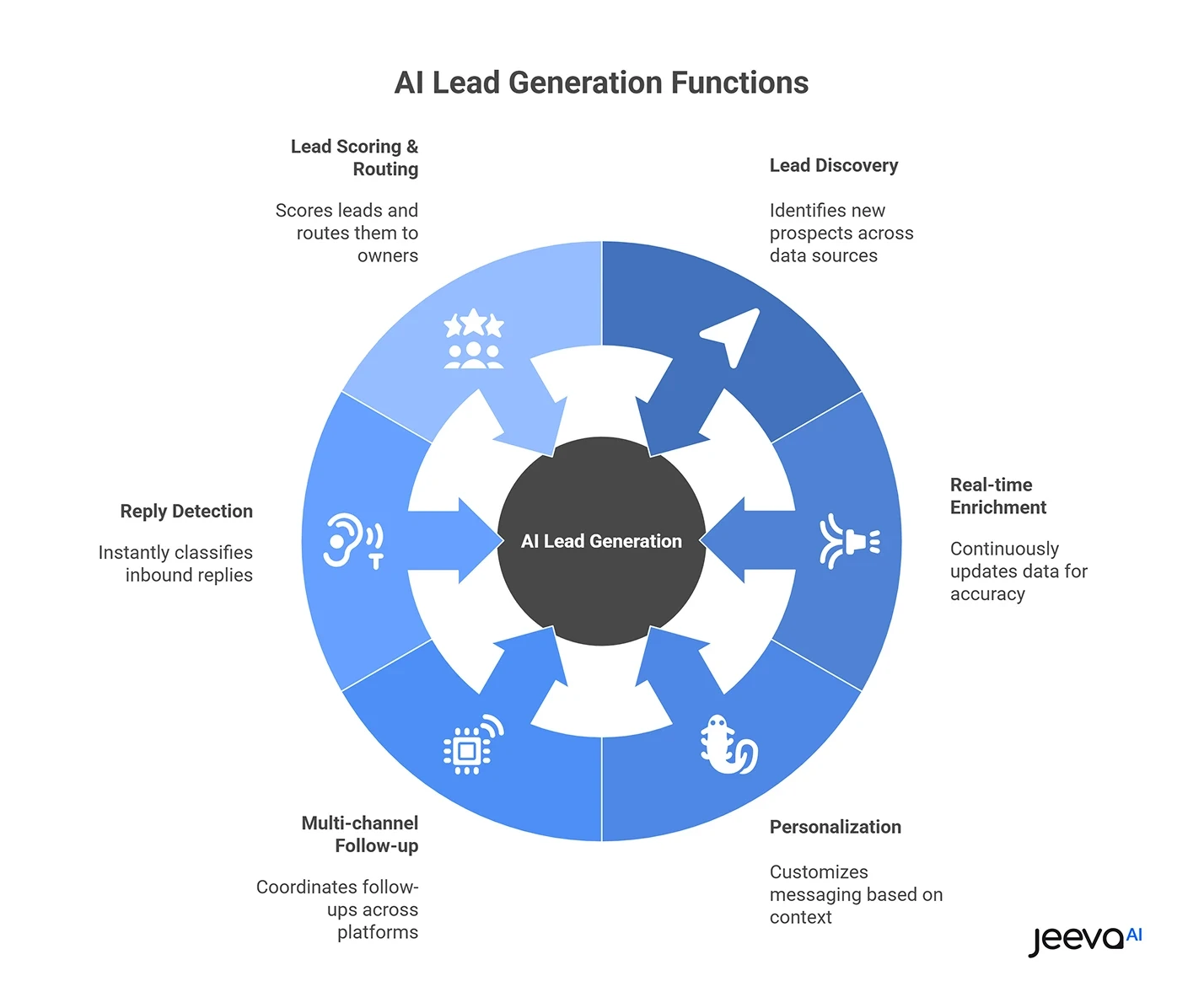
Scaling AI-powered enrichment in 2026 requires focusing on data quality, speed of activation, and responsible governance rather than raw data volume. Teams that treat enrichment as a strategic revenue function not a background data task achieve higher conversion rates and more predictable pipeline outcomes.
The following best practices define how high-performing B2B teams scale enrichment effectively.
Why Start with ICP Segments?
Scaling enrichment begins with prioritization. Instead of enriching every lead equally, high-performing teams focus first on Ideal Customer Profile (ICP) segments such as target industries, company sizes, regions, or in-market accounts.
Why this matters: Concentrating enrichment on ICP segments delivers faster ROI by improving qualification accuracy and conversion rates where revenue impact is highest.
Why Speed Matters More Than Volume in 2026
In modern B2B sales, data freshness is more valuable than data quantity. Enriching fewer leads in real time produces better results than enriching large volumes of leads after delays.
Why this matters: Real-time enrichment ensures outreach happens while buyer intent is active, preventing missed opportunities caused by stale or delayed data.
Why Enrichment Must Be Combined with AI Execution
Enrichment alone does not create value unless it is immediately activated. Scaled teams integrate enrichment directly into AI-driven execution, including prospecting, personalized outreach, follow-ups, and meeting scheduling.
Why this matters: When enriched data flows directly into execution workflows, sales teams eliminate manual handoffs and convert insights into action instantly.
Why Compliance and Data Governance Are Non-Negotiable
As enrichment scales, so does compliance risk. Teams must ensure enriched data complies with privacy regulations, consent requirements, and internal governance policies across regions and channels.
Why this matters: Strong data governance protects brand trust, reduces legal risk, and ensures AI-powered workflows remain sustainable as volume grows.
Why These Practices Define Winners in 2026
Teams that scale AI-powered enrichment successfully focus on precision over excess, speed over storage, execution over insight, and governance over shortcuts.
Outcome: Higher-quality pipelines, faster deal cycles, and scalable, compliant revenue growth.
Common Mistakes to Avoid When Implementing AI Enrichment
AI enrichment can significantly improve sales performance, but only when implemented correctly. Many teams struggle not because of technology limitations, but due to poor execution choices that reduce data impact.
These mistakes often lead to wasted enrichment spend, delayed outreach, and low conversion outcomes. Avoiding them ensures enriched data directly supports faster, more effective sales execution.
What Are the Most Common Mistakes in AI Enrichment?
Enriching all leads instead of prioritizing ICP segments
Relying on batch updates rather than real-time enrichment
Allowing outdated or duplicate CRM records to persist
Treating enrichment as data storage, not execution trigger
Delaying outreach after enrichment reduces buyer responsiveness
Ignoring compliance, consent, and data governance requirements
Poor AI enrichment execution creates friction across the sales funnel and weakens automation accuracy. When teams focus on high-value leads, enable real-time updates, maintain clean CRM data, and activate enrichment instantly, data becomes a growth lever rather than a cost center. In 2026, avoiding these mistakes is essential for building scalable, predictable revenue systems.
Why Do B2B Sales Teams Need Real-Time Lead Enrichment Today?
Real-time enrichment has become essential as B2B data decays faster than sales teams can manually correct it. Contact records become outdated due to job changes, company shifts, and role movement, weakening personalization and outreach accuracy.
At the same time, sales teams lose valuable selling time to manual research and CRM cleanup. In 2026, revenue performance increasingly depends on how fast teams can act on fresh, actionable data.
Why Can’t B2B Teams Rely on Static Data Anymore?
Contact data decays rapidly due to frequent job changes
Outdated emails damage sender reputation and deliverability
Manual data research consumes majority of sales time
Slow response reduces chances of engaging high-intent buyers
Static enrichment misses real-time buying intent signals
Delayed activation causes qualified leads to go cold
Real-time enrichment addresses these challenges by continuously refreshing buyer data and activating it instantly within sales workflows. It enables teams to engage prospects while intent is still active, reduce administrative overhead, and protect outreach performance.
In modern B2B sales, real-time enrichment is no longer a nice-to-have it is core revenue infrastructure.
How Modern AI Platforms Achieve Sub-Second Enrichment
Layer | What Happens | Key Tech | Jeeva.ai Differentiation |
Trigger Capture | Form-fill, chat, or reverse-IP fires webhook | AWS EventBridge / Kafka | Out-of-the-box webhooks & SDKs for popular CRMs |
Hybrid Data Lake + Graph | Fans out to 100+ structured & unstructured sources (e.g., filings, hiring boards, intent feeds) | Vector DB + Columnar Lakehouse | Hybrid-vector search blending sparse & dense indexes for 2× faster recall |
Cascaded AI Enrichment | ① Hard match by email/domain → ② Probabilistic match via embeddings → ③ LLM fills soft attributes (e.g., “preferred tech”, “recent funding”) | Retrieval-Augmented Generation (RAG) | Confidence gating; low-confidence fields flagged for human review |
Latency & Cost Optimizer | Bandit algorithm picks cheapest model meeting < 2s SLA | On-device embeddings + GPU batching | Jeeva’s p95 latency at 1.8 seconds (July 2025 benchmark) |
Compliance & Audit | Every attribute stamped with source & timestamp; GDPR/CPRA logging auto-populated | Data-lineage graph | EU AI Act–ready “Transparency Report” export in one click |
Five High-Impact Use-Cases That Grow Pipeline
# | Play | Why It Boosts Pipeline | Real-World Proof | KPIs to Watch |
1 | Instant ICP Fit Check on Inbound Leads | Filters junk leads before SDRs spend time; frees up 40% of call time | Firms using AI fit-scoring grew SQL-to-opportunity rate by 25% (Forrester) | % leads auto-disqualified, SDR talk-time |
2 | Auto-Personalized First-Touch Within 5 Minutes | Uses fresh context to spike reply rates | Teams responding in <5 minutes see 391% more conversions (Rep.ai) | Response time, meeting-book rate |
3 | Dynamic Routing to AEs Based on Size/Intent | Reduces hand-off lag and misalignment | AI routing cuts sales cycle length by 15% (Gartner) | Lead-to-demo SLA, pipeline velocity |
4 | Always-Fresh Nurture Drips Driven by Enrichment Updates (Funding, Hires) | Keeps dormant prospects engaged without rep effort | Event-triggered drip users report 30% lift in re-engagement (HubSpot 2025) | Re-open rate, recycled lead contribution |
5 | Precision Forecasting Inputs (Live Headcount, Tech Spend) | Improves commit accuracy and informs ABM spend | Sales orgs using enriched data hit 95%+ forecast accuracy (McKinsey) | Forecast variance, CAC by segment |
Implementation Roadmap (First 45 Days)
Days | Actions | Tools / Jeeva Modules |
1–10 | Sync CRM, marketing automation & reverse-IP feeds. Run baseline decay audit (expect 22-30% stale fields). | CRM Integration & Audit |
11–20 | Drop Jeeva enrichment tag on forms & chat. Build five trigger-based segments (ICP fit, high intent, funding news, job changes, tech adoption). | Real-Time Webhooks & Segmentation |
21–30 | Launch auto-personalized email + InMail sequences for each segment. Enable Slack notifications for AEs on >90% fit events. | Multichannel Sequencer & Alerts |
31–45 | Split-test subject-line variants via Jeeva Creative Copilot. Integrate enriched fields into RevOps forecasting models. | Creative Copilot & RevOps Dashboard |
Expected lift: 15–20% more meetings and 10–15% pipeline growth within the first quarter.
Final Thoughts : AI Lead Generation
Real-time lead enrichment is no longer a competitive advantage, it is a baseline requirement for winning modern B2B sales pipelines. As buyer intent windows shrink and data decay accelerates, sales teams that rely on delayed or static enrichment fall behind before conversations even begin.
Platforms like Jeeva AI demonstrate where the market is heading by combining real-time enrichment, fast signal processing, and integrated multichannel execution. When enrichment is tightly connected to discovery, outreach, and follow-up, data stops being a passive asset and becomes an active revenue driver.
By applying proven implementation plays and following a structured rollout roadmap, sales teams can achieve measurable improvements in pipeline velocity, forecast accuracy, and conversion rates. In 2026 and beyond, the teams that win will be those that treat real-time enrichment as core sales infrastructure not an add-on.
FAQ
What is real-time lead enrichment?
Why is real-time lead enrichment important for B2B sales?
How does real-time enrichment improve sales conversions?
How does AI lead generation work with real-time enrichment?
Which teams benefit most from real-time lead enrichment?