
Introduction to Agentic AI for Sales
Large sales teams especially those with 1000+ seats require AI systems that can scale across workflows, data pipelines, permissions, and compliance frameworks. Agentic AI can automate prospecting, enrichment, outreach, and follow-ups, but scaling it for enterprise-level teams demands stronger architecture, multi-agent safety, and reliable governance.
This guide explains how to structure, deploy, and scale agentic AI across large US enterprise sales teams, with best practices applicable for the UK, Canada, Australia, and New Zealand.
For foundations, you can also explore: Agentic AI B2B Sales Guide.
Why Do Big Sales Teams Need a Scalable Agentic AI Architecture?
Large sales teams handle massive volumes of leads, emails, sequences, conversations, and CRM processes. Without scalable architecture, AI becomes slow, unstable, or inaccurate. A strong architecture ensures the AI performs consistently across all regions and departments.
Fact: Enterprises report 30–50% workflow slowdown when AI systems are not architected for scale.
Architecture Features That Support Scaling
Here’s what large teams depend on.
Cloud-native infrastructure
Horizontally scalable compute
Distributed multi-agent workloads
High availability and failover
Region-based routing
Real-time monitoring
A solid architecture keeps AI stable even when thousands of reps depend on it simultaneously.
How Can Multi-Agent Systems Handle 1000+ Sales Reps?
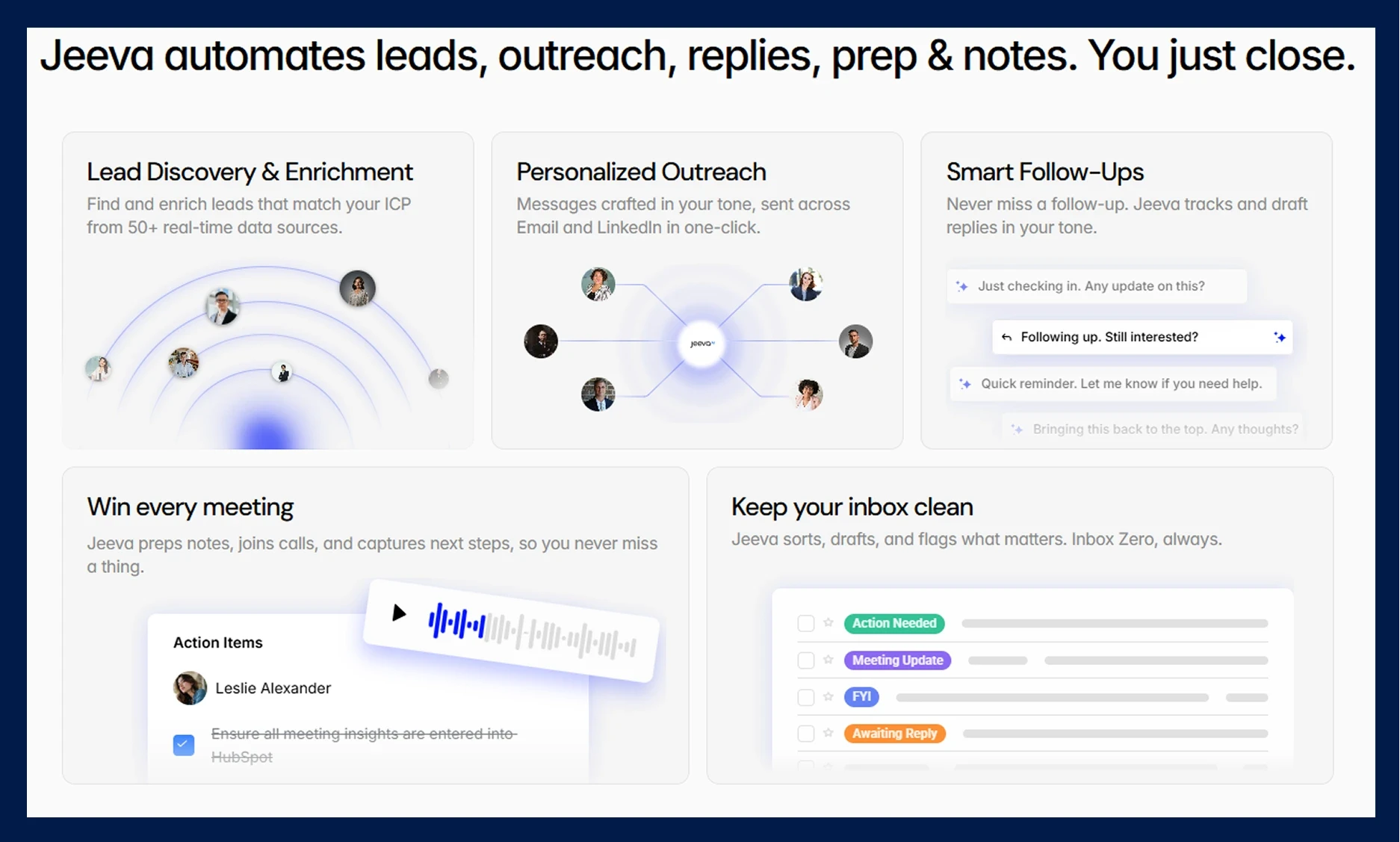
Multi-agent AI splits responsibilities across specialized agents. This prevents overload, improves decision-making, and avoids bottlenecks in workflows like enrichment, outreach, or scoring.
Fact: Multi-agent AI improves throughput by 40–60% in enterprise deployments.
🟦 Related guide: Lead Enrichment & Agentic AI
Why Multi-Agent Works for Huge Teams
Each agent handles one key task efficiently.
Prospector agent
Enrichment agent
Writer/personalization agent
Outreach sequence agent
Scoring/qualification agent
Calendar coordination agent
Multi-agent architecture ensures AI remains consistent even as workload increases massively.
Multi-Agent Workload Distribution for Large Sales Teams
AI Agent | Responsibility | Benefit for 1000+ Reps |
|---|---|---|
Prospector | Finds ICP leads | Reduces manual work |
Enrichment | Validates data | Ensures quality |
Writer | Creates messages | Personalizes at scale |
Outreach | Sends sequences | Manages volume |
Qualifier | Scores leads | Focuses attention |
Calendar Agent | Books meetings | Boosts conversions |
What Data Architecture Do Large Teams Need for Agentic AI?
Large sales teams depend on clean, structured, and real-time data. This requires enriched, verified, and compliant data pipelines to avoid inaccuracies in scoring, targeting, and outreach.
Fact: Poor data quality reduces AI performance by up to 70%.
🟦 Related reading: Real-Time Lead Enrichment for Email & Sales Outreach
Data Architecture Essentials
Data must be complete, reliable, and constantly updated.
Unified data layer
Real-time verification
Enrichment automation
CRM syncing
Technographic + firmographic inputs
Intent-driven enrichment
Stronger data pipelines ensure agentic AI makes the right decisions at scale.

How Do You Maintain Speed and Reliability for Thousands of Workflows?
Large sales teams run millions of actions weekly: enrichment events, outreach touches, scoring updates, chat interactions, and meeting bookings. Speed and uptime must be guaranteed at enterprise scale.
Fact: Enterprises expect 99.9%+ uptime from AI systems.
🟦 Compare similar systems: Multi-Channel Sales Automation with Agentic AI
How to Maintain AI Performance?
Speed is a critical part of scaling AI.
Load balancing
Distributed compute
Queue-based processing
Fast API execution
Instant failover
Background job optimization
Good performance architecture ensures AI stays fast even during peak workload hours.
How Does Compliance Impact AI Scaling Across Regions?
US enterprises must comply with CCPA and CPRA, while UK teams follow GDPR, Canada follows PIPEDA, and Australia follows the Privacy Act. AI scaling requires strict adherence to these frameworks.
Fact: Privacy violations cost enterprises up to $20 million under GDPR.
🟦 Related compliance guide: CCPA-Compliant Lead Enrichment for the US
Compliance Requirements for Enterprise Scaling
AI must follow legal rules across regions.
GDPR
CCPA
SOC 2
ISO 27001
Data residency
Audit logging
Compliance ensures safe scaling across global markets.
Regional Compliance Requirements
Region | Regulation | Priority |
|---|---|---|
US | CCPA/CPRA | High |
UK | GDPR | High |
Canada | PIPEDA | Medium |
Australia | Privacy Act | High |
NZ | Privacy Act 2020 | Medium |
How Do You Ensure Auditability and Control at Enterprise Scale?
Auditability ensures enterprises know exactly what AI did, when it did it, and why. For 1000+ seat teams, AI must provide complete logs for every action performed by every agent.
Fact: 88% of enterprise buyers demand full AI audit logs.
Auditability Essentials
These features ensure accountability.
Time-stamped logs
API logs
Data retention logs
Permission tracking
Error event logs
Exportable audit file
With proper audit trails, AI remains transparent and compliant.
How Should Enterprises Manage AI-Driven Outreach at Scale?
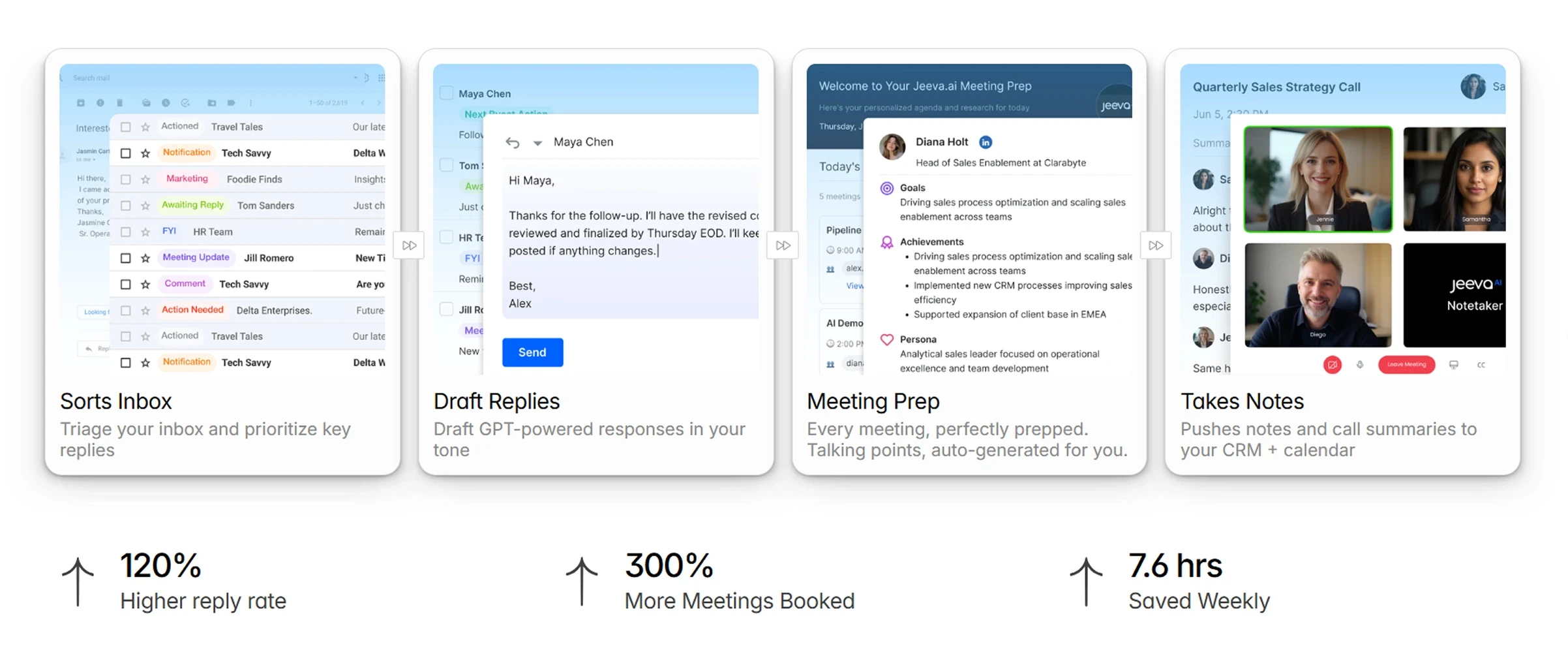
Large teams generate hundreds of thousands of outreach actions per week. AI must personalize, deliver, and follow-up across email, LinkedIn, and chat without failure.
Fact: Multi-channel AI sequences increase meeting creation by 3–7×.
🟦 Related outbound framework: Email + Chat + Calendar Sequences
Outreach Scaling Strategies
AI must automate sequences safely.
Adaptive send-time optimization
Personalized message generation
Follow-up automation
Channel switching logic
Dynamic branching
Calendar-first follow-ups
At scale, automation engines can outperform hundreds of SDRs.
How Can Sales Teams Use User Signals to Prioritize at Scale?
For large teams, firmographics, technographics, and intent signals must drive prioritization. AI agents should adjust outreach based on user signals.
Fact: Using technographic data improves conversion by 30%+.
Technographics deep dive: Technographic Signals for US Enterprise Lead Prioritization
Priority Signals for AI
AI agents rely on signals for smarter decisions.
Tech stack
Funding data
Hiring trends
Website visits
Engagement behavior
Competitor activity
Signal-based prioritization drives efficient pipeline scaling.
How Does Jeeva AI Support 1000+ Seat Sales Teams?
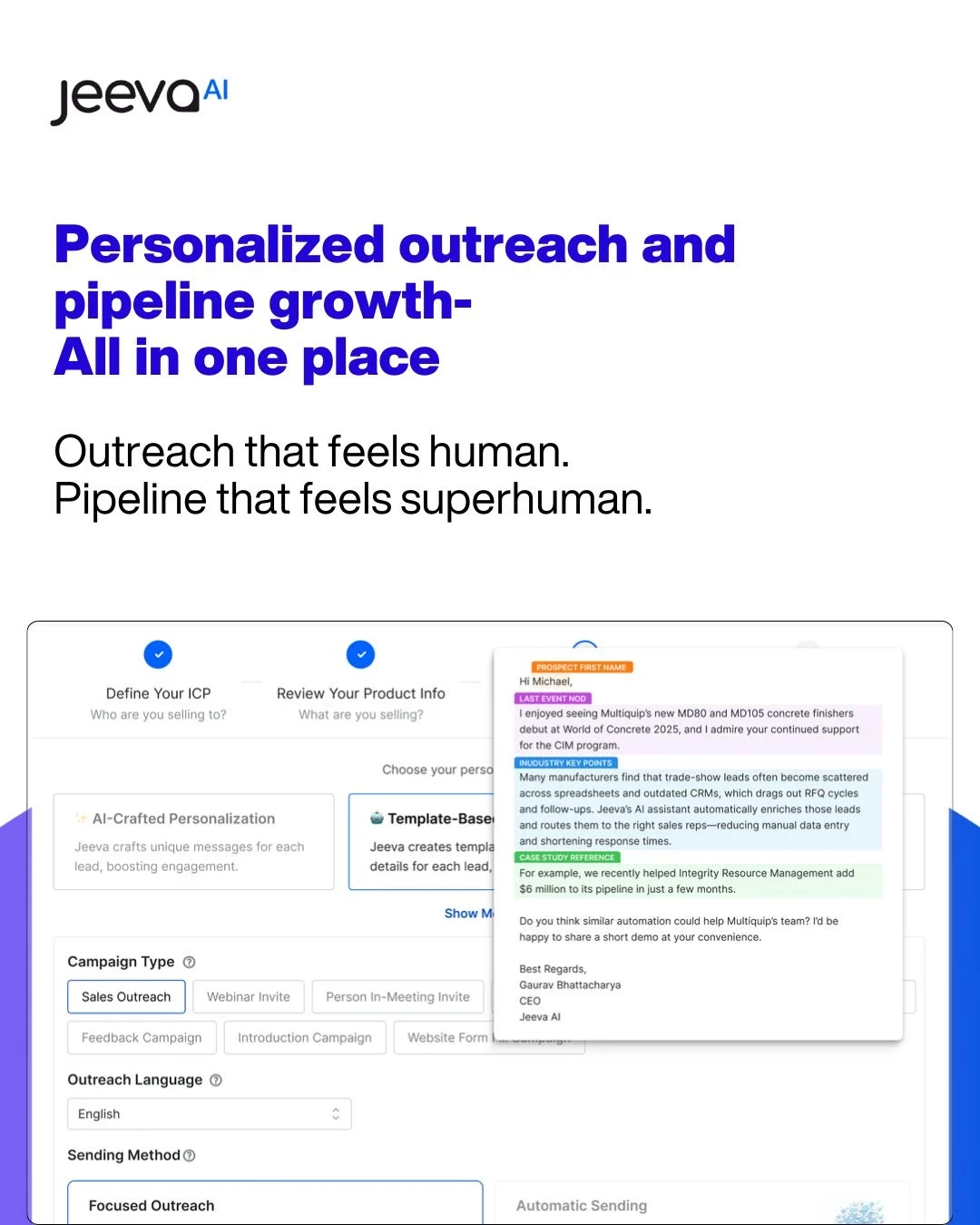
Jeeva AI’s multi-agent system is designed to run thousands of workflows simultaneously prospecting, enrichment, outreach, qualification, and scheduling—without losing accuracy or speed.
Fact: Jeeva AI users report 50–70% time saved across SDR teams.
🟦 LinkedIn automation resource: Automated LinkedIn Outreach for Tech Startups
Jeeva AI Enterprise Strengths
Jeeva’s architecture is built for scale.
Multi-agent automation
Real-time enrichment
Dynamic workflows
Calendar-first scheduling
AI-driven scoring
Global compliance
Jeeva AI enables true enterprise-wide automation without risk.
What Steps Should Enterprises Follow to Scale Agentic AI Safely?
Large teams must adopt AI in controlled phases. Starting small reduces risk, improves monitoring, and prepares operations for full deployment.
Fact: Phased adoption increases success rates by 2×.
Steps for Safe Scaling
Follow these steps to scale without issues.
Start with small workflows
Train user groups
Add governance models
Deploy multi-agent work
flows
Enable log monitoring
Expand to full scale
A phased rollout ensures smooth enterprise-wide adoption.
Scaling Requirements Checklist
Area | Requirement | Needed for 1000+ Seats |
|---|---|---|
Architecture | Horizontal scaling | Yes |
Data | Real-time enrichment | Yes |
Compliance | CCPA + GDPR | Yes |
Outreach | Multi-channel AI | Yes |
Security | SOC 2 / ISO | Yes |
Governance | Full audit logs | Yes |
Conclusion
Scaling agentic AI across a 1000+ seat sales team requires strong architecture, multi-agent systems, compliant data workflows, and reliable automation. With the right foundation, enterprises can automate prospecting, outreach, enrichment, and follow-ups at massive scale.
Platforms like Jeeva AI offer enterprise-ready architecture built for global teams.
FAQ
Why is scalability critical for agentic AI in large sales teams?
Can multi-agent AI support 1000+ workflows at the same time?
How does compliance impact scaling?
What infrastructure do large teams need?
Is Jeeva AI built for 1000+ seat enterprise deployments?