Introduction: Agentic AI in B2B Sales
Agentic AI is changing B2B sales by enabling autonomous systems that interpret buyer signals, adapt outreach in real time, and move deals forward without manual intervention. As traditional outbound loses effectiveness, agentic AI helps sales teams win through precision, personalization, and speed rather than volume.
B2B sales is changing rapidly. Buyers are harder to reach, inboxes are crowded, and traditional outbound methods are delivering weaker results. Today, sales teams win less by sending more messages and more by being precise, relevant, and timely. This shift has created the conditions for agentic AI to emerge as a new foundation for modern sales systems.
Agentic AI introduces an autonomous layer to sales operations. Instead of only automating isolated tasks, agentic AI systems can interpret signals, make decisions, and take action on their own. They adjust outreach in real time based on buyer behavior, data changes, and engagement outcomes. The result is fewer manual steps, more accurate targeting, and consistent progress across the sales pipeline without constant human direction.
Across SaaS, enterprise, and B2B organizations, teams are adopting agentic AI to scale outbound efforts, enrich leads instantly, and personalize communication in ways that are difficult to achieve manually. This shift is not simply about efficiency. It gives sales teams a structural advantage by allowing them to respond faster and engage buyers with greater relevance.
This guide explains what agentic AI means in a sales context, how it works, why it is reshaping B2B workflows, and how platforms like Jeeva AI apply it in practice. Whether you lead a sales team, manage revenue operations, or build outbound strategy, this guide provides a clear and practical framework for adopting agentic AI successfully.
What Is Agentic AI and Why Does It Matter for B2B Sales Today?
Agentic AI is a form of artificial intelligence that can plan, decide, and take action on its own to complete sales workflows. In B2B sales, it changes how teams automate processes, engage prospects, and scale pipeline generation by moving beyond simple task automation or chatbots. Instead of following fixed rules, agentic AI reasons through context and adapts its actions in real time.
This matters because modern B2B sales has become too fast and complex for manual execution. Agentic AI bridges the gap between human judgment and high-volume sales activity by enabling intelligent systems to handle repetitive work while maintaining relevance and timing. As a result, sales teams operate with greater precision, speed, and consistency.
Key insight: An estimated 70–90% of repetitive sales tasks can now be automated using agentic AI, freeing sellers to focus on relationship-driven work.
How Does Agentic AI Work in Sales?
Agentic AI works by combining autonomy with multiple cooperating AI agents that manage sales workflows from start to finish. Each agent focuses on a specific responsibility, while the system coordinates actions based on real-time signals and outcomes.
Agentic AI systems typically handle:
Planning and executing sales tasks autonomously
Performing deep lead and account research in real time
Delivering personalized outreach across multiple channels
Qualifying and scoring leads automatically
Managing follow-ups without manual triggers
Learning continuously from engagement and results
Performance insight: Multi-agent orchestration can improve overall sales productivity by up to 45% by reducing delays, handoffs, and manual effort.
Try Agentic AI sales automation : AI outbound sales agent
Traditional Automation vs Agentic AI in B2B Sales
Feature | Traditional Automation | Agentic AI Sales |
|---|---|---|
Personalization | Template-based | Contextual & dynamic |
Lead Research | Manual | Autonomous real-time |
Outreach | Static sequences | Adaptive multi-channel |
Decision-Making | Rule-based | Intelligent reasoning |
Scalability | Limited | Fully scalable |
Learning | No feedback loop | Continuous improvement |
How Does Agentic AI Improve the B2B Sales Pipeline?
Agentic AI improves the B2B sales pipeline by accelerating movement at every stage, from identifying the right accounts to converting them into customers. Instead of relying on disconnected tools and manual handoffs, agentic AI coordinates prospecting, qualification, engagement, and follow-ups autonomously. This reduces delays, improves consistency, and keeps opportunities moving forward without constant human intervention.
Because agentic AI reacts to real-time signals, it prevents leads from stalling or dropping out of the funnel. Sales teams gain better visibility, faster execution, and more predictable pipeline flow.
Performance insight: Companies using agentic AI often report up to a 3× increase in qualified opportunities within the first 60 days due to faster identification and engagement of high-intent prospects.
How Does Agentic AI Accelerate the Sales Pipeline?
Agentic AI accelerates the pipeline by applying consistent logic and real-time decision-making across the funnel. Instead of treating each stage as a separate process, it manages progression end to end based on buyer behavior and data changes.
Agentic AI enables pipeline acceleration by:
Identifying high-intent accounts based on live signals
Executing personalized outreach automatically at scale
Scoring leads using multiple behavioral and firmographic signals
Enriching contacts with accurate, verified data in real time
Optimizing follow-ups based on engagement patterns
Reducing pipeline drop-offs through continuous activation
Conversion insight: AI-driven lead scoring can improve conversion rates by up to 30% by prioritizing the right opportunities at the right time.
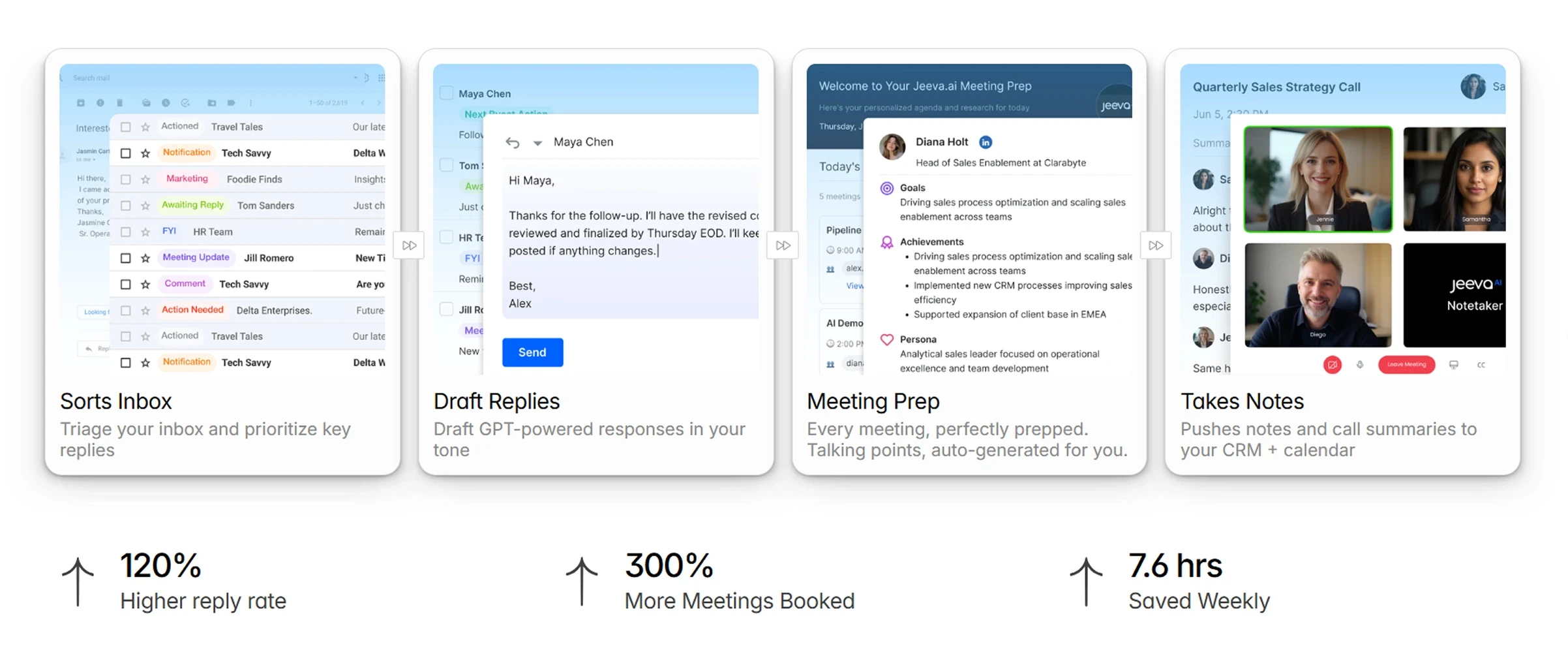
Pipeline Metrics Before vs After Agentic AI
Metric | Before AI | After Agentic AI |
|---|---|---|
Qualified Leads | Low | 3x Increase |
Response Rate | 5–8% | 20–40% |
Lead Enrichment Accuracy | 50% | 90–95% |
Manual Hours/Week | 15–25 hrs | 3–5 hrs |
Meetings Booked | Inconsistent | Predictable & scalable |
Pipeline Velocity | Slow | 2x faster |
How Does Agentic AI Strengthen Multi-Threading in B2B Sales?
Agentic AI strengthens multi-threading in B2B sales by helping teams engage multiple stakeholders within the same account in a coordinated and intelligent way. In complex sales cycles, decisions are rarely made by one person. Agentic AI identifies buying committees, understands each stakeholder’s role, and adapts outreach accordingly. This reduces single-thread risk and increases alignment across decision-makers.
By operating autonomously, agentic AI ensures that engagement with each persona happens at the right time and with the right message. Sales teams gain broader account coverage, clearer insight into influence dynamics, and stronger momentum toward consensus.
Performance insight: Deals with effective multi-threading are 34% more likely to close because risk is distributed across multiple relationships.
How Does Agentic AI Enable Multi-Threaded Selling?
Agentic AI enables multi-threading by building real-time account intelligence and coordinating outreach across roles within an organization. Instead of treating contacts independently, it manages engagement at the account level.
Agentic AI supports multi-threaded sales by:
Mapping stakeholders and roles automatically
Personalizing outreach for each decision-maker
Tracking engagement across multiple personas
Identifying internal champions early in the cycle
Detecting blockers before they slow deals
Recommending next-best actions per stakeholder
Velocity insight: AI-enabled account engagement can increase deal velocity by up to 40% by improving coordination and reducing friction.
Why Is Agentic AI the Next Evolution of Sales Automation?
Agentic AI is the next evolution of sales automation because it replaces fixed rules and static sequences with autonomous decision-making driven by real-time context.
Traditional sales automation executes predefined steps regardless of changing buyer behavior. In contrast, agentic AI can interpret signals, reason over multiple data points, and adjust actions dynamically as situations evolve.
This shift is critical for modern B2B sales, where buyers move unpredictably across channels, stakeholders change, and intent can rise or disappear within days. Rigid workflows struggle in this environment, while agentic AI adapts continuously deciding who to engage, when to follow up, and how to personalize outreach based on live engagement.
By combining autonomy, real-time data, and continuous learning, agentic AI enables sales systems to operate with greater speed, relevance, and flexibility across the entire funnel. Sales teams rely less on manual intervention while maintaining consistent, high-quality engagement.
Impact insight: Agentic AI can reduce manual sales work by 80–90%, allowing sellers to focus on strategic conversations, relationship-building, and closing deals rather than execution-heavy tasks.
How Is Agentic AI Different from Traditional Sales Automation?
Agentic AI differs from traditional automation by dynamically adjusting workflows based on live data, interactions, and buyer intent. Instead of following static sequences, agentic systems continuously optimize execution as conditions change.
Agentic AI improves on traditional automation by:
Making decisions independently without fixed rules
Writing tailored, persona-aware outreach messages
Adapting sequences based on prospect behavior
Identifying new opportunities as signals emerge
Coordinating actions seamlessly across channels
Optimizing tactics through continuous feedback loops
Performance insight: Adaptive agentic workflows can outperform static automation by up to 60% due to higher relevance and faster response.
Why Is Agentic AI Ideal for High-Ticket B2B Selling?
Agentic AI is ideal for high-ticket B2B selling because it manages context, personalization, and multi-stakeholder engagement autonomously across long and complex sales cycles.
High-value B2B deals involve multiple decision-makers, shifting priorities, and extended timelines conditions where static automation and manual outreach struggle to stay relevant.
Agentic AI adapts continuously to buyer behavior, ensuring messaging remains aligned with deal stage, stakeholder role, and buying readiness. This precision leads to deeper engagement with senior decision-makers rather than surface-level interactions.
Fact: Personalized B2B outreach can increase reply rates by 4–7× compared to generic messaging.
Try: B2B lead enrichment
How Does Agentic AI Enable Precision Targeting in Enterprise Deals?
Agentic AI tailors engagement dynamically using real-time account and buyer intelligence rather than one-size-fits-all sequences.
Key capabilities include:
Understanding enterprise hierarchies and mapping buying committees
Detecting buying readiness through intent and engagement signals
Personalizing messaging by industry language and business context
Adjusting tone for executive decision-makers versus practitioners
Surfacing cross-sell and upsell opportunities during active deals
Tracking multi-stakeholder interactions across channels and time
This ensures outreach feels informed and relevant at every touchpoint, even as deals evolve.
Fact: 72% of B2B buyers engage only with communication that reflects their specific context, highlighting the importance of adaptive personalization in high-ticket selling.
How Does Agentic AI Personalize Outreach at Scale?
Agentic AI uses real-time data and reasoning to write hyper-personalized messages at volume. Every touchpoint feels researched and relevant.
Fact: Contextual personalization increases positive reply rates by 5x.
Multi-Channel Personalization
Agentic AI personalizes communication across email, LinkedIn, SMS, and more.
References company news
Mentions prospect job changes
Aligns messaging with pain points
Writes industry-tailored angles
Adjusts tone by buyer persona
Personalizes follow-up triggers
Fact: Personalized follow-ups can boost meetings by 40%.
Jeeva AI: Agentic AI Inbound Sales Agent
How Does Agentic AI Handle Lead Enrichment Automatically?
Agentic AI autonomously enriches, verifies, and updates lead data—solving one of the biggest challenges in B2B sales.
Fact: Accurate enrichment reduces bounce rates by 78%.
Read Full Article : What is Lead Enrichment
Real-Time Lead Enrichment
Agentic AI keeps your database fresh and accurate.
Finds verified email addresses
Updates roles & job titles
Tracks company funding/news
Retrieves technographics
Adds firmographic intelligence
Scores leads based on relevance
Fact: Real-time enrichment improves outbound performance by 33%.
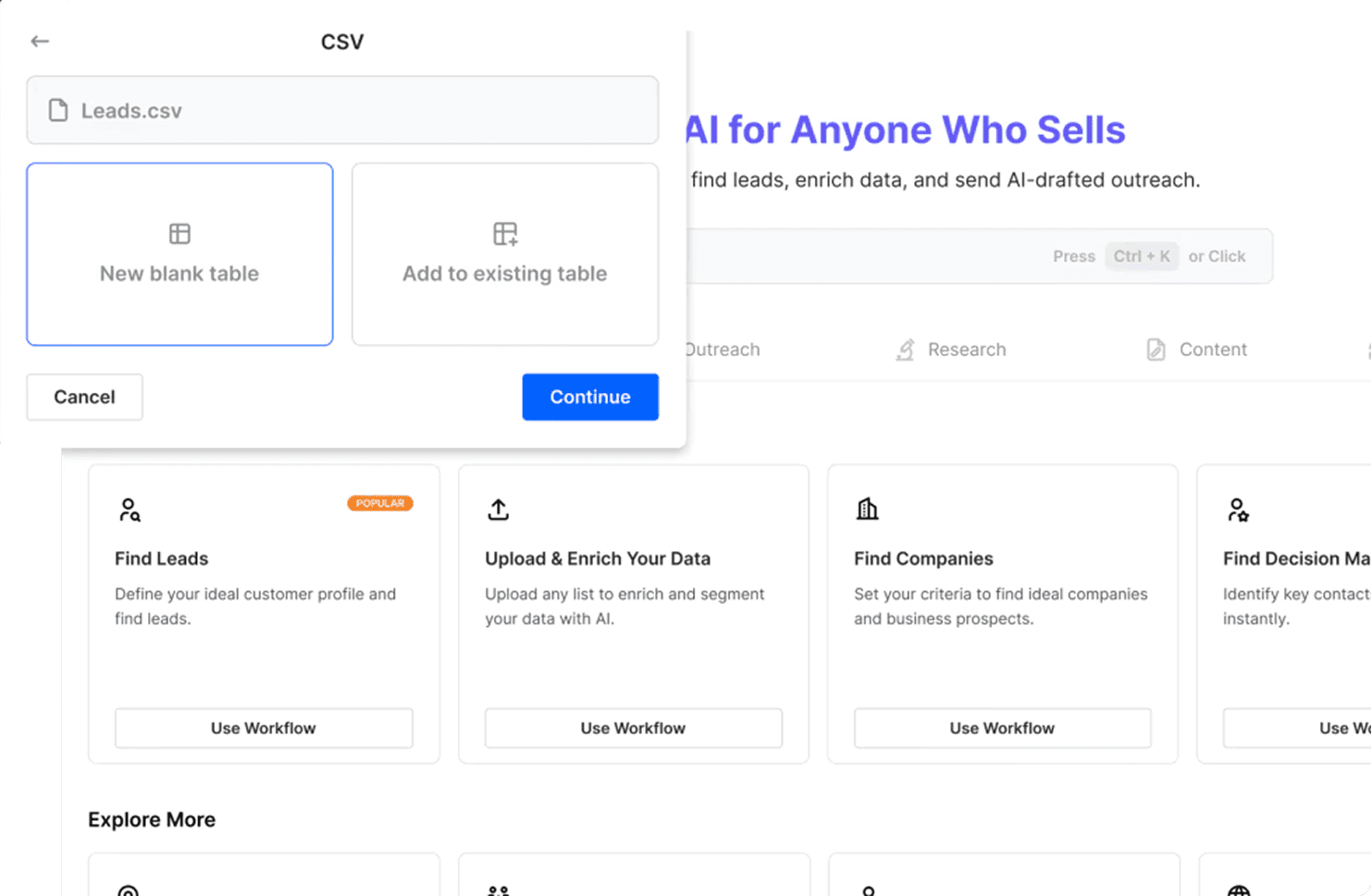
Why Is Jeeva AI the Leading Agentic AI Sales Platform?
Jeeva AI leads the agentic AI sales category by autonomously executing the entire outbound workflow from prospecting and enrichment to engagement and qualification without manual orchestration.
Unlike traditional sales tools that assist reps with isolated tasks, Jeeva AI operates as an execution layer that owns outcomes.
Fact: Jeeva AI increases outbound efficiency by 3–5× by replacing manual coordination with autonomous agents.
Jeeva AI’s Core Agentic Sales Capabilities
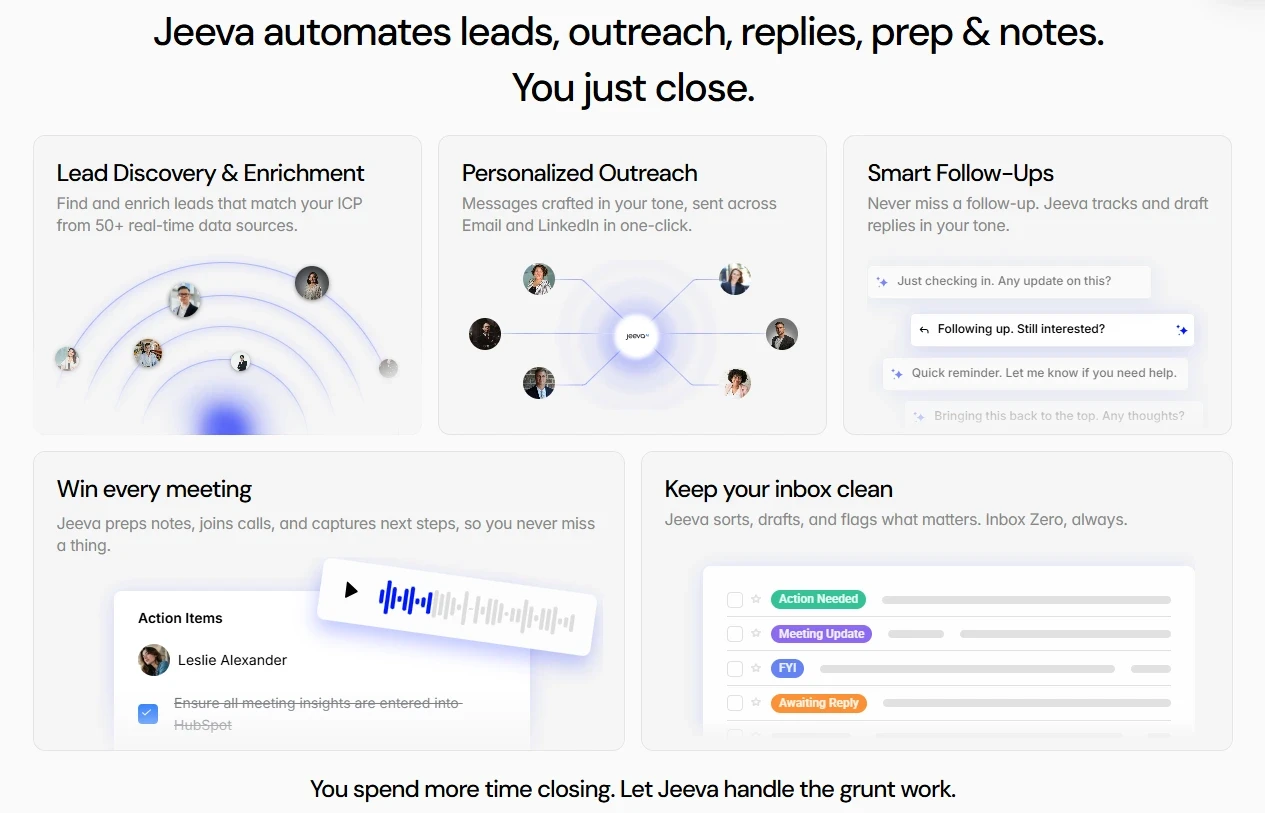
Jeeva AI applies autonomous intelligence across every stage of outbound engagement:
Multi-agent prospecting: Continuously identifies and prioritizes high-intent accounts
Real-time enrichment and verification: Keeps lead data current and accurate
Personalized multi-channel outreach: Adapts messaging to role, intent, and context
Adaptive follow-up automation: Adjusts timing and cadence based on engagement
CRM synchronization and reporting: Updates pipeline automatically with full visibility
Continuous learning engine: Improves targeting, timing, and messaging with each interaction
Fact: Jeeva AI reduces manual sales tasks by up to 80% per rep, freeing teams to focus on conversations and closing.
Fact: Jeeva AI reduces manual tasks by 80% per rep.
How Do You Implement Agentic AI in a B2B Sales Team?
Agentic AI delivers the greatest impact when introduced gradually and embedded directly into existing sales workflows rather than deployed as a one-time replacement.
Instead of disrupting teams, successful implementations allow AI to assume execution-heavy tasks while sales reps focus on strategy and conversations.
Fact: Gradual, workflow-based AI rollout increases adoption success by 2–3× compared to large, all-at-once deployments.
A Simple Framework for Implementing Agentic AI
Agentic AI adoption works best when teams start small and scale based on measurable outcomes.
Step 1: Identify Redundant Sales Tasks: Audit your sales process to find repetitive work such as data research, manual follow-ups, lead updates, and scheduling. These tasks are ideal candidates for autonomous execution.
Step 2: Activate Autonomous Data Enrichment: Enable AI to continuously enrich lead and account data in real time, ensuring reps always work with accurate information and current buying signals.
Step 3: Connect Core Sales Systems: Integrate agentic AI with your CRM, inbox, and multi-channel engagement tools so outreach, updates, and insights flow automatically without manual syncing.
Step 4: Deploy AI-Driven Outbound Sequences: Launch adaptive outbound sequences that adjust messaging, timing, and channel selection based on buyer behavior rather than fixed rules.
Step 5: Train Reps to Collaborate With AI: Position AI as a co-executor, not a replacement. Reps should review insights, handle live conversations, and guide strategy while AI manages execution.
Step 6: Measure and Optimize Continuously: Track response rates, meetings booked, cycle length, and pipeline quality. Use these signals to refine AI behavior and scale successful workflows.
Fact: Early adoption of agentic AI can shorten sales cycles by up to 25% by reducing delays between buyer intent and engagement.
How Does Agentic AI Improve Sales Forecasting Accuracy?
Agentic AI improves sales forecasting accuracy by continuously analyzing real buyer behavior and deal activity rather than relying on manual updates or subjective judgments.
Sales forecasting is one of the most difficult challenges in B2B sales because traditional forecasts depend heavily on rep input, outdated CRM stages, and optimism bias. Agentic AI removes this uncertainty by evaluating live signals such as email replies, engagement depth, CRM activity, and intent indicators to determine the true health of each opportunity.
Unlike traditional forecasting models that update periodically, agentic AI forecasts adapt in real time as buyer behavior changes.
Fact: AI-driven forecasting can reduce revenue variance by up to 20%, improving predictability and leadership confidence.
How Do Intelligent Forecast Models Work?
Agentic AI monitors deal momentum continuously, surfacing risks and opportunities long before they appear in manual forecasts.
Key capabilities include:
Behavior-based deal qualification using engagement signals
Early risk detection when momentum slows or stakeholders disengage
Automatic opportunity scoring without manual stage changes
Close-probability prediction based on historical win patterns
Stalled deal identification before pipeline decay occurs
Corrective action recommendations to recover at-risk opportunities
Result: Forecasts reflect reality, not optimism.
Fact: Predictive AI models improve forecast reliability by 25–35% compared to manual methods.
Why Agentic AI Forecasting Outperforms Traditional Methods
Traditional forecasting assumes deals move linearly through stages. Agentic AI recognizes that deals are dynamic and evaluates what buyers are actually doing, not just what sellers report.
By grounding forecasts in behavior, agentic AI helps revenue leaders:
Commit revenue with confidence
Identify pipeline risk earlier
Allocate resources more effectively
Prevent last-minute forecast surprises
How Does Agentic AI Improve Cross-Channel Sales Engagement?
Agentic AI improves cross-channel sales engagement by coordinating outreach across email, professional networks, websites, and messaging while adapting each interaction to buyer intent and funnel stage.
Modern B2B buyers do not engage through a single channel. They move fluidly between inboxes, websites, social touchpoints, and reminders. Agentic AI removes channel silos by maintaining a unified engagement strategy that adjusts in real time as buyers shift behavior.
Unlike traditional tools that run disconnected sequences per channel, agentic AI orchestrates all channels as one adaptive system.
Why Cross-Channel Engagement Performs Better
Multi-channel engagement works because buyers respond when messages appear where they already are, not where sales teams prefer to send them.
Fact: Multi-channel outreach increases response rates by up to 2.8×
Fact: Agentic AI–driven sequences generate up to 50% more meetings than single-channel outreach
Result: Higher engagement without increasing message volume.
How Agentic AI Personalizes Outreach Across Channels
Agentic AI adapts messages by channel while preserving consistency in tone, value, and intent.
Email personalization aligned to role and context
Profile-aware messaging based on professional activity
Intent-driven follow-ups matched to buyer behavior
Automated meeting reminders triggered by engagement
Smart send-time optimization by timezone and response patterns
Adaptive channel switching when engagement stalls
Result: Buyers experience relevance, not repetition.
Why Agentic AI Outperforms Traditional Multi-Channel Automation?
Traditional tools treat each channel as a separate workflow. Agentic AI treats engagement as a continuous conversation, deciding when to persist, pause, or shift channels automatically based on live feedback.
This ensures outreach feels coordinated, timely, and human rather than automated or fragmented.
Conclusion: Agentic AI Is Redefining the Future of B2B Sales
B2B sales is entering a new era: one where autonomy, intelligence, and precision matter more than volume. Agentic AI gives sales teams the power to move faster, target smarter, and personalize outreach at a level humans alone can’t achieve. It transforms outreach into a continuous, adaptive system where every task - from enrichment to follow-ups- happens intelligently and automatically.
As buying cycles grow more complex and competitive noise increases, the companies winning today aren’t those sending the most emails - they’re the ones sending the right message, to the right buyer, with the right context. Agentic AI makes that possible at scale.
Platforms like Jeeva AI prove that autonomous multi-agent systems aren’t “next-gen” anymore - they’re the new standard for modern B2B growth teams. With real-time enrichment, multi-channel personalization, adaptive reasoning, and end-to-end workflow automation, Jeeva AI enables teams to convert intent faster, book more meetings, and build healthier pipelines without adding more headcount.
If your sales team wants to scale intelligently, reduce manual workload, and win more deals with precision, agentic AI isn’t optional - it's the competitive edge. And the earlier you adopt it, the bigger the advantage you gain.
FAQ
What is agentic AI in B2B sales?
How does agentic AI improve outbound sales?
Is agentic AI better than traditional sales automation?
How does Jeeva AI use agentic intelligence?
Can agentic AI replace sales reps?