
Introduction
As multi-agent AI becomes central to modern sales operations, enterprise teams across the US, UK, and Canada must secure these workflows to protect customer data, maintain compliance, and ensure safe automation.
Multi-agent systems handle sensitive tasks like enrichment, outreach, qualification, and scheduling making them powerful but also vulnerable if not managed correctly.
This guide breaks down how to secure multi-agent AI workflows so enterprise sales teams can scale automation safely while staying compliant with strict data laws.
For core architecture principles, see: Lead Enrichment & Agentic AI
Why Do Multi-Agent AI Workflows Need Strong Security Controls?
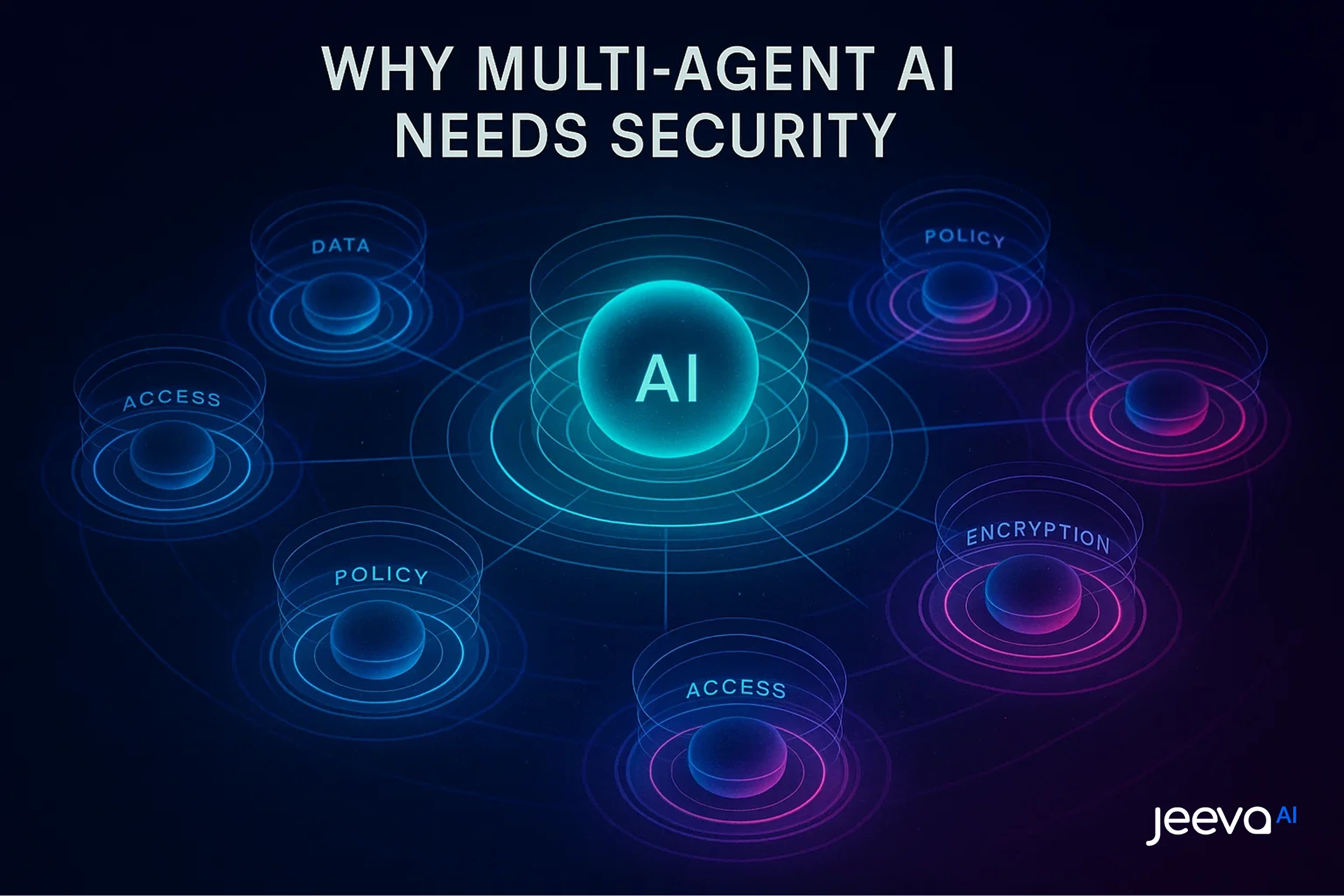
Multi-agent AI systems involve multiple specialized agents working simultaneously, each accessing different parts of your data ecosystem. This increases efficiency but also widens the security surface, making governance crucial. Without proper controls, unauthorized access, data leakage, or incorrect decision-making can occur.
Fact: 72% of AI-related enterprise breaches happen due to poor internal access controls.
Risks Multi-Agent AI Introduces
These risks grow when AI handles high-volume workflows.
Unmonitored agent-to-agent communication
Over-permissioned AI tasks
Exposure to sensitive customer data
Dependency on external data sources
Inconsistent audit trails
Automation errors at scale
Good security prevents these risks from impacting sales operations.
What Makes Multi-Agent Systems Different from Traditional AI?
Traditional AI typically operates as a single model performing one task. Multi-agent AI, however, breaks tasks into clusters handled by specialized agents research agents, enrichment agents, outreach agents, calendaring agents, and more. This structure increases efficiency but requires stronger segmentation.
Fact: Multi-agent systems reduce task load by 40% but require 2× more governance layers.
Unique Security Considerations
Multi-agent systems need safeguards because they:
Access more data sources
Trigger more automated actions
Pass information between agents
Require permission boundaries
Depend on real-time updates
Operate autonomously
Segmentation and monitoring are key to keeping workflows safe.
Single-Agent vs Multi-Agent AI Security Needs
Area | Single Agent | Multi-Agent |
|---|---|---|
Permission scope | Narrow | Wide |
Monitoring | Simple | Complex |
Attack surface | Smaller | Larger |
Automation level | Limited | High |
Logging needs | Basic | Detailed |
Enterprise fit | Moderate | Excellent |
How Should Enterprises Define Permission Levels for Each Agent?
Each agent should only access the data and systems required for its function. This prevents unauthorized actions and limits damage if one agent is compromised. Over-permissioning is one of the biggest AI security risks.
Fact: 1 in 3 enterprise AI platforms give agents more permissions than required.
Permission-Control Best Practices
Ensure every agent has a clearly defined scope.
Use “least privilege” access
Limit API calls per agent
Isolate sensitive datasets
Separate enrichment and outreach roles
Require approval for high-risk actions
Audit permissions quarterly
Strong permission control reduces the chance of harmful automation decisions.
How Can Enterprises Monitor Multi-Agent AI Behavior?
Monitoring ensures agents follow expected patterns. If an agent behaves unusually - such as sending too many emails or enriching unexpected fields systems must detect and stop it.
Fact: 60% of AI anomalies are detected only after causing user-facing issues.
What to Monitor Daily
Track key areas to identify risks early.
Outreach volume
Data access requests
API usage spikes
Lead scoring anomalies
Sequence timing irregularities
Unexpected integration calls
Continuous monitoring keeps workflows predictable and secure.
How Do You Secure Data Inside Multi-Agent Workflows?
Data flows between multiple agents, CRMs, and enrichment tools. Securing these flows prevents leaks and keeps customer information protected under US, UK, and CA laws.
Fact: 44% of AI-driven data leaks happen during inter-system transfers.
🟦 Related reading: CCPA & US Privacy Laws: What Sales Automation Platforms Must Do
Data Security Essentials
Use these controls to secure data flows.
Encrypt data at rest and in transit
Use region-specific storage
Mask sensitive personal data
Set data deletion rules
Rotate API keys regularly
Block unauthorized export actions
Data protection is the backbone of secure AI automation.
Data Sensitivity Levels in Sales AI Systems
Data Type | Sensitivity | Security Needed |
|---|---|---|
Business email | Low | Basic encryption |
Lead enrichment data | Medium | Permission controls |
Buyer intent signals | Medium | Access logging |
Personal phone numbers | High | Consent + masking |
Conversation logs | High | Restricted access |
Calendar events | High | Strong encryption |
How Should Multi-Agent Actions Be Logged for Auditability?
Audit logs help you understand what an agent did, when it did it, and why. This is required for compliance frameworks and risk management.
Fact: CCPA and GDPR require traceability for all personal data actions.
Logging Requirements
AI logs must capture things like:
Agent ID
Timestamp
Triggering event
Data accessed
System integrations invoked
Result or output of the action
Complete logs make troubleshooting and compliance easier.
How Can Enterprises Prevent AI Workflow Abuse or Misuse?
AI workflows can be exploited if not designed carefully—for example, sending mass emails to unintended contacts or enriching leads without permission. Safeguards must prevent agent misuse.
Fact: 29% of AI security incidents result from unintended automation triggers.
Abuse-Prevention Strategies
Protect the system from both mistakes and misuse.
Rate limit outbound actions
Restrict who can start automations
Block editing core workflows
Automate spam-prevention checks
Use two-person approval for mass actions
Disable unused integrations
These controls keep workflows safe and intentional.
How Do Privacy Laws Apply to Multi-Agent AI Systems?
Laws like CCPA, CPRA, PIPEDA, and UK GDPR treat AI actions as “processing personal data.” Multi-agent workflows must follow strict guidelines for collection, enrichment, deletion, and transparency.
Fact: By 2025, 70% of US residents will be covered by state privacy laws.
🟦 For deeper compliance guidance: Clean & Validate B2B Email Lists for US Requirements
Privacy Requirements to Follow
Multi-agent systems must enable:
Data deletion requests
Opt-out handling
Consent-aware enrichment
Transparent privacy disclosures
Secure role-based access
Support for user identity verification
Privacy compliance protects both brand reputation and operational safety.
Compliance Requirements for Multi-Agent AI
Requirement | Needed for US | Needed for UK | Needed for CA |
|---|---|---|---|
Access logs | ✔ | ✔ | ✔ |
Opt-out handling | ✔ | ✔ | ✔ |
Encryption | ✔ | ✔ | ✔ |
Data minimization | Suggested | Required | Required |
Right-to-delete | ✔ | ✔ | ✔ |
Identity verification | ✔ | ✔ | ✔ |
How Do You Build Secure Multi-Agent Automations at Scale?
As your sales team grows, more agents will handle more tasks making security even more important. Enterprise-grade automation must balance speed with safety.
Fact: Scaled automations increase security incidents by 35% without safeguards.
🟦 Related outreach framework: Multi-Channel Sales Automation with Agentic AI
Scaling Best Practices
Use these guardrails to scale safely.
Isolate high-risk automations
Add approval flows
Standardize templates
Automate QA checks
Monitor workflow performance
Build weekly review cycles
Scalable systems are secure systems.
Why Is Jeeva AI the Most Secure Multi-Agent Platform for Enterprise Sales?
Jeeva AI uses multi-agent separation, data permissioning, real-time monitoring, and SOC2-aligned governance to safely automate outbound workflows for enterprise teams in the US, UK, and Canada. Its compliance-first architecture allows large teams to scale automation confidently.
Fact: Teams using Jeeva AI report 50–70% fewer manual errors across outbound workflows.
🟦 Related enterprise adoption resource: Automated LinkedIn Outreach with Agentic AI
Why Jeeva AI Leads in Security
Jeeva AI delivers enterprise-grade protection.
Complete agent-level segregation
Real-time anomaly detection
SOC2-ready data controls
Permissioned data access
Secure multi-agent orchestration
Full activity logs for audits
For enterprise sales teams, Jeeva AI offers unmatched security and reliability.
Conclusion
Securing multi-agent AI workflows is essential for enterprise sales teams operating in the US, UK, and Canada. By controlling permissions, monitoring behavior, enforcing compliance, and protecting data, organizations can scale automation safely.
Jeeva AI leads the way with a secure, multi-agent architecture that keeps processes efficient, compliant, and protected helping sales ops teams adopt AI with confidence.
FAQ
Why do multi-agent AI systems need more security?
Does CCPA apply to AI agents used in sales?
What is the biggest risk in multi-agent workflows?
How can we monitor AI behavior safely?
Is Jeeva AI compliance-ready for US/UK/CA laws?