Introduction : Best Sales Automation Software Tools
Sales automation in 2026 is no longer about simple workflows or email sequences. Modern sales teams in the US, UK, Canada, Australia, and New Zealand rely on AI sales agents, data-driven automation, and multi-channel outreach engines to generate leads faster and close deals with less effort.
The new generation of tools uses agentic AI, a system where multiple AI agents work independently to automate prospecting, enrichment, outreach, follow-ups, and qualification. This shift is changing the entire sales pipeline.
This guide breaks down the best sales automation tools in 2026, their features, pricing, strengths, and where they fit into your sales strategy.
What Is Sales Automation Software?
Sales automation software helps teams reduce manual tasks and improve outreach quality using AI, workflows, and data. Instead of SDRs spending hours researching leads or writing emails, automation tools handle these tasks instantly.
Fact: Sales teams using AI automation see 45–70% faster outreach cycles.
What Sales Automation Tools Do?
Automate prospecting
Enrich contact & company data
Personalize cold emails
Manage multi-channel sequences
Score leads & detect intent
Sync everything to CRM
Why AI Sales Agents Are Leading Sales Automation in 2026
In 2026, sales teams need speed, scale, and accuracy and AI sales agents deliver all three. These agents work like digital SDRs, handling prospecting, outreach, replies, qualification, and meeting booking without human effort.
Unlike traditional automation, AI sales agents think, decide, and act on their own across the entire workflow. They don’t pause, forget, or slow down as volume grows. Fact: Global teams using AI sales agents reduce manual sales workload by 60%+.
Why AI Sales Agents Are Better
AI sales agents outperform traditional tools by owning the full sales workflow.
24/7 autonomous operation: Agents work nonstop across time zones without burnout.
Real-time data enrichment: Lead and company data stays fresh automatically.
Personalized message writing: Outreach adapts to role, company, and intent.
Inbox reply classification: Replies are read and categorized instantly.
Intent scoring: Buying signals are detected and scored in real time.
Calendar booking automation: Qualified leads book meetings without back-and-forth.
AI sales agents don’t just assist sales teams: they replace manual execution. That’s why they are becoming the backbone of sales automation in 2026.
Best Sales Automation Tools in 2026 (Top 10 Compared)
The sales automation market in 2026 is shaped by AI-driven workflows, agentic systems, and deep data enrichment. Modern tools no longer just assist reps - they automate large parts of the sales cycle.
Below are the Top 10 sales automation tools helping B2B teams scale across the US, UK, Canada, Australia, and New Zealand, ranked by real-world impact and capability.
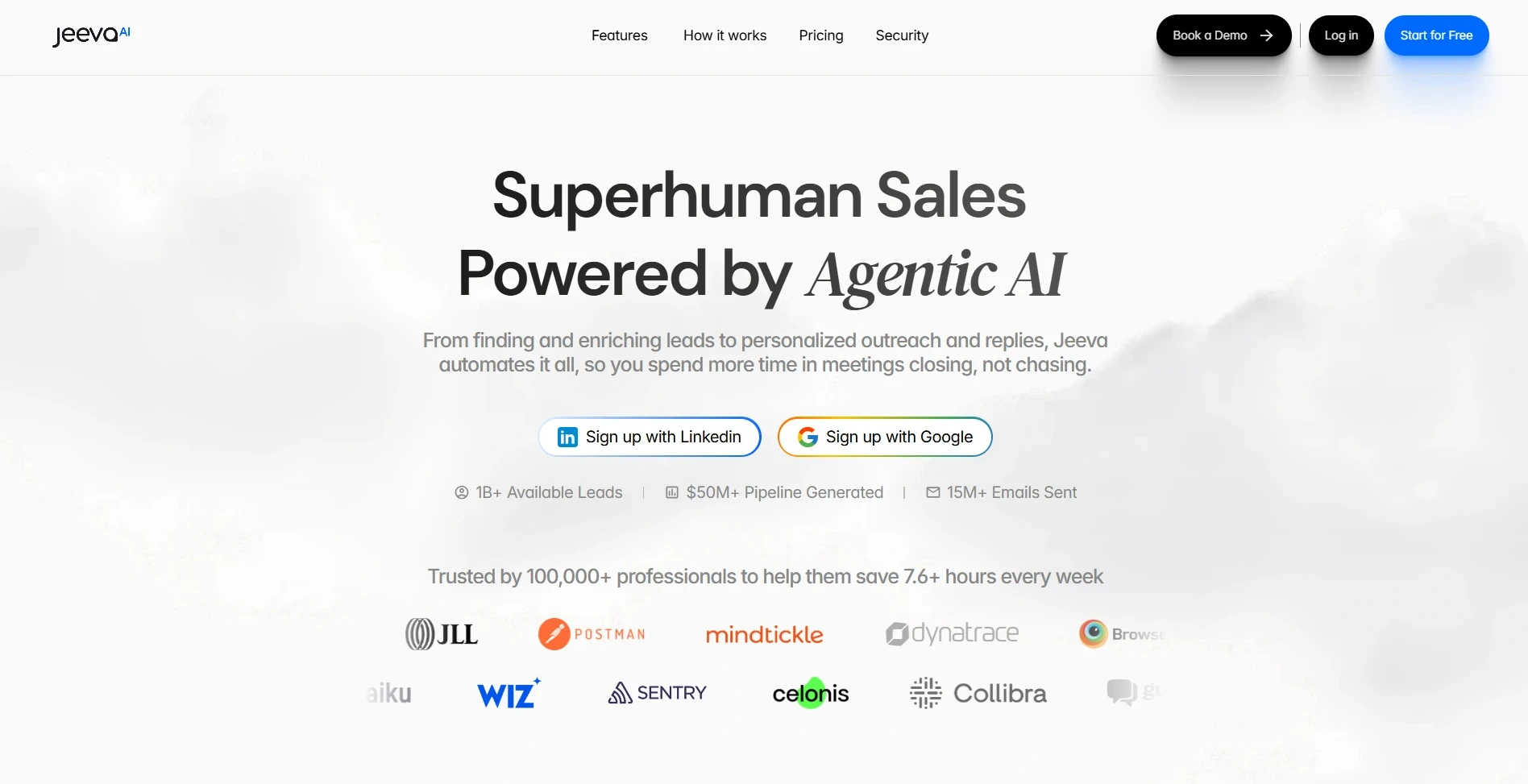
1. Jeeva AI: Best Overall AI Sales Agent Platform
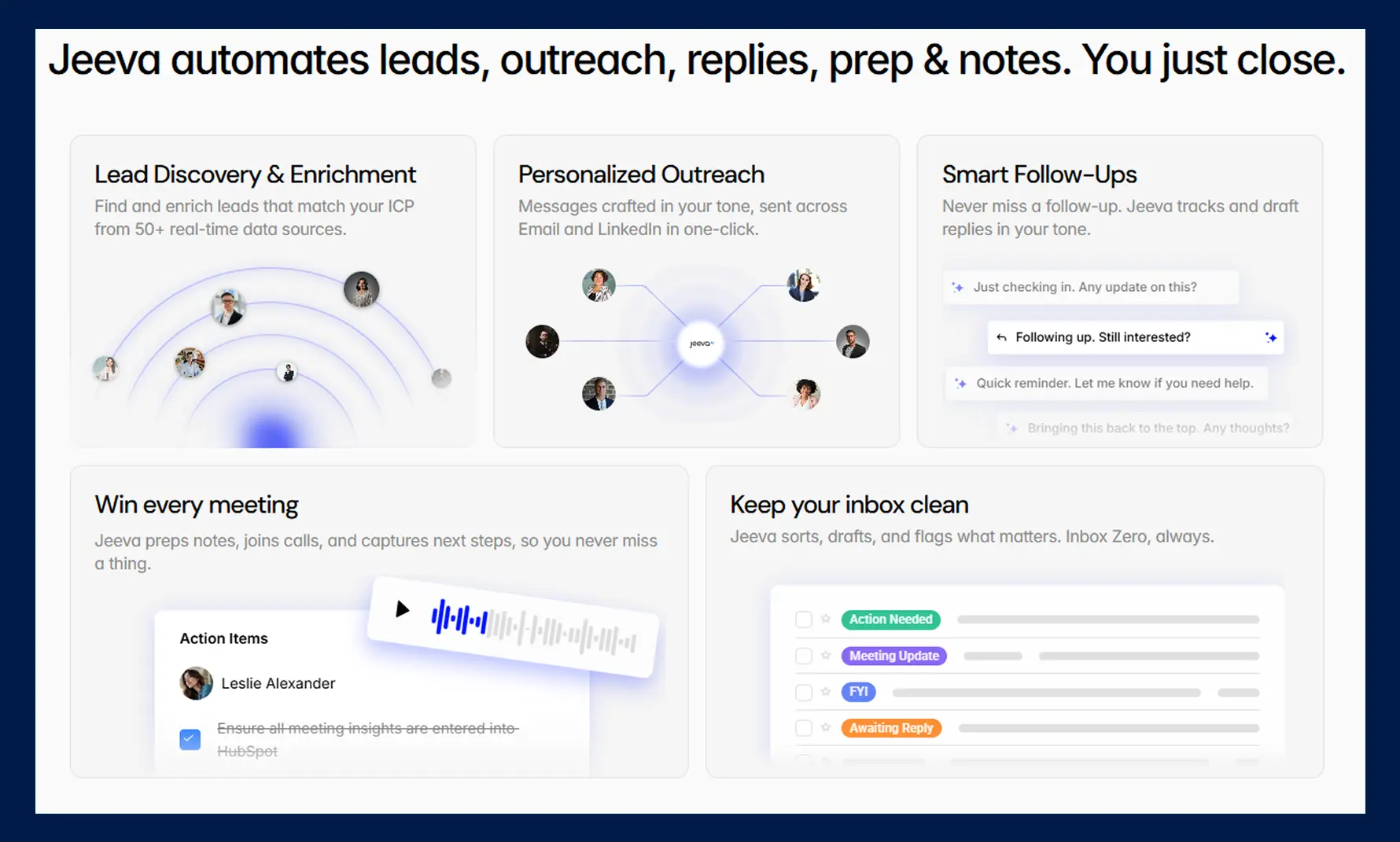
Jeeva AI stands out as the only true agentic AI sales platform. It uses six autonomous AI agents that work together like a full Sales Automation and Outreach handling everything from prospecting to booking meetings.
Unlike traditional tools, Jeeva runs the entire outbound workflow automatically with real-time decision-making.
Key Features of Jeeva AI
AI Prospector, Writer, Enrichment & Qualification agents: Each agent handles a specific Sales automation task autonomously
Smart Inbox AI: Reads, classifies, and responds to replies automatically
Calendar Booking Agent: Schedules meetings without back-and-forth
Real-time enrichment: Keeps company and contact data always fresh
Multi-channel sequences: Email, LinkedIn, and chat in one flow
Sales Automation: AI Outbound & AI Inbound Sales Agent
Why It’s #1: Jeeva delivers 3× more qualified meetings, runs a fully autonomous outbound engine, offers best-in-class personalization with built-in compliance, and is designed specifically for teams in the US, UK, CA, AUS, and NZ.
2. Salesforce Sales Cloud: CRM Automation
Salesforce remains the go-to platform for large enterprises that need deep CRM control, security, and reporting. Its AI features enhance workflows but still require significant configuration and human oversight.
Key Features of Salesforce
Einstein AI insights – Predictive analytics and recommendations
Workflow automation – Custom rules and process builders
Lead scoring – AI-assisted prioritization
Deal intelligence – Forecasting and pipeline health
Advanced reporting – Enterprise-grade analytics
Best For: Large sales organizations, strict enterprise compliance needs, and complex multi-region workflows.

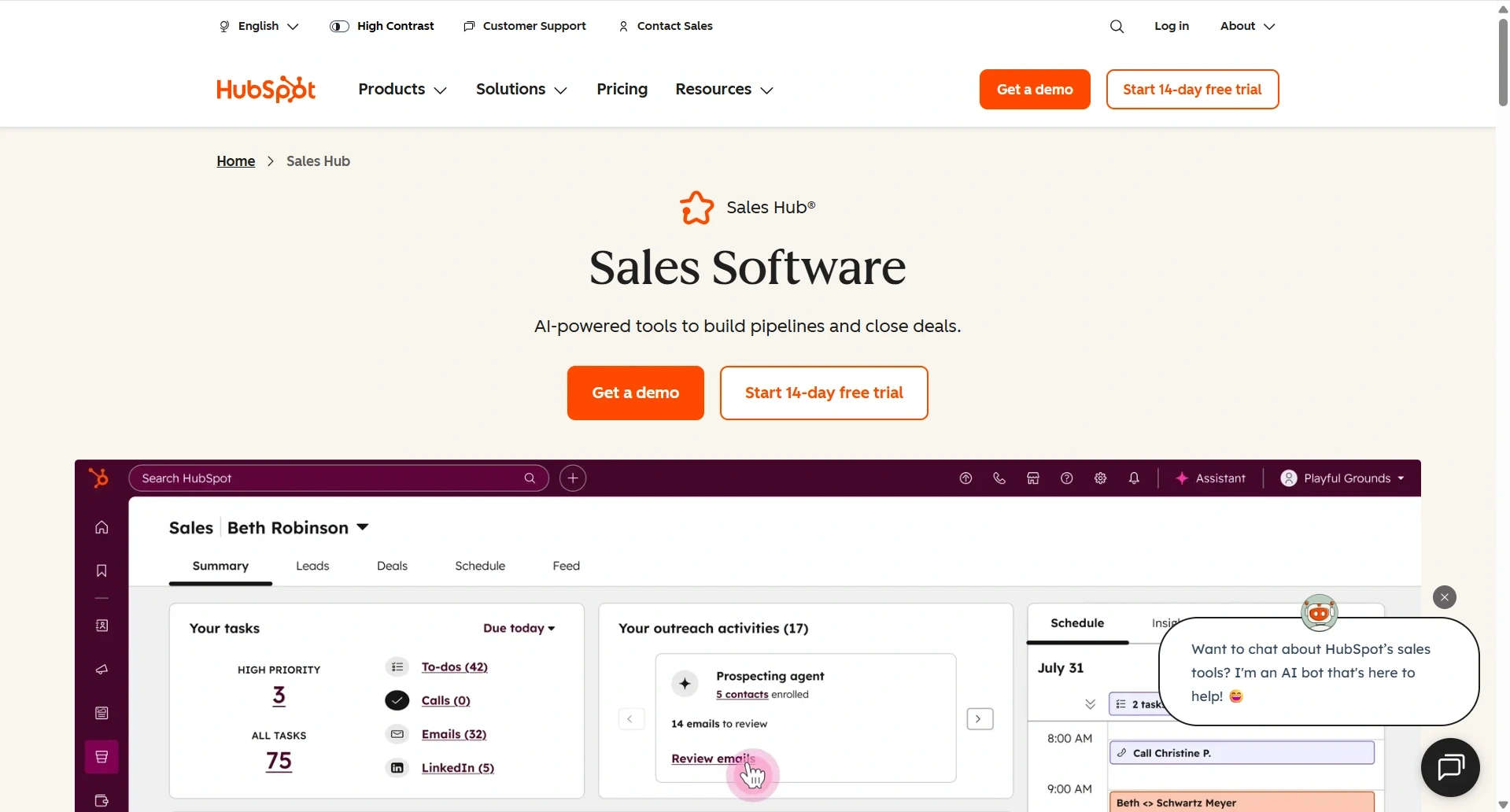
3. HubSpot Sales Hub
HubSpot is known for its ease of use and all-in-one approach. It combines CRM, marketing, and sales automation in a single platform, making it popular with growing teams.
Key Features of HubSpot Hub
Automated email sequences – Easy-to-build outreach flows
CRM + pipeline automation – Visual deal tracking
Predictive lead scoring – AI-assisted prioritization
Meeting booking – Built-in scheduling
Email tracking – Open and click insights
Best For: SMBs and mid-market teams looking for a simple, unified CRM and automation tool.
4. Apollo io
Apollo is widely used for its large contact database and outbound email automation. It’s strong on data access but less autonomous compared to agentic platforms.
Key Features of Apollo io
Huge contact data library: Broad prospect coverage
Email automation: Sequences and follow-ups
Buyer intent signals: Basic intent tracking
Sequence workflows: Outbound-focused automation
AI writing features: Email copy assistance
5. Clay
Clay excels at pulling data from many sources and stitching it together into custom workflows. It’s powerful for ops-heavy teams that enjoy building systems.
Key Features of Clay
Technographic & firmographic enrichment: Deep data signals
API-based data pulls: Hundreds of integrations
AI messaging personalization: Context-aware copy
Flexible automations: Build-your-own workflows
CRM integration: Sync enriched data
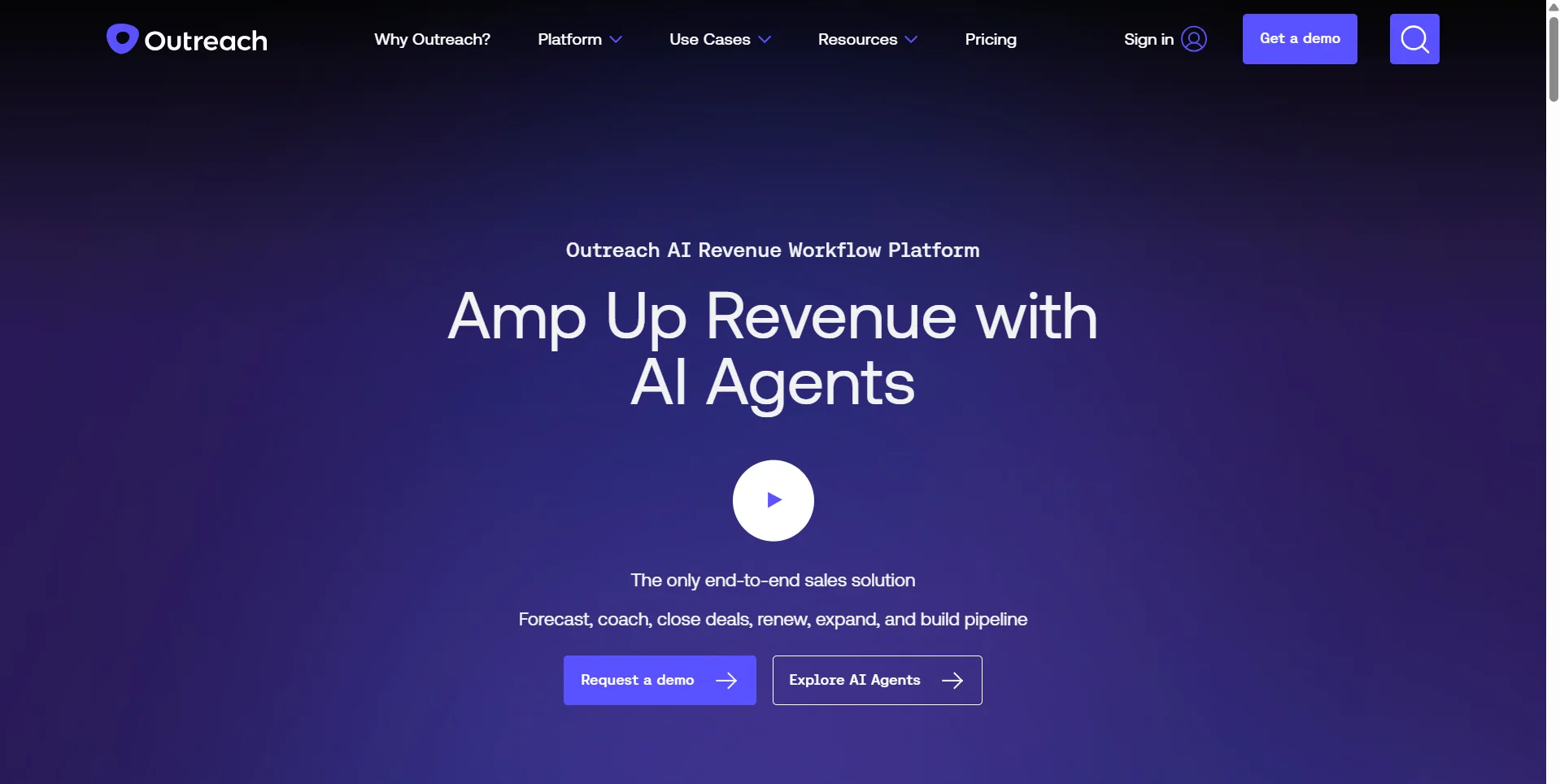
6. Outreach io
Outreach focuses on sequencing, forecasting, and pipeline management for large sales teams with structured outbound processes.
Key Features of Outreach io
AI-powered sequences: Multi-step outreach
Deal health scoring: Pipeline risk insights
Sales forecasting: Predictive revenue views
Analytics dashboard: Performance tracking
Large-team scaling: Enterprise-ready
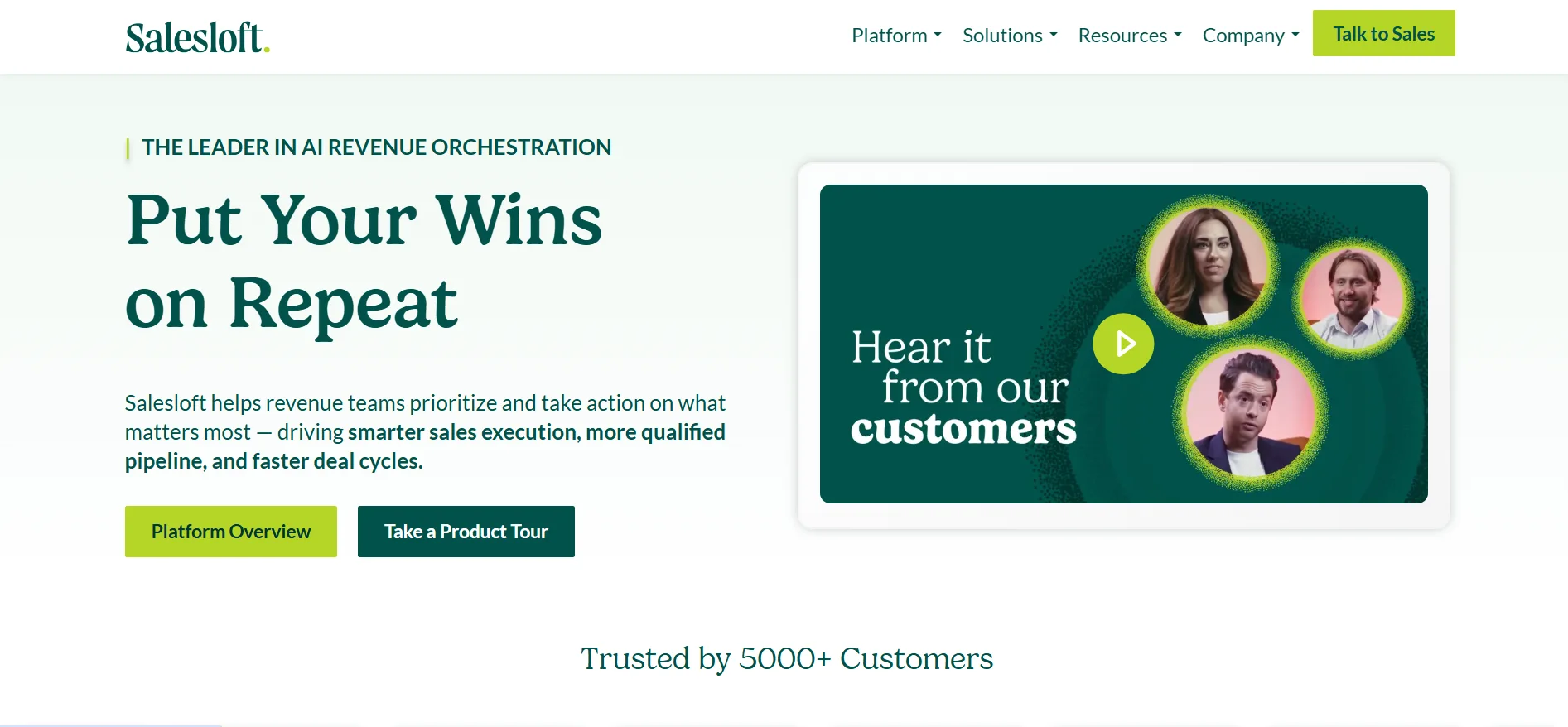
7. Salesloft
Salesloft is built around cadences and rep productivity, helping teams manage email, calls, and SMS in one place.
Key Features of Salesloft
Cadence builder: Structured outreach flows
AI email suggestions: Writing assistance
Call + email + SMS automation: Multi-channel support
Conversation insights: Call and email analysis
Pipeline governance: Manager visibility
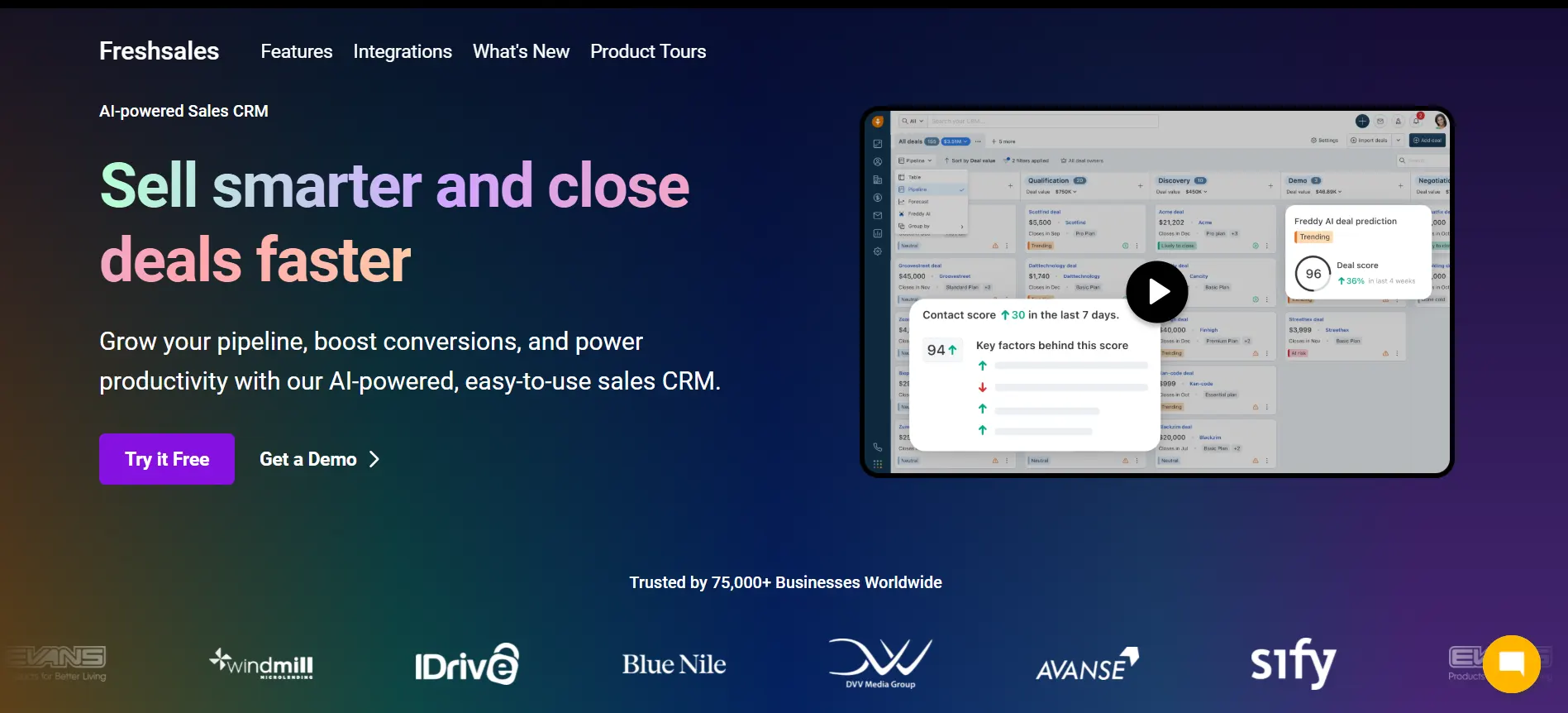
8. Freshsales (Freshworks)
Freshsales offers solid CRM automation at a lower price point, making it attractive for smaller teams with basic needs.
Key Features of Freshsales
Lead scoring: Rule-based prioritization
Workflow automation: Simple triggers
Email sequences: Basic outreach
Contact timelines: Interaction history
Built-in phone dialer: Calling support
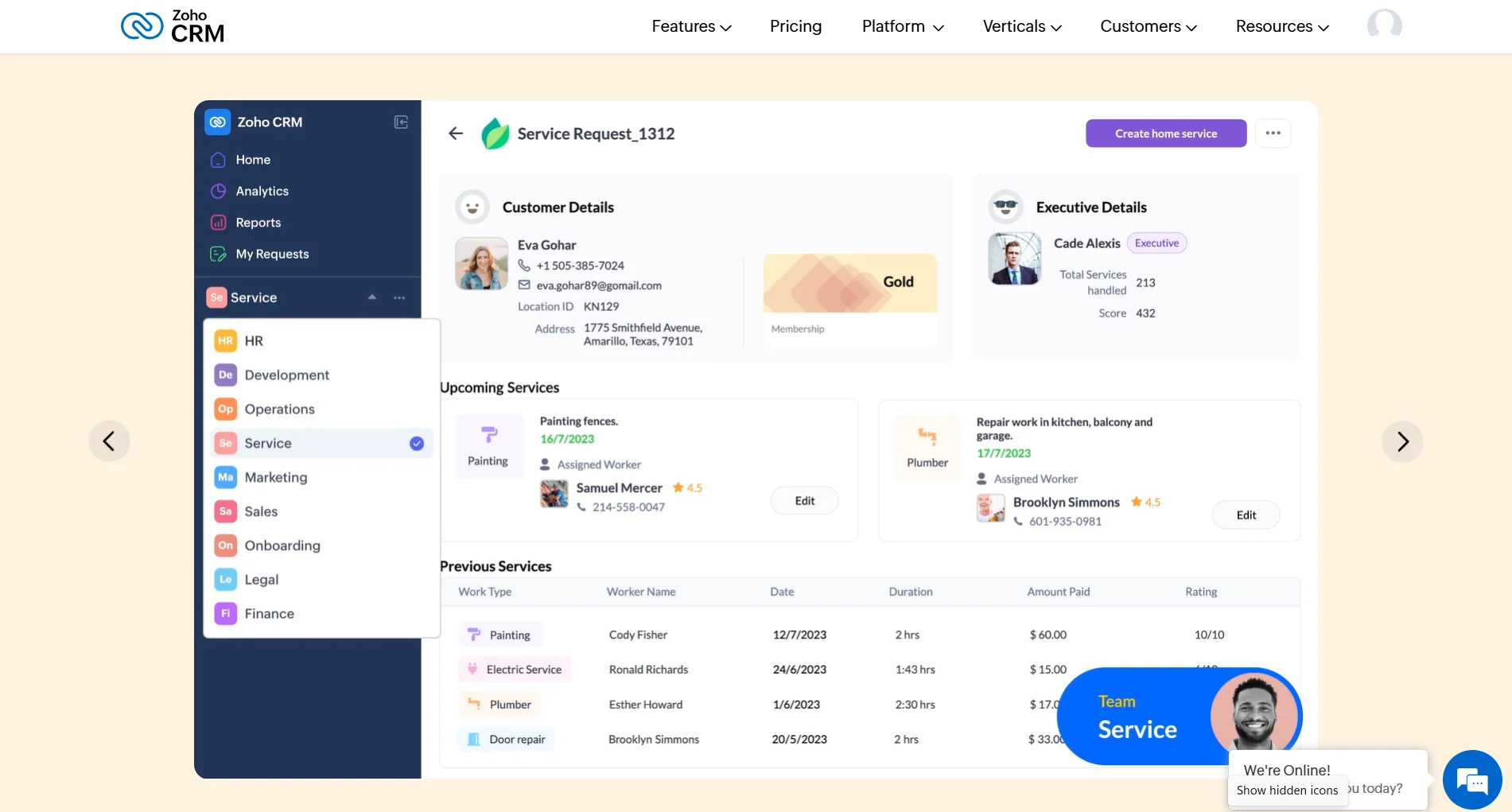
9. Zoho CRM: Best Flexible & Customizable Automation
Zoho is highly customizable and works well for niche industries or teams with unique workflows.
Key Features of Zoho CRM
Blueprint automation – Custom process flows
AI scoring – Basic AI prioritization
Multi-channel outreach – Email, phone, social
Custom CRM modules – Tailored data models
Workflow triggers – Event-based actions
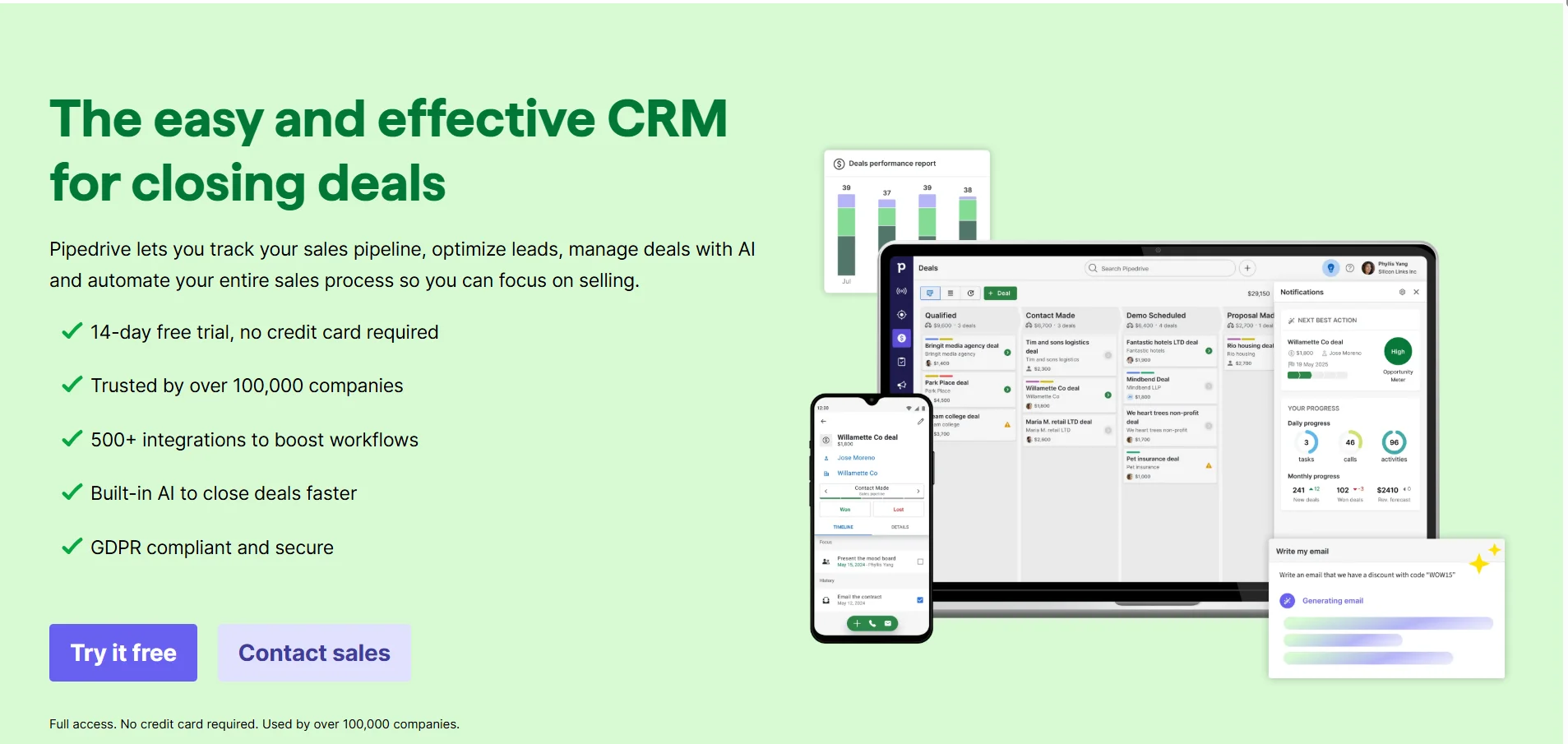
10. Pipedrive: Best for Simple Deal Management
Pipedrive keeps things simple with a visual pipeline and lightweight automation, ideal for outbound-focused teams.
Key Features of Pipedrive
Visual pipeline: Easy deal tracking
Email & task automation: Basic workflows
Insights + reporting: Sales visibility
Lead inbox: Centralized lead view
AI assistant: Simple recommendations
Final Takeaway
Most sales tools in 2026 still assist reps. Jeeva AI replaces manual SDR work entirely using true multi-agent automation from prospecting to meetings. That’s why it leads this list as the best overall AI sales automation platform for modern B2B teams.
Comparison Table: Best Sales Automation Tools 2026
Tool | Best For | AI Level |
|---|---|---|
Jeeva AI | Full AI sales agent system | Multi-Agent |
Salesforce | Enterprise CRM automation | Advanced |
HubSpot | All-in-one CRM + automation | Medium |
Apollo.io | Prospecting + outreach | Medium |
Clay | Data enrichment workflows | High |
Outreach.io | Enterprise sequencing | Medium |
Salesloft | Cadence automation | Medium |
Freshsales | Budget CRM + automation | Medium |
Zoho CRM | Customizable automation | Medium |
Pipedrive | Simple pipeline automation | Low–Medium |
What Sales Tasks Can Be Automated in 2026?
In 2026, sales automation goes far beyond basic email sequences. AI sales agents can now handle almost the entire SDR workflow from finding leads to booking meetings.
These systems work continuously, follow clear rules, and learn from data, making them ideal for repetitive sales tasks. This allows human reps to focus on real conversations and closing deals instead of admin work.
Fact: Nearly 80% of repetitive SDR tasks can now be automated using AI.
Tasks AI Handles
These are the most common sales tasks fully automated by AI agents.
Lead discovery: Finds new prospects that match your ideal customer profile.
Enrichment: Updates company and contact details in real time.
Email writing: Creates personalized emails based on role and intent.
Follow-up sequences: Sends smart follow-ups at the right time automatically.
Reply analysis: Reads replies and understands interest or objections.
Meeting scheduling: Books meetings without back-and-forth emails.
AI takes care of repetitive sales work so reps don’t have to. Sales teams move faster with less effort and fewer mistakes.
Key Features to Look for in Automation Tools (2026 Checklist)
Not all sales tools offer true automation. Many still rely on templates, manual triggers, or constant human input. In 2026, the best tools use AI agents that can make decisions and take action on their own.
Choosing the right platform is critical to avoid partial automation and tool overload.
Must-Have Features in Sales Automation
These features separate real AI automation from basic sales tools.
Real-time AI enrichment: Keeps lead data accurate without manual updates.
Personalized messaging: Writes messages tailored to each prospect.
Multi-agent automation: Different AI agents handle different sales tasks.
CRM syncing: Automatically updates all lead and deal information.
Compliance tools: Supports regional data and outreach regulations.
Inbox intelligence: Reads, classifies, and responds to replies automatically.
The right automation tool runs sales workflows end to end. This is what allows teams to scale faster without adding more headcount.
KPI Targets & Dashboards to Track Success
KPI | Definition | Target at 90 Days Post-Launch |
Reply Rate | (Positive + Neutral replies) / Emails Sent | > 15% |
Time-to-Meeting | Lead creation → Meeting booked | < 24 hours |
Cost per SQL | Total platform spend / SQLs | ↓ 30% vs baseline |
Pipeline Velocity | SQL → Closed-Won (days) | ↓ 20% |
How AI Improves Lead Generation Quality?
AI improves lead generation quality by analyzing large data sets that humans can’t review manually. Instead of guessing who might be a good lead, AI evaluates real signals to find prospects that truly match your ideal customer.
It looks at company data, buyer behavior, intent, and past outcomes to reduce noise. This means fewer bad leads and more sales-ready conversations. The result is higher conversion and less wasted effort.
Data Types Used:
AI combines multiple data signals to judge lead quality accurately.
Technographics: Identifies tools and software a company already uses.
Firmographics: Analyzes company size, industry, revenue, and location.
Intent signals: Detects buying interest from searches and online behavior.
Website behavior: Tracks visits to pricing, demo, or product pages.
CRM history: Learns from past wins, losses, and deal patterns.
Engagement scoring: Measures how actively a lead interacts with outreach.
Better data leads to better targeting. AI ensures sales teams talk to the right companies at the right time.
👉 Learn about technographics → Technographic Signals to Prioritise Leads in US Enterprise Sales
Multi-Channel Automation Trends for 2026
In 2026, lead generation is no longer email-only. Buyers move across LinkedIn, chat, SMS, and calendars and AI follows them. The best platforms coordinate all channels into one workflow.
This creates smoother conversations and fewer dropped leads. Multi-channel automation increases visibility and response without extra manual work.
What’s Changing
AI now manages conversations across multiple channels together.
Chat-based sequences: AI engages leads through website and in-app chat.
AI-driven LinkedIn messaging: Personalized messages and follow-ups on LinkedIn.
SMS reminders: Short reminders for meetings or follow-ups.
Voice AI outreach: AI-powered calls for early engagement.
Calendar agents: AI handles scheduling without human back-and-forth.
Behavior-based triggers: Actions change based on how leads respond.
Multi-channel automation meets buyers where they are. It creates faster responses and more natural sales conversations.
👉 Multi-channel automation → Multi-Channel Outreach & Automation Engines
AI Automation for Team Productivity
AI automation removes repetitive work that slows sales teams down. Tasks like enrichment, follow-ups, and inbox sorting no longer need human time.
This gives reps more hours each day to focus on real conversations and deals. Productivity increases without longer workdays. Teams move faster with less stress.
Productivity Boosters
AI takes care of daily tasks that usually consume hours.
Faster prospecting: Leads are found and enriched automatically.
No manual enrichment: Data updates happen in real time.
Automatic follow-ups: AI sends reminders and nudges on schedule.
Smart inbox replies: AI reads and responds to common messages.
Predictive scoring: Leads are prioritized based on likelihood to convert.
Meeting automation: Scheduling happens without coordination emails.
AI automation gives time back to sales teams. Less busywork means better focus, energy, and results.
Compliance & Privacy Considerations
AI sales automation must follow strict privacy and outreach laws to be safe and scalable. Regulations like GDPR (EU/UK), CCPA (US), CASL (Canada), and the Australia Spam Act define how data can be collected, stored, and used for outreach. If AI ignores these rules, companies risk fines, domain damage, and loss of trust.
The right AI platform builds compliance into every action automatically. This allows teams to scale outreach globally without legal risk.
Compliance Features Needed
These features ensure AI-led outreach stays legal and trustworthy.
Opt-out automation: Automatically stops outreach when users unsubscribe.
Suppression lists: Prevents messaging blocked or restricted contacts.
Data residency controls: Stores and processes data in approved regions.
Permission-based outreach: Ensures messages follow consent rules.
Encryption: Protects lead data in transit and at rest.
Activity logs: Maintains full records for audits and compliance checks.
Compliance is not optional - it’s foundational. AI platforms must protect data, respect consent, and follow regional laws by design.
👉 CCPA compliance guide → CCPA-Compliant Lead Enrichment in the US
Why Jeeva AI Leads the 2026 Market?
In 2026, sales teams need more than automation - they need autonomous systems that work end to end. Jeeva AI stands out by combining multi-agent architecture, real-time enrichment, and fully autonomous workflows inside the CRM and inbox. Instead of assisting SDRs, Jeeva replaces repetitive SDR work entirely.
This allows teams to scale globally while staying compliant and highly personalized. Jeeva delivers faster pipeline growth at a lower cost than traditional sales stacks.
Why It’s #1 in the Sales Automation
Jeeva AI outperforms other platforms on scale, autonomy, and ROI.
6 autonomous sales agents: Each agent handles a specific Sales function.
Handles prospecting → meetings: Covers the full sales workflow end to end.
GEO-compliant automation: Built-in compliance for US, UK, CA, AUS, and more.
Works across all regions: Supports global outreach without manual setup.
High personalization: Messages adapt to role, intent, and region.
Lowest cost per qualified meeting: Delivers higher ROI than manual teams.
Jeeva AI doesn’t just automate sales - it runs it autonomously. That’s why it leads the agentic AI market in 2026.
Jeeva AI vs Industry Standards
Capability | Good | Great | Jeeva AI |
Data Freshness Lag | ≤ 7 days | ≤ 24 hours | Real-time (<1 sec) |
Channels Automated | Email + Call | Email + Call + Social | Email, LinkedIn, Call, SMS, WhatsApp |
AI Personalization | Merge Tags | Contextual Snippets | Dynamic Storylines |
Average Time-to-Demo | 7–14 days | 3–5 days | < 24 hours |
Compliance Coverage | GDPR only | GDPR + TCPA | GDPR, TCPA, SOC 2 |
From Busywork to Booked Meetings - Summing Up
Sales automation success in 2025 hinges on speed, data accuracy, and compliance, deeply embedded in every touchpoint. Legacy CRM bolt-ons and manual sequences cannot keep pace with buyer expectations or regulatory demands.
Jeeva AI’s agentic AI sales platform uniquely integrates real-time enrichment, multichannel outreach, and compliance to empower revenue teams so they spend more time closing deals and less time clicking buttons.
Conclusion
Sales automation in 2026 is defined by AI agents, multi-channel workflows, and data-driven personalization. The best teams use automation to scale outbound, enrich leads, qualify faster, and generate predictable pipeline growth.
Platforms like Jeeva AI, Clay, Apollo, and HubSpot each offer unique strengths - but only Jeeva AI delivers a complete agentic AI stack that automates the entire outbound sales process end-to-end.
The companies that adopt AI-powered automation now will dominate B2B sales in 2026–2030.
FAQ
What is the best AI sales automation tool in 2026?
Can AI sales tools replace SDRs?
Which regions benefit most from sales automation?
What features matter most in automation tools?
How does sales automation improve pipeline?