In 2026, AI sales pipeline automation has transitioned from a nice-to-have to a strategic imperative for B2B teams. Modern automation doesn’t just eliminate manual tasks - it optimizes decision-making, accelerates pipeline velocity, and boosts conversion outcomes by leveraging AI-driven data enrichment, predictive scoring, and personalized multi-channel engagement.
This guide explains what AI pipeline automation is, why it matters for revenue teams, and how to get started with a practical, step-by-step implementation framework.
What Is AI Sales Pipeline Automation?
AI sales pipeline automation uses intelligent software to manage and execute repetitive sales activities such as lead enrichment, routing, sequencing, follow-ups, and meeting scheduling. Unlike traditional automation, AI-driven systems analyze behavioral signals, historical data, and real-time engagement to determine next-best actions.
This allows pipelines to adapt dynamically as buyer intent changes. As a result, sales teams spend less time on manual execution and more time on strategy, conversations, and deal progression.
Why AI Pipeline Automation Matters in 2026
In 2026, AI pipeline automation is no longer just an operational efficiency tool. it is a strategic requirement for scaling revenue. Sales teams operate across more channels, handle higher lead volumes, and manage increasingly complex buying groups. Manual workflows and rule-based automation struggle to keep up with this complexity.
AI-assisted pipeline workflows reduce execution delays by responding instantly to buyer actions and prioritizing high-intent opportunities. They also maintain cleaner, more accurate CRM data, which improves forecasting and decision-making.
Teams that adopt AI pipeline automation gain consistency, speed, and predictability in revenue execution, while teams that rely on manual processes face growing performance gaps.
Why Automate the Sales Pipeline? Impact by Role
The benefits of AI-powered pipeline automation cascade across sales, revenue operations, and leadership roles:
Benefit | KPI Lift (2024-25 Benchmarks) | What It Means For… |
Admin offload | Reps reclaim 2–3 hours/day by automating logging, routing, and note-taking | • CRO/VP Sales: Gain over 1 extra selling day per week • RevOps: Cleaner, more reliable CRM data |
Real-time enrichment | Lead conversion rates jump ≈ 25% with automated data updates | • Demand-Gen: Higher MQL to SQL pass-through • Founders: Data-driven decisions without expanding headcount |
AI-written outreach | Personalized emails deliver 35% more bookings | • Sales Leaders: Larger pipeline per rep |
Predictive prioritization | ZoomInfo Copilot users capture ~25% more pipeline & 60% more meetings | • C-suite: Confidence reps focus on highest-value accounts |
Signal-driven cadence | Regie.ai’s “Signal Selling” auto-adjusts based on 100+ buyer signals | • RevOps: Sales sequences self-optimize, no manual A/B testing |
How AI Powers Sales Pipeline Automation
AI-powered sales pipeline automation works by combining data intelligence, predictive models, and execution logic into a single continuous system. Instead of relying on static rules, AI evaluates signals in real time and adapts actions across enrichment, scoring, outreach, and deal progression.
This allows pipelines to move faster, stay accurate, and respond dynamically to buyer behavior.
Core AI Capabilities Behind Pipeline Automation
Continuously enriches CRM data with firmographic and intent signals
Scores leads dynamically using ICP fit and engagement data
Generates personalized outreach across email and social channels
Adjusts cadence timing based on real-time buyer responses
Recommends next-best actions to reduce execution delays
Tracks conversions and retrains models automatically
Together, these capabilities create a self-improving pipeline engine that prioritizes the right accounts, executes consistently, and compounds performance over time.
Best Practices for AI Pipeline Automation Adoption
AI pipeline automation works best when adoption is deliberate and phased. Teams should focus on workflows that deliver immediate efficiency while maintaining control over personalization, compliance, and data quality. A measured rollout ensures automation improves execution without creating operational or regulatory risk.
Key Best Practices for AI Pipeline Automation
Start with repetitive, high-volume sales workflows
Automate routing, follow-ups, and scheduling first
Maintain human oversight for messaging and compliance
Continuously clean and enrich CRM data
Track performance impact before expanding automation
Scale automation based on proven efficiency gains
Following these practices allows teams to adopt AI pipeline automation safely and effectively. Gradual expansion based on measurable wins leads to sustainable performance improvements and long-term success.
Competitive Landscape: Where Does Jeeva AI Fit?
Platform | AI Focus | Data Foundation | Outreach Channels | Latest 2025 Milestone |
Jeeva AI | Autonomous agents that find → enrich → engage in one loop | 150M contacts + live enrichment | Email, LinkedIn, phone, Slack, SMS | Launched “Unibox” reply hub & auto A/B optimizer |
ZoomInfo Copilot | Generative AI insights & buying-signal alerts | 180M contacts | Email, phone | Users report 25% more pipeline within 6 months |
Apollo AI Platform | AI Research Agent + Chrome assistant | 210M contacts / 35M firms | Email, voice, social | 46% more meetings, 35% more bookings |
Claygent (Clay) | API-first research agents across 130+ data sources | Bring-your-own + 130 providers | Email, Slack, webhooks | 6× revenue growth in 2024; $40M Series B funding |
Clearbit Breeze | AI-native enrichment inside HubSpot | 250+ data providers | Email, site chat | Relaunched with intent reveal |
Regie One | “Signal Selling” agentic sequencing | Aggregated 3rd-party + custom signals | Email, LinkedIn, phone | Live signal-driven cadence engine |
Jeeva’s differentiator: a fully autonomous flywheel that integrates data enrichment and outreach within a single agent eliminating the “swivel-chair” inefficiencies between enrichment and engagement modules competitors still struggle with. This architecture is ideal for lean GTM teams (10–100 reps) targeting outsized pipeline growth.
How Can Founders, CROs, and RevOps Leaders Implement AI Pipeline Automation Effectively?
Implementing AI sales pipeline automation requires a structured rollout that prioritizes data readiness, workflow impact, and team adoption. When approached methodically, AI becomes a reliable revenue execution system rather than an experimental tool.
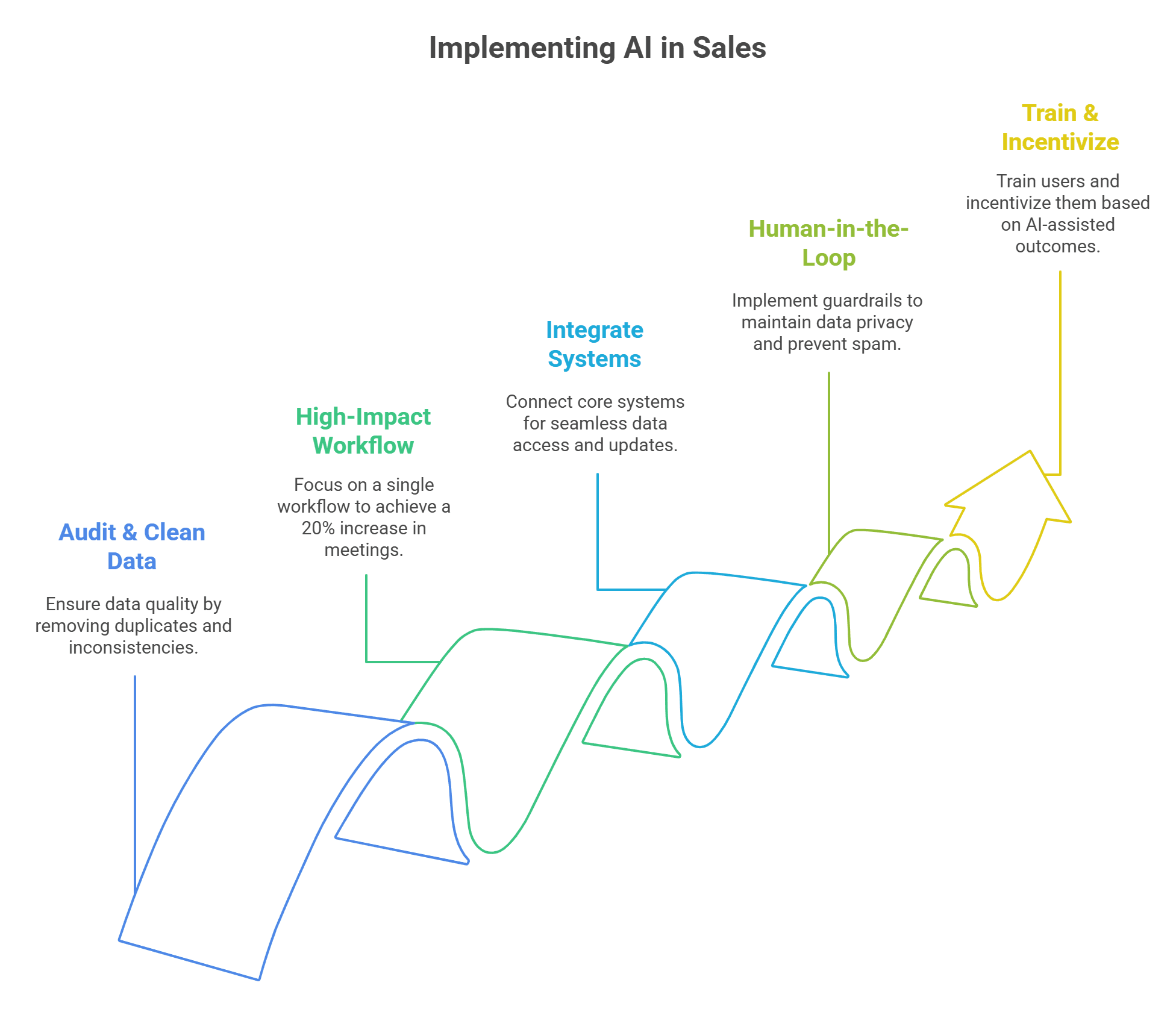
This five-step blueprint outlines how leadership teams can deploy AI automation with control, accountability, and measurable outcomes.
Step-by-Step AI Pipeline Automation Implementation
Audit and clean CRM data to eliminate duplicates and inconsistencies
Start with one high-impact workflow such as outbound prospecting or enrichment handoffs
Integrate CRM, marketing automation, calendars, and internal communication tools
Add human-in-the-loop guardrails for compliance, quality, and activity limits
Train teams and align incentives with AI-assisted pipeline performance
Following this approach helps teams validate results early and reduce operational risk. With clean data, connected systems, and aligned incentives, AI pipeline automation scales predictably and supports long-term revenue growth.
KPI Benchmarks to Track
KPI | Expected Improvement | Source |
Meetings per rep lift | 30–50% increase within the first quarter | Apollo & ZoomInfo User Data |
Pipeline volume | +25% growth | ZoomInfo Copilot |
Lead-to-SQL conversion rate | +10–25% uplift post automated enrichment | Marketo Study |
Time saved per rep | 2–3 hours per day reclaimed | Salesforce |
What Are the Common Pitfalls in AI Pipeline Automation and How Can Teams Avoid Them?
AI pipeline automation can fail when implementation focuses on tools instead of systems. Common pitfalls usually stem from poor integration, lack of oversight, or missing compliance safeguards. Identifying these risks early helps teams avoid inefficiencies and scale automation safely.
Common Pitfalls and How to Avoid Them
Tool bloat from disconnected sales and marketing systems
Enforce platform consolidation and shared data context
AI-generated messaging that feels generic or robotic
Add human review to refine tone and relevance
Compliance blind spots across outreach channels
Prioritize consent management and opt-outs everywhere
Avoiding these pitfalls ensures AI automation strengthens pipeline execution rather than fragmenting it. With integrated systems, human oversight, and compliance-first design, teams can scale automation confidently and sustainably.
Common Pitfalls and How to Avoid Them
Pitfall | Risk | Mitigation |
Tool bloat | Multiple disconnected tools cause context switching and lost time | Consolidate around a single agentic platform like Jeeva AI |
Cold-start data gaps | AI cannot score leads if data is incomplete | Schedule nightly data enrichment jobs |
Over-automation tone-deafness | Robotic emails reduce buyer trust | Mix AI drafts with rep voice reviews every sprint |
Compliance blind spots | Violations of privacy laws risk penalties | Conduct vendor assessments and enable opt-out logic by default |
Key Takeaways
AI-powered sales pipeline automation reclaims 2–3 hours of selling time per rep daily, turning 70% of admin overhead into revenue-driving activities.
Automated, real-time enrichment boosts lead conversion rates by approximately 25%, while AI-generated outreach messages increase meeting bookings by 35%.
Platforms like Jeeva AI integrate autonomous data enrichment and engagement into a single agent, eliminating operational silos and enhancing productivity.
Following a structured 5-step implementation plan ensures quick wins and mitigates risks around data quality and compliance.
Consistent KPI tracking and human oversight help maintain pipeline quality and AI effectiveness over time.
FAQ
What results can teams expect after implementing AI pipeline automation?
How fast can you see results from AI pipeline automation?
Does AI pipeline automation replace sales reps?
Is CRM data quality important for AI automation success?
What metrics should I monitor to measure AI automation success?