Introduction:
AI lead generation and sales automation have changed the way companies find customers in 2026. Instead of spending hours researching prospects, writing cold emails, and manually following up, businesses in the US, UK, Canada, Australia, and New Zealand now use AI tools that can work automatically and intelligently.
These tools collect data, identify the right people, write personalized messages, handle replies, and book meetings - all with little human effort. This guide explains everything about AI lead generation and AI sales automation in simple, clear language.
It includes definitions, examples, tools, workflows, best practices, and why platforms like Jeeva AI are leading the market.
What Is AI Lead Generation and How Does It Work?
AI lead generation uses artificial intelligence to find potential customers, analyze their information, and reach out to them automatically. Instead of doing everything manually, AI tools collect data, check if a person matches your target customer, and help start a conversation.
AI works by reading large amounts of online data, understanding patterns, and making decisions - such as who to contact and what message to send.
Fact: AI can analyze over 10 million data points per second, making it far faster than any human team.
How AI Lead Generation Works
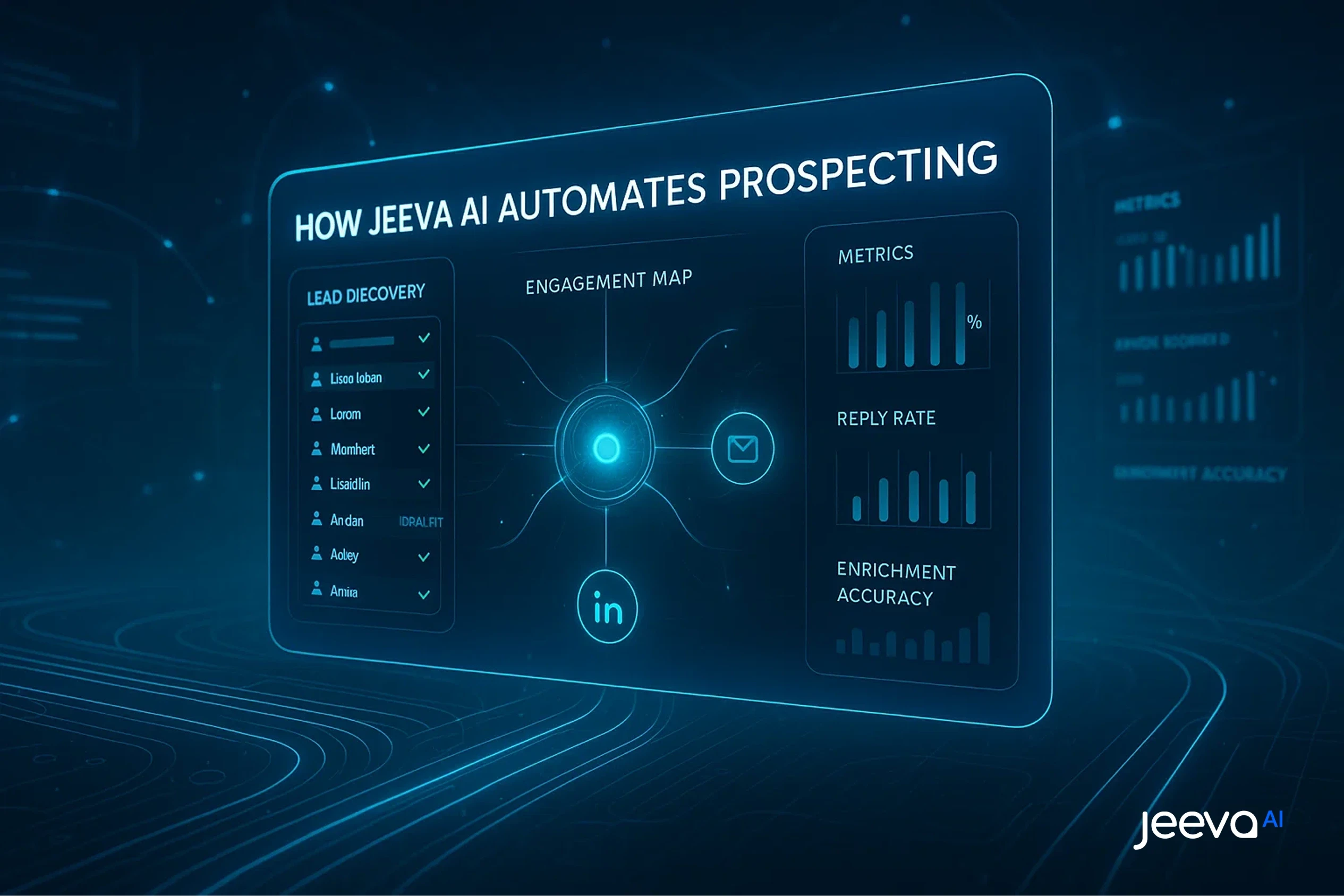
AI lead generation follows a simple but powerful flow:
Finds potential leads across the internet
Enriches leads with accurate data
Checks if they fit your Ideal Customer Profile (ICP)
Personalizes outreach messages
Sends multi-channel messages
Tracks replies and books meetings
AI turns the entire process into an automatic system.
Learn more about automated multi-channel outreach: Multi Channel Sales Automation Outreach
Why Is AI Lead Generation Essential in 2026?
Sales teams today need to move faster. Manual lead generation takes too much time and often produces low-quality results. AI makes the process efficient, accurate, and scalable.
In 2026, buyers receive more messages than ever, so personalization and timing matter a lot. AI helps you stand out because it understands buyer behavior and sends better messages.
Fact: Businesses using AI lead generation see 3× more qualified leads compared to traditional methods.
Why Companies Are Switching to AI Lead Gen
Companies adopt AI because it:
Saves hours of research time
Improves lead accuracy
Personalizes messages instantly
Sends follow-ups automatically
Works across multiple channels
Reduces hiring costs for SDR teams
AI helps every company grow faster with fewer resources.
What Problems Does AI Solve in Sales Prospecting?
Sales prospecting can be slow, repetitive, and frustrating. SDRs often spend 65–75% of their day researching leads instead of talking to buyers. AI removes these bottlenecks.
AI handles data tasks, writing tasks, and repetitive messaging, allowing reps to focus on real conversations.
Fact: Sales teams lose 30–40% productivity due to manual prospecting alone.
Common Prospecting Problems AI Fixes
AI helps solve the biggest issues, such as:
Slow research and data collection
Low personalization
Missed follow-ups
Wrong leads and poor targeting
Low outreach volume
Repetitive admin tasks
AI ensures nothing is missed and everything moves faster.
AI Lead Generation vs Traditional Lead Generation: What’s the Difference?
Table: Traditional vs AI Lead Generation
Feature | Traditional Lead Gen | AI Lead Gen |
|---|---|---|
Speed | Slow | Instant |
Personalization | Low | Very High |
Data Accuracy | Medium | High |
Follow-ups | Manual | Automatic |
Cost | High | Lower |
Scalability | Limited | Unlimited |
Fact: AI can generate 50–300% more outreach volume than human SDRs alone.
Why AI Lead Gen Performs Better ?
AI outperforms manual efforts because it:
Processes more data
Creates smarter messages
Responds instantly
Never gets tired
Works across channels
Learns and improves over time
AI brings accuracy, speed, and consistency to lead generation.
What Types of AI Power Modern Lead Generation Tools?
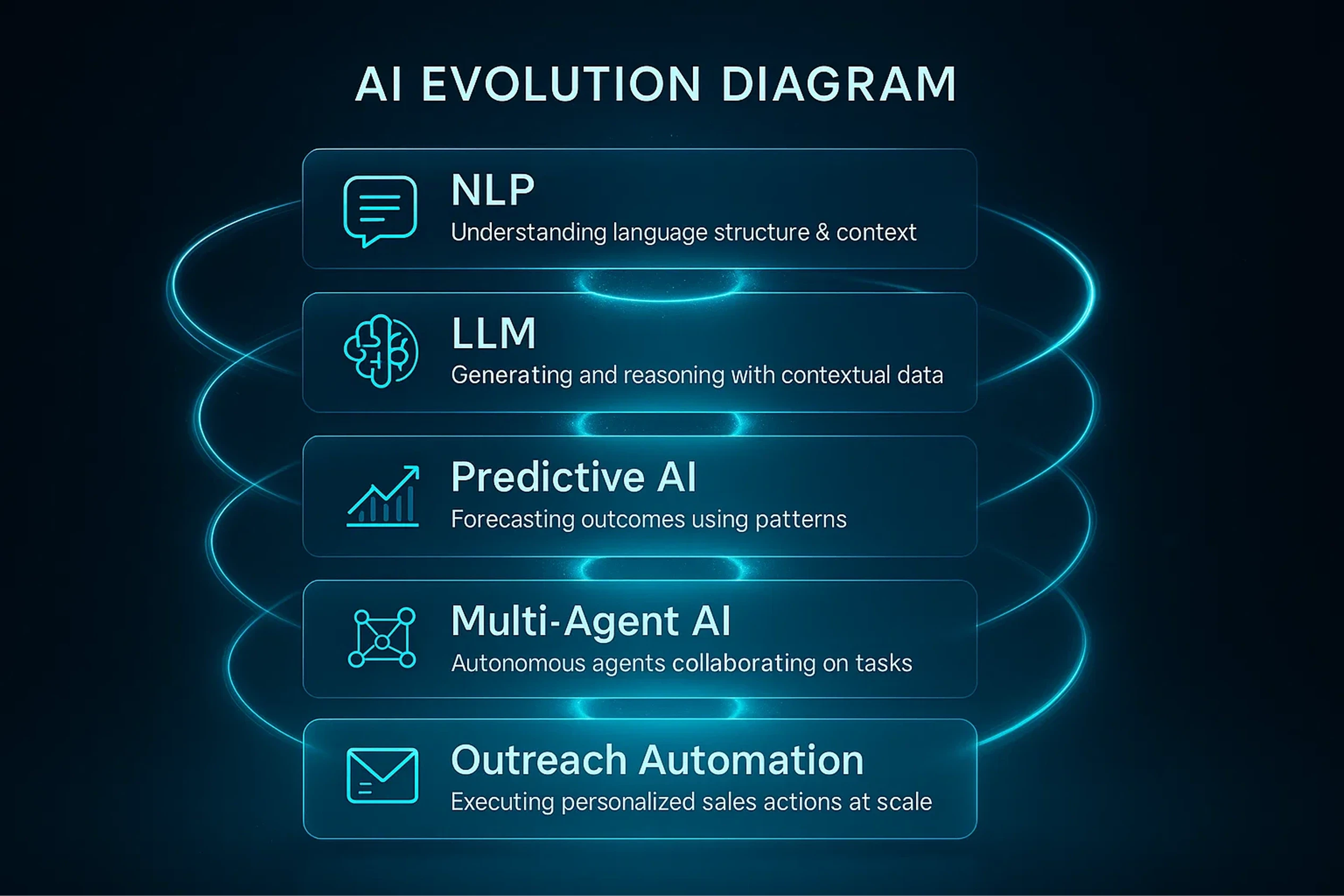
Modern lead generation uses several types of AI working together. Each type plays a different role: some analyze data, some write messages, and some make decisions.
These AI systems help identify the right prospects, predict timing, and create better communication.
Fact: 89% of top-performing sales teams use at least three types of AI models in their outreach strategy.
Types of AI Used in Lead Gen
Common AI technologies include:
NLP for understanding text
LLMs for writing messages
Predictive AI for timing
Behavioral AI for scoring
Multi-agent AI for workflow automation
Machine learning models for targeting
These work together to produce high-quality pipeline.
Learn how AI improves data accuracy: AI Lead Enrichment
What Is Agentic AI and Why Is It a Game-Changer for Sales?
Agentic AI is a type of AI that behaves like a digital worker - it can take action, make decisions, and complete tasks autonomously. Unlike simple automation, Agentic AI can think, plan, and adapt.
For sales teams, this means AI can now act like an SDR who researches leads, sends outreach, handles replies, and books meetings.
Fact: Agentic AI reduces outbound workload by 3 hours per rep per day.
Why Agentic AI Is Transforming Sales
Agentic AI stands out because it:
Thinks and reasons like a rep
Handles multi-step workflows
Personalizes every message
Learns from buyer behavior
Works across multiple tools
Operates 24/7 without supervision
This is the future of sales automation.
Real-Time AI Enrichment: Why It Matters for Sales Accuracy
Accurate data is the heart of AI lead generation. Real-time enrichment ensures your leads always have correct job titles, company details, technographics, and contact information.
Outdated data leads to wasted messages. AI solves this with continuous enrichment.
Fact: Real-time enrichment increases meeting-booking rates by 40–60%.
Benefits of Real-Time Enrichment
Enrichment helps by:
Updating lead information
Finding missing data
Reducing bounce rates
Improving personalization
Enhancing lead scoring
Increasing reply rates
Better data = better results.
See how enrichment improves email outreach: AI Lead Enrichment with real time email Sales Outreach
Predictive AI for Identifying Buyer Intent
Predictive AI analyzes online behavior, technographics, content engagement, and timing signals to identify buyers most likely to convert.
It helps prioritize leads so sales teams spend time where it matters the most.
Fact: Predictive AI can increase outbound efficiency by up to 55%.
What Predictive AI Looks For
Predictive AI tracks signals such as:
Website activity
Product research behavior
Funding rounds
Hiring trends
Technology stack changes
Email engagement
These signals indicate buying readiness.
How Does AI Automate Outbound Sales Workflows?
AI automates outbound sales by taking over tasks that used to require hours of manual work. It researches prospects, enriches their data, writes personalized emails, sends follow-ups, replies instantly, and even books meetings.
Instead of using multiple tools, AI connects the entire workflow into one smart system that works automatically in the background.
Fact: AI-driven outbound workflows reduce manual workload by 70% across US and UK sales teams.
What Steps AI Automates in Outbound
AI handles the entire outbound process:
Finds new leads using web signals
Enriches data in real time
Writes personalized email outreach
Sends follow-up messages automatically
Handles replies and classifies intent
Books meetings on the sales rep’s calendar
This creates a continuous pipeline without manual effort.
Learn more about multi-agent workflows in sales: Securing multi agent ai workflow
How Does AI Improve Multi-Channel Sales Outreach?
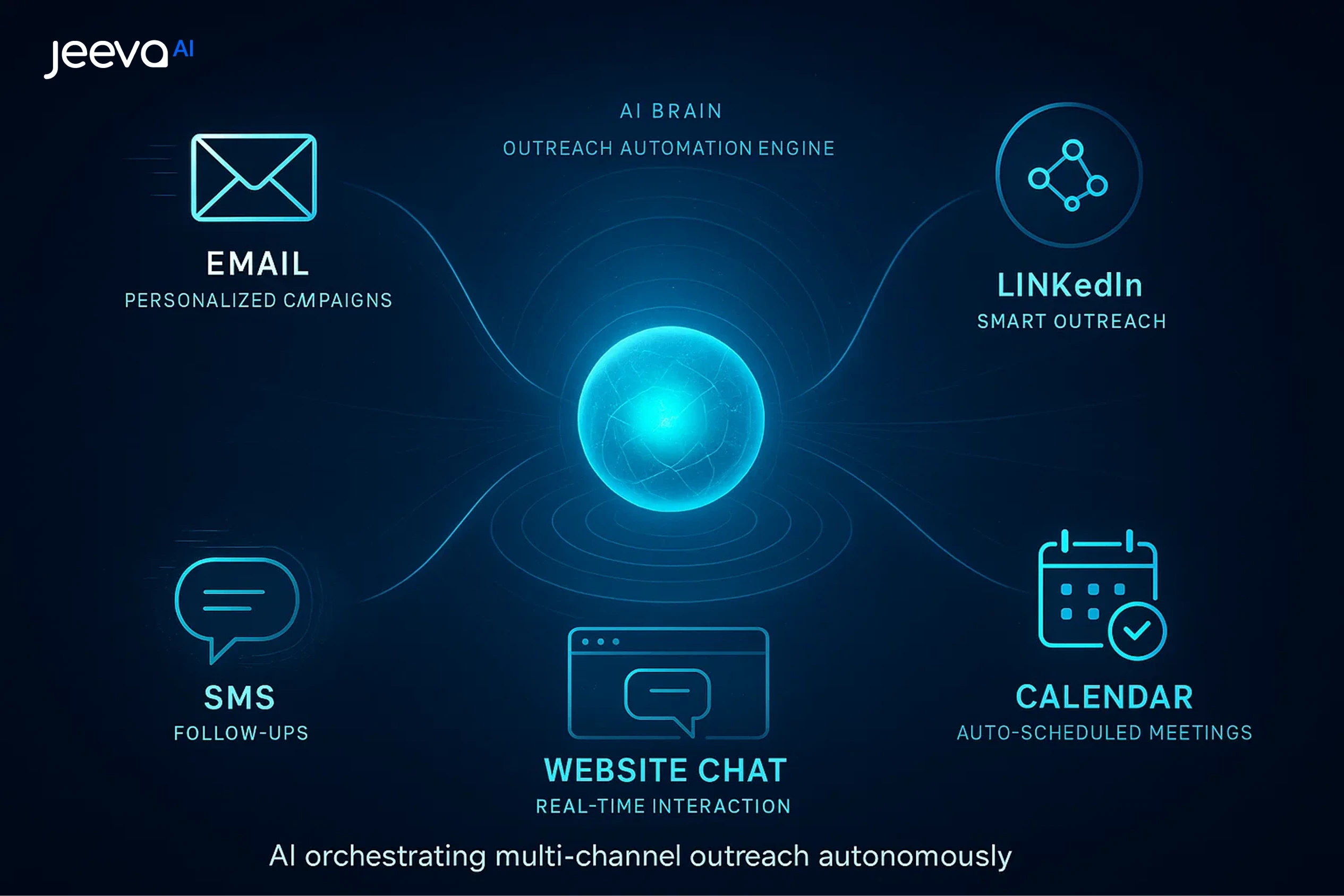
AI doesn’t just send emails - it works across email, LinkedIn, SMS, chat, forms, and calendar booking.
Because buyers use many channels today, AI ensures your message reaches them in the right place at the right time.It also adjusts messaging per channel automatically.
Fact: Multi-channel outreach increases reply rates by 3–5× compared to email-only campaigns.
Why Multi-Channel Automation Works Better
AI improves your outreach across channels by:
Choosing the best communication channel
Writing channel-specific messages
Timing messages for higher engagement
Detecting when leads engage
Following up instantly
Keeping outreach consistent
This makes your outreach smarter and more effective.
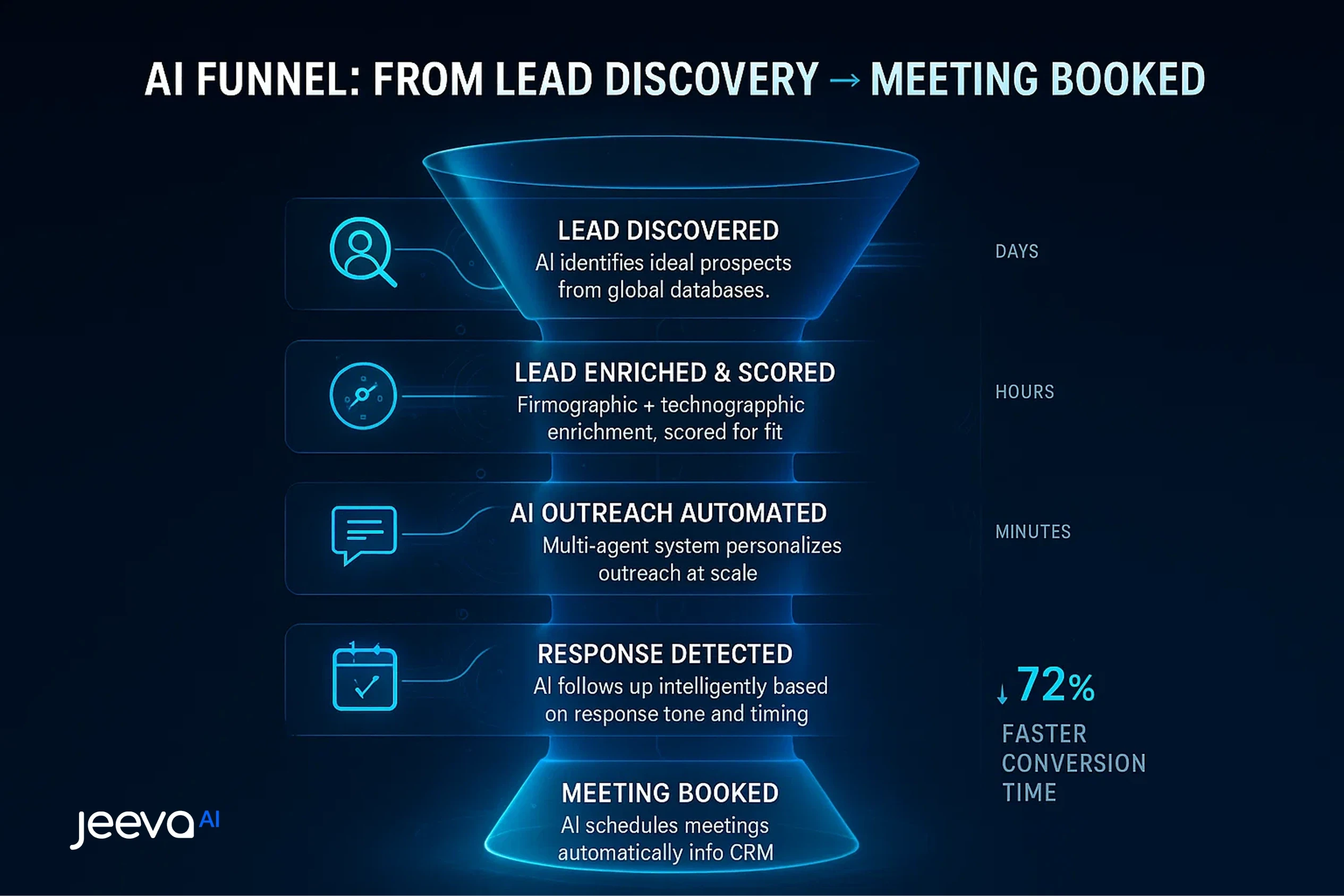
What Does a Complete AI Sales Funnel Look Like?
A modern AI funnel doesn’t rely on humans to perform each step. Instead, AI moves the lead from discovery to meeting booking with very little human input. The funnel becomes smooth, fast, and predictable.
Fact: AI funnels shorten time-to-meeting by 40–60% on average.
Stages of an AI-Powered Sales Funnel
AI supports each stage of the funnel:
Awareness through automated prospect discovery
Qualification using enrichment and scoring
Personalization for outreach messages
Multi-channel follow-ups
Reply handling and classification
Meeting booking and routing
Each step improves conversion and reduces manual work.
What Data Does AI Need for Effective Lead Generation?
AI relies heavily on accurate data. The better the data, the smarter the decision-making.
It analyzes company details, job roles, technology used, buying signals, and more to decide who is a good fit.
Fact: High-quality data increases AI targeting accuracy by up to 80%.
Core Data Points AI Uses
AI gathers and analyzes:
Firmographic data (company info)
Technographic data (tools used)
Intent data (buying signals)
Contact data
Behavior patterns
Market triggers
This ensures the right prospects are targeted.
Learn more about intent and firmographic data differences: Intent Data vs Firmographic data Saas Sales
How Accurate Data Improves AI Lead Qualification
AI qualifies leads by studying how closely they match your Ideal Customer Profile (ICP). When the data is accurate, qualification becomes much more reliable. AI can detect which leads are ready to buy and which ones should be ignored.
Fact: AI lead scoring improves lead-to-meeting conversion by 35–50%.
Benefits of Strong Data for Qualification
Strong data leads to:
Better ICP matching
Higher-quality conversations
Lower bounce rates
Faster outreach cycles
More accurate scoring
Stronger pipeline quality
Data is the backbone of AI performance.
Why Data Residency and Compliance Matter for AI Lead Generation
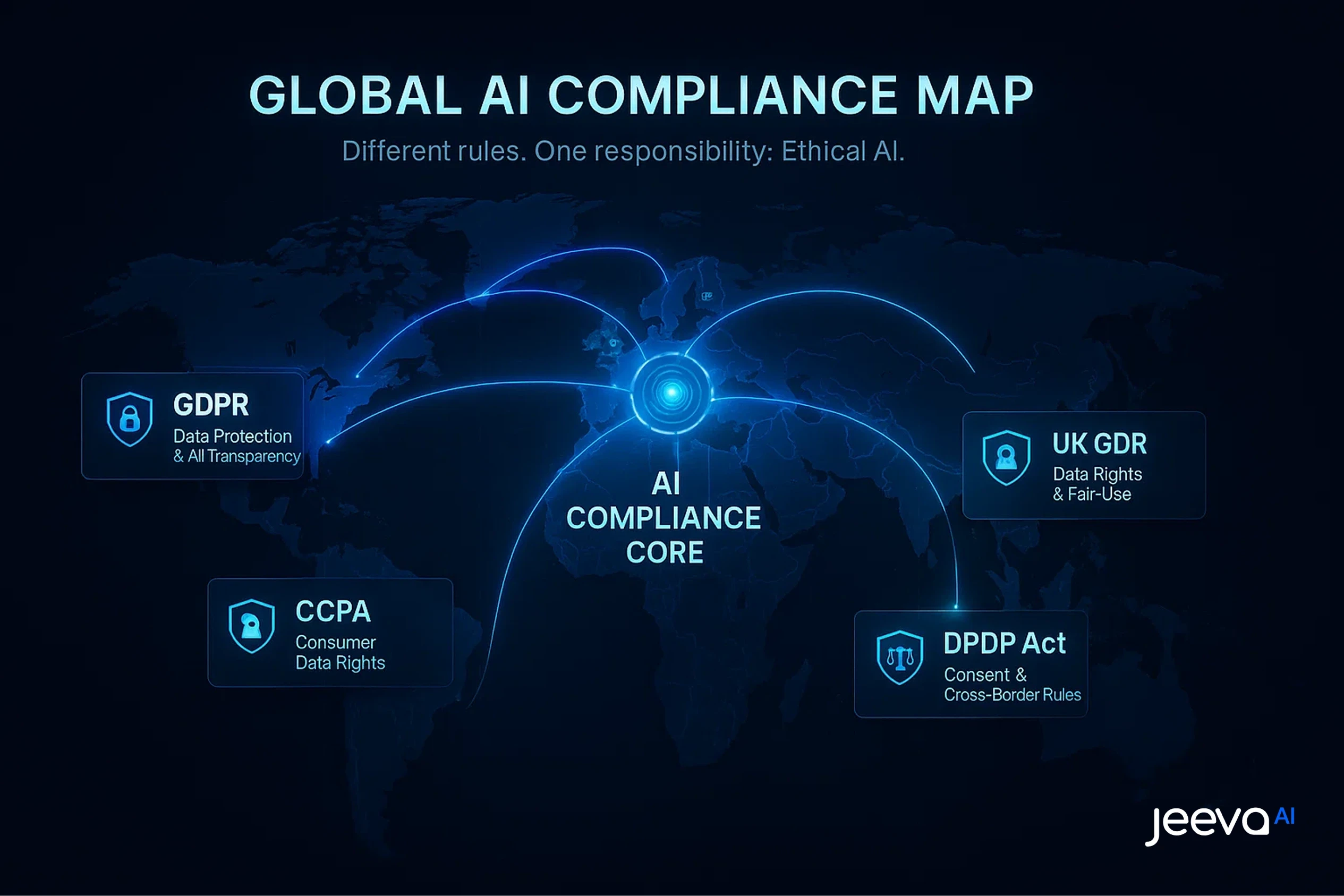
AI tools must follow regional data rules. Each region (US, UK, CA, AUS, NZ) has laws about where data can be stored and how it must be protected. Companies prefer AI tools that comply with their local regulations.
Fact: 52% of enterprises require region-specific data storage for AI workflows.
Compliance Expectations by Country
Different regions have different rules:
US: SOC 2, strong encryption
UK: ISO27001 + GDPR alignment
Canada: PIPEDA rules
Australia: Australian Privacy Principles (APP)
New Zealand: NZ Privacy Act
AI vendors must meet these standards to gain trust.
Regional Compliance Overview
Region | Required Standards | Why It Matters |
|---|---|---|
US | SOC 2 | Trust + cloud security |
UK/EU | ISO27001 + GDPR | Data privacy |
CA | PIPEDA | Customer data rights |
AUS | APP | Strict data handling |
NZ | NZPA | Personal information safety |
What Is AI Sales Automation and How Does It Support Lead Generation?
AI sales automation is the process of letting AI complete repetitive tasks like researching leads, sending emails, handling replies, qualifying prospects, and booking meetings. Instead of hiring more people, companies use AI to scale outbound without increasing costs.
AI ensures outreach is consistent, fast, and personalized giving sales teams more time to close deals.
Fact: AI automation reduces manual sales workload by 60–75% in US and UK teams.
How AI Supports the Entire Outbound Process
AI helps at every step of outbound by:
Automating research and list building
Creating personalized messages
Sending follow-ups automatically
Tracking lead engagement
Qualifying replies instantly
Scheduling meetings for reps
AI connects the whole workflow into one system.
Read how multi-agent AI improves outbound: Multi Channel Sales Automation
How Does AI Automate Cold Email Outreach at Scale?
Cold email outreach is effective only when messages are personalized and sent at the right time. AI writes unique emails for each prospect, follows up automatically, and monitors responses.
This makes large-scale outreach possible without compromising quality.
Fact: AI-personalized cold emails get 3× higher reply rates than templates.
What AI Automates in Cold Emailing
AI makes cold email better by:
Writing personalized messages
Checking deliverability
Warming up domains automatically
Scheduling emails at optimal times
Handling replies intelligently
Identifying positive intent
This increases both delivery and conversion rates.
How Does AI Improve Personalization in 2026?
Personalization is no longer optional. Buyers ignore generic outreach. AI uses real-time data like job roles, industry trends, and company technology to create highly relevant messages for each prospect.
Fact: 72% of buyers respond only to personalized outreach.
How AI Delivers Better Personalization
AI makes messages feel human by:
Using real-time data
Matching tone to buyer preferences
Adding recent company events
Creating custom value propositions
Using unique subject lines
Changing content based on past behavior
AI brings personalization to every touchpoint.
What Are the Best Channels for AI-Driven Outreach?
AI performs better when using multiple channels together. Each channel supports a different part of the buyer journey.
Fact: Multi-channel sequences increase meetings by 5× compared to email-only.
Most Effective AI Outreach Channels
AI uses:
Email (most reliable)
LinkedIn messages and InMails
SMS for fast engagement
Website chat for real-time questions
Calendar booking links
Voice notes or automated calls
AI chooses the best channel based on buyer behavior.
How Does AI Qualify Leads Automatically?
AI qualification uses data, intent signals, job roles, and engagement behavior to determine whether a prospect is ready for sales. Instead of manually reading every reply, AI instantly categorizes interest and routes leads to the right rep.
Fact: AI qualification improves sales team efficiency by 40% on average.
What AI Looks At During Qualification
AI qualifies leads using:
Reply sentiment
ICP match percentage
Technographic fit
Company size
Engagement behavior
Buying signals
AI ensures only the best leads reach reps.
What KPIs Should You Track for AI Lead Generation?
Tracking the right KPIs helps measure how well AI contributes to pipeline growth.
Businesses across the US, UK, CA, AUS, and NZ use standard metrics to evaluate success.
Fact: Companies that track AI KPIs see 30% better ROI in their outbound motion.
Most Important AI Lead Gen KPIs
Measure AI with:
Meetings booked
Cost per qualified lead
Reply rate
Conversion rate
Time-to-meeting
Revenue per rep
These metrics show real impact.
Table: AI Lead Gen KPI Benchmarks (2026)
KPI | Benchmarks |
|---|---|
Reply Rate | 15–30% |
Meetings Booked | 3–10% |
Qualification Rate | 20–40% |
Time-to-Meeting | 1–3 days |
Cost per Lead | 40–60% cheaper than SDRs |
How to Measure ROI of AI Sales Automation?
AI sales automation ROI isn’t only about revenue. It also includes time saved, fewer hires needed, reduced overhead, and improved speed.
Fact: AI reduces the need for SDR headcount by 30–50%.
ROI Areas to Evaluate
AI delivers ROI through:
Lower hiring costs
Higher outreach volume
Better lead quality
Faster reply handling
Improved customer experience
Higher pipeline per rep
ROI becomes clear within 30–60 days of use.
How Does AI Reduce Time-to-Meeting (TTM)?
AI instantly responds to leads, follows up faster, and pushes toward booking.
This makes it easier for buyers to talk before losing interest.
Fact: Leads contacted within 5 minutes are 9× more likely to convert.
Why AI Speeds Up the Meeting Process
AI improves speed by:
Responding instantly
Asking qualification questions
Providing clear CTAs
Sending calendar links
Offering flexible options
Eliminating delays
This increases meetings and revenue.
Conclusion: The Future of AI Lead Generation & Sales Automation in 2026
AI lead generation and sales automation are no longer “nice-to-have” tools-they are essential for any company that wants to grow faster in 2026. Businesses across the US, UK, Canada, Australia, and New Zealand are already using AI to find better leads, personalize outreach, automate follow-ups, qualify prospects, and book meetings with almost no manual effort.
Agentic AI, real-time enrichment, multi-channel outreach, and predictive scoring have changed how modern sales teams work. Instead of spending hours on repetitive tasks, teams now focus on strategy, customer conversations, and closing deals while AI handles everything else in the background.
The companies that adopt AI early will stay ahead because AI improves speed, accuracy, and scalability at a level human-only teams cannot match. And platforms like Jeeva AI, built with multi-agent automation and enterprise-grade compliance, are leading the shift by turning complex sales workflows into fully autonomous systems.
The sales landscape is changing quickly. The teams who embrace AI today will build the strongest pipelines, close deals faster, and outperform competitors in 2026 and beyond. AI isn’t replacing salespeople - it’s helping them win more business with less effort.
FAQ
What is AI lead generation?
How does AI improve sales outreach?
Is AI better than hiring more SDRs?
Can AI lead generation work for small teams or startups?
Is AI lead generation compliant with privacy laws?