Introduction: Why Do Startups Need AI Sales Engagement Tools in 2026?
Startups need AI sales engagement tools in 2026 to replace manual outreach with adaptive, data-driven engagement that scales pipeline without increasing headcount.
In 2026, sales engagement is no longer about increasing outreach volume—it is about precision, timing, and relevance powered by AI. Startups face tighter budgets, smaller teams, and more competitive inboxes, making manual or rule-based engagement strategies ineffective at scale.
Modern AI sales engagement tools combine automation, behavioral analytics, and real-time personalization to help startups run efficient outbound programs without adding headcount. Instead of static sequences, these platforms adapt messaging, timing, and follow-ups based on how prospects actually engage.
Startups adopting AI-driven engagement platforms such as Jeeva AI report measurable gains, including up to 3× more qualified meetings and shorter sales cycles by as much as 40%, by unifying data intelligence with adaptive sequencing. This allows lean teams to operate with the consistency and effectiveness of much larger sales organizations.
The advantage is clear: AI gives startups the speed of automation combined with human-level relevance enabling faster conversations, better-qualified pipeline, and more predictable growth in a highly competitive market.
What Is an AI Sales Engagement Tool?
An AI sales engagement tool automates and personalizes multi-channel sales communication by using real-time buyer data to optimize timing, messaging, and follow-ups.
An AI sales engagement tool is software that uses artificial intelligence to plan, personalize, and automate sales communication across multiple channels such as email, chat, messaging, and calls. Instead of relying on fixed sequences or manual follow-ups, it adapts outreach based on buyer behavior, engagement signals, and intent data.
These tools help sales teams engage prospects at the right time, with the right message, without increasing manual effort.
What Are the Core Capabilities of an AI Sales Engagement Tool?
Modern AI sales engagement platforms typically include:
Automated outreach and follow-ups that adjust based on prospect behavior
Lead scoring and prioritization using engagement and intent signals
Context-aware message generation that sounds natural and human
CRM synchronization with platforms like HubSpot and Salesforce
Engagement and conversion analytics across every touchpoint
By combining automation with real-time decision-making, AI sales engagement tools turn each prospect interaction into a measurable, data-driven opportunity improving consistency, response rates, and pipeline outcomes.
Benefits of AI in Sales Engagement Tools
AI sales engagement tools improve how sales teams connect with prospects by personalizing communication, optimizing timing, and automating follow-ups across every stage of engagement.
Unlike traditional engagement software that relies on static sequences, AI introduces adaptive intelligence. Each interaction is informed by buyer behavior, intent signals, and past engagement—allowing teams to scale outreach without losing relevance or context.
Core Benefits of AI Sales Engagement Tools
Personalization at scale: Messages adapt to role, intent, and interaction history
Intelligent timing: Predictive models send outreach when prospects are most responsive
Consistent follow-ups: Autonomous systems ensure no touchpoint is missed
Actionable engagement insights: AI analyzes opens, clicks, and replies to refine future outreach
Higher sales productivity: Teams manage up to 3× more prospects without added headcount
By combining personalization, timing intelligence, and continuous learning, AI sales engagement tools turn every prospect interaction into a measurable, data-driven opportunity—improving reply rates, pipeline velocity, and execution consistency across global sales teams.
Why Do Startups Need AI-First Sales Engagement in 2026?
Startups need AI-first sales engagement in 2026 to replace ineffective mass outreach with scalable personalization that drives pipeline without increasing headcount or costs.
AI-first sales engagement has become a baseline requirement for startups, not a competitive advantage. As buyer attention declines and sales teams remain lean, startups can no longer rely on manual outreach or experimental AI pilots that fail to scale.
Research from Boston Consulting Group shows that 74% of companies still struggle to turn AI pilots into repeatable business outcomes, largely due to limited headcount, fragmented tools, and budget constraints. For startups, this gap is even more pronounced there is little margin for experimentation without clear returns.
For lean teams, the mandate is straightforward:
Adopt tools that pay for themselves quickly: Every dollar invested must translate directly into pipeline or booked meetings
Scale without adding headcount: AI must function like a virtual SDR, not another system that requires constant oversight
At the same time, traditional outbound tactics are breaking down. Inbox saturation has pushed reply rates from 18% to single digits, according to data from Amplemarket. Generic outreach is ignored, while fully manual personalization is too slow and expensive to sustain.
This shift explains why founders are increasingly turning to agentic AI systems designed to execute sales engagement autonomously rather than simply assist with tasks. These systems are expected to:
Write with human-like context: Each message reflects real prospect research
Learn and adapt continuously: Follow-ups are triggered by live engagement signals, not fixed schedules
Demonstrate measurable ROI: Every activity is tied to meetings booked and revenue generated
The conclusion is clear: In 2025, personalization at scale delivered by budget-efficient, autonomous AI is no longer optional for startups. It is the new minimum standard for building pipeline, competing for attention, and growing revenue without increasing sales headcount.
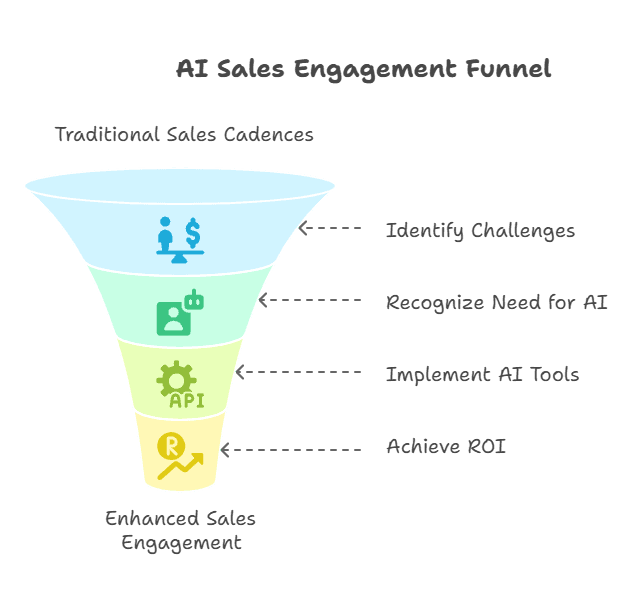
Top AI Sales Engagement Tools for Startups in 2026
In 2026, the best AI sales engagement tools for startups are agentic platforms that execute outreach autonomously, while traditional tools still rely on manual sequencing and oversight.
By 2026, sales engagement tools have split into two clear categories: agentic systems that execute autonomously and traditional platforms that still require manual orchestration. For startups, the difference directly impacts speed, headcount efficiency, and ROI.
Tool | Best For (2026) | Key Capabilities |
|---|---|---|
Jeeva AI | Agentic, end-to-end sales execution | Multi-agent outreach, real-time enrichment, autonomous follow-ups, CRM sync |
Outreach.io | Large teams needing structured control | Enterprise sequencing, workflow automation, engagement analytics |
Apollo.io | Startups scaling outbound lists | Prospecting database, email engagement, basic automation |
HubSpot Sales Hub | Teams wanting CRM-first engagement | Sequences, templates, analytics, native CRM integration |
Lemlist | High-touch cold email personalization | Visual personalization, warm-up tools, email-first cadences |
Groove | Salesforce-centric organizations | Engagement analytics, pipeline visibility, activity tracking |
Salesloft | Enterprise engagement orchestration | Cadences, AI scoring, revenue analytics |
Smartwriter.ai | AI-generated outbound copy | Personalized email and message generation |
Lavender.ai | Improving email quality and tone | Real-time coaching, clarity and personalization feedback |
Reply.io | SMB multi-channel automation | Sequences, AI scoring, outreach integrations |
Trending AI Sales Engagement Tools in 2026
As AI adoption matures, sales engagement tools are shifting from isolated automation features to intelligent systems that combine engagement, intent detection, and autonomous execution. Startups are no longer evaluating tools based on how many tasks they automate but on how effectively they convert intent into conversations.
Key Trends Shaping AI Sales Engagement Tools in 2026
Agentic AI replacing task-based automation: Autonomous systems now plan, execute, and adapt outreach without manual rule-setting
Predictive engagement timing: AI determines the optimal moment to engage each prospect based on behavior and response patterns
Multi-channel intent detection: Engagement signals are captured across email, messaging, voice, and web interactions
Context-aware follow-up logic: AI adjusts responses dynamically instead of relying on fixed follow-up sequences
Hybrid voice and email cadences: Natural language models coordinate written and spoken outreach seamlessly
These trends reflect a broader shift away from “assistive AI” toward execution-focused AI that owns outcomes rather than tasks.
Platforms like Jeeva AI already integrate these capabilities through a multi-agent architecture allowing sales teams to run adaptive, intent-driven engagement workflows without added operational complexity. As a result, such systems are setting the benchmark for where AI sales engagement is headed, not just where it is today.
Top AI Sales Engagement Tools for Startups in 2026
1. Jeeva AI
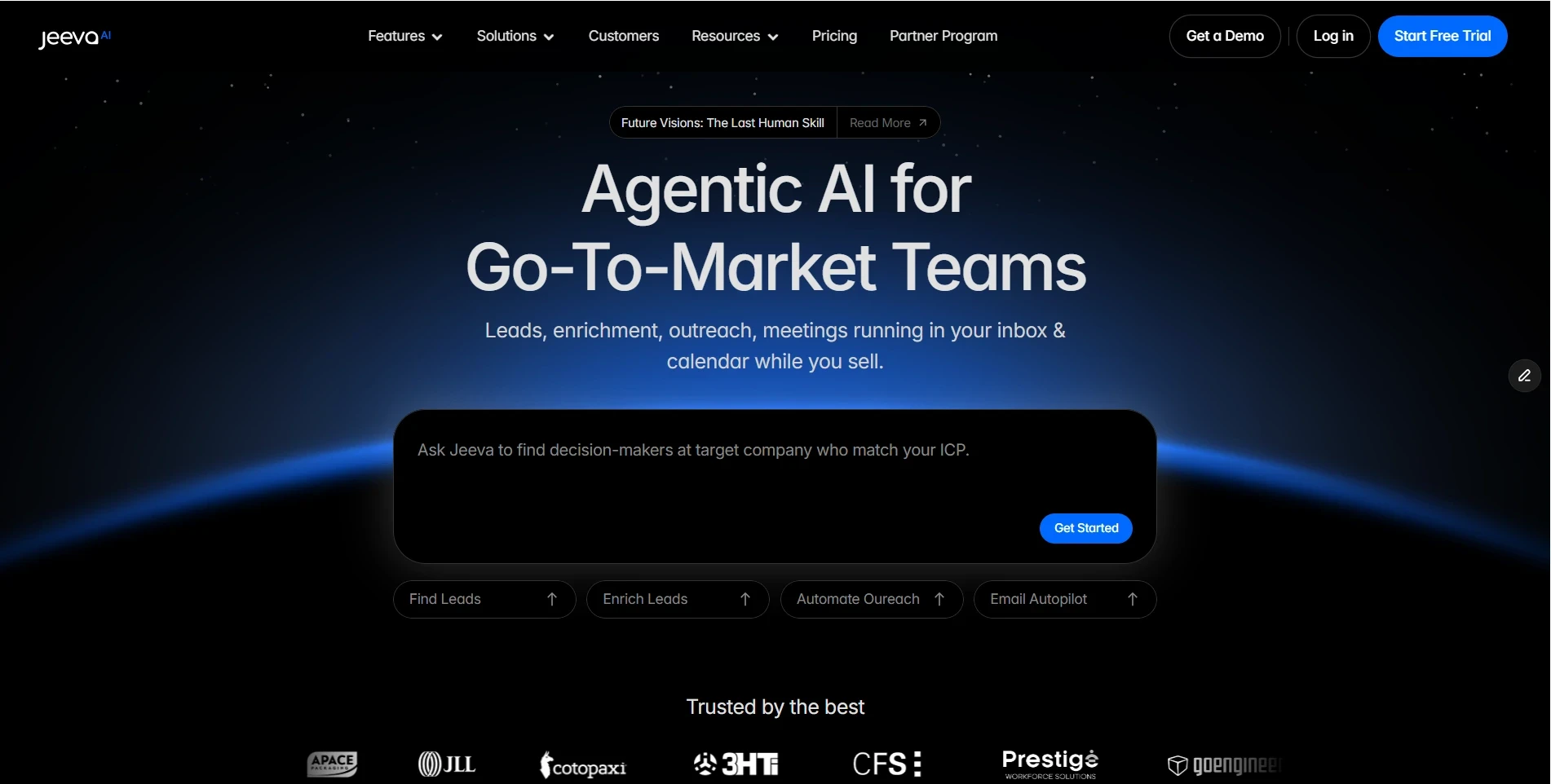
Jeeva AI is an Agentic AI Sales Platform designed to manage outbound sales with minimal manual effort. It uses multiple AI agents to handle different parts of the outbound process, from finding leads to responding to prospects.
The platform works through three core agents:
A prospecting agent that identifies and verifies potential leads
A writing agent that creates relevant, personalized messages
An engagement agent that manages replies and schedules meetings
These agents operate together and adjust their actions based on engagement results over time.
Best for: Startups that want AI to manage prospecting, outreach, and follow-ups across email and LinkedIn with limited hands-on involvement.
Strengths: Multi-agent automation, personalized outreach, CRM and LinkedIn integration, real-time activity tracking, and support for growing sales teams.
Limitations: Best suited for teams comfortable allowing AI to manage most outbound tasks.
Jeeva AI helps startup sales teams run outbound outreach continuously, without manual list building, message writing, or reply handling.
2. Outreach.io
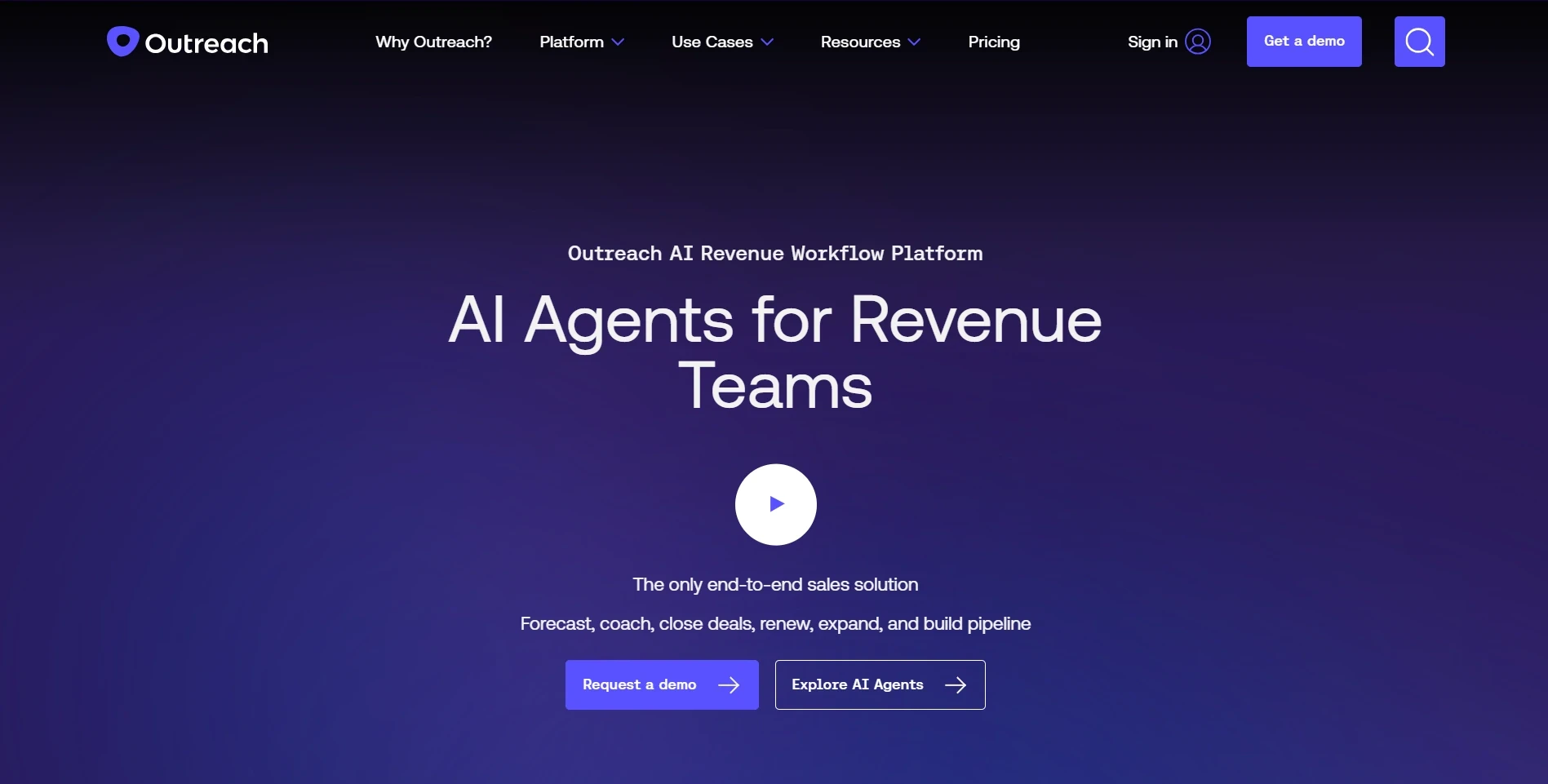
Outreach.io is a powerhouse engagement platform focused on sequence automation and workflow analytics.
It’s great for startups transitioning to mid-market or enterprise-level scaling, offering detailed reporting and structured outreach flows.
Best For: Startups looking to scale outbound campaigns with structured cadences and analytics.
Pros: Enterprise-grade sequences, AI-driven workflow optimization, detailed analytics.
Cons: Premium pricing and a steeper learning curve for small teams.
3. Apollo.io
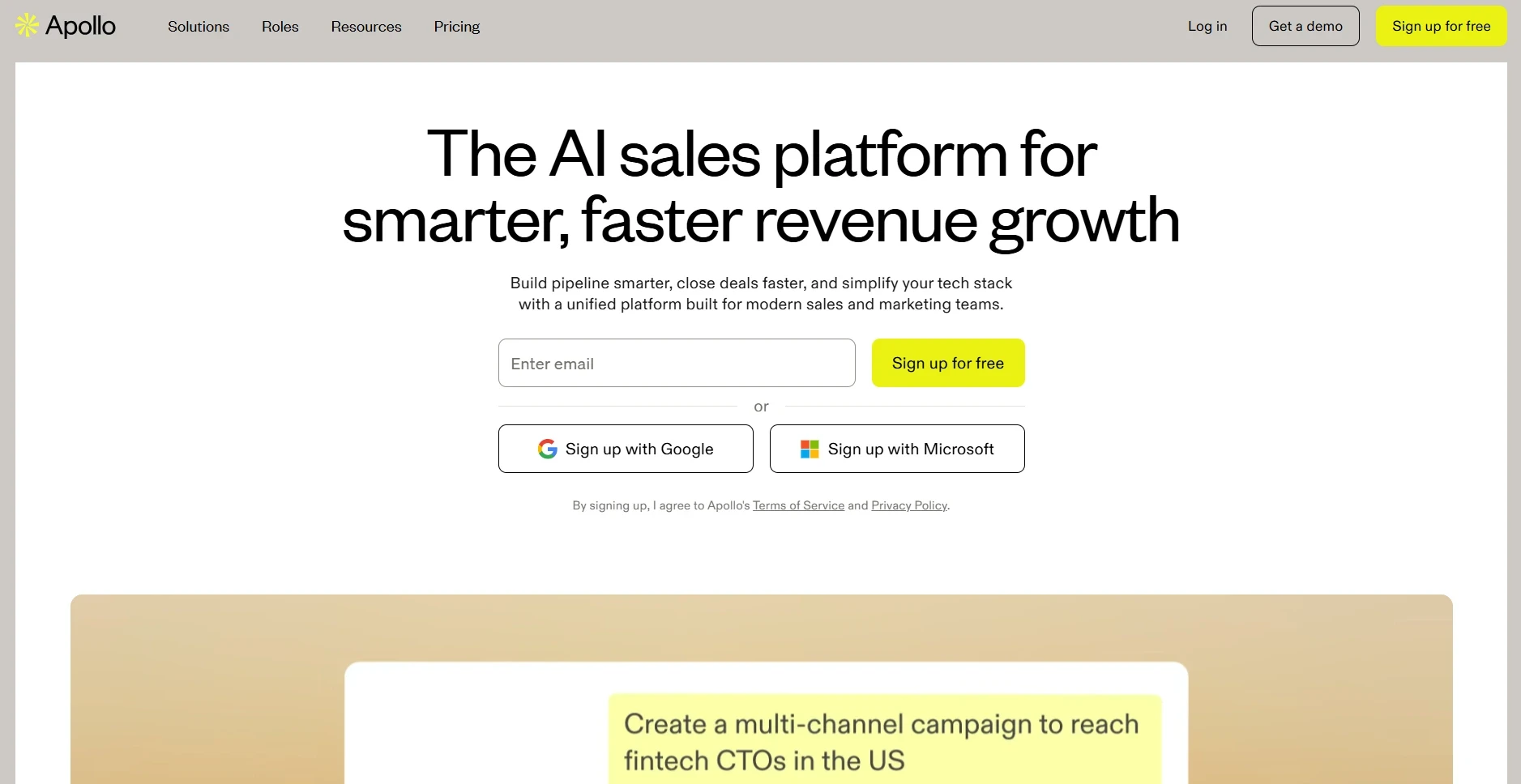
Apollo.io blends prospecting and engagement into a single AI-enabled platform. It’s perfect for startups that want both lead data and outreach tools under one dashboard, minimizing tool-switching.
Best For: Small teams needing an affordable, all-in-one solution for data + engagement.
Pros: Unified contact database and email sequencing, cost-effective plans, and integrated intent tracking.
Cons: Data accuracy and enrichment depth can vary in smaller regions.
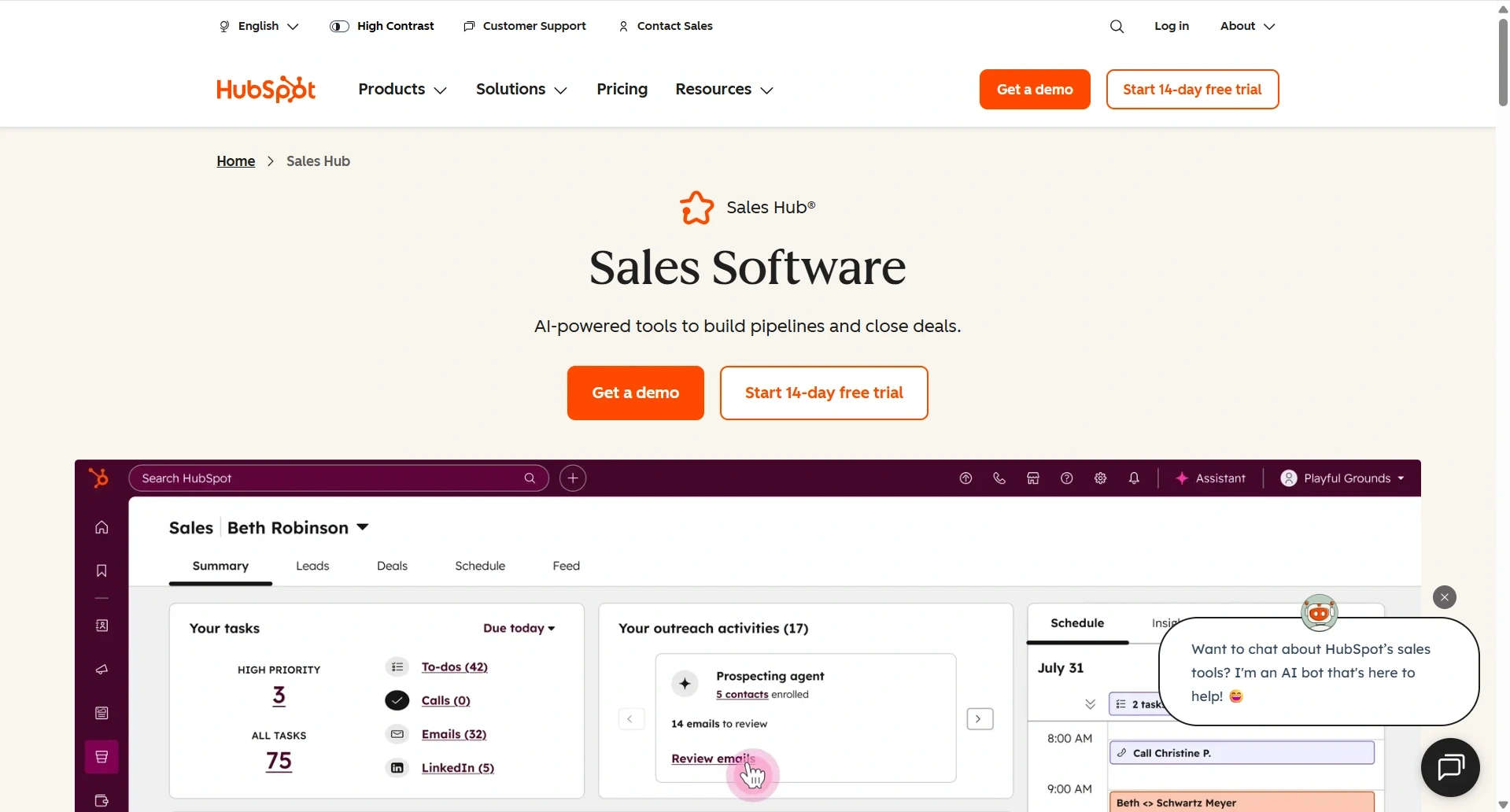
4. HubSpot Sales Hub
HubSpot Sales Hub brings CRM, automation, and engagement under one ecosystem, making it ideal for startups that already run on HubSpot. Its built-in email tracking, AI recommendations, and task automation streamline the entire sales workflow.
Best For: Startups already using HubSpot CRM or inbound marketing tools.
Pros: Smooth CRM integration, user-friendly interface, solid AI insights.
Cons: Some advanced AI features are locked behind higher-tier subscriptions.
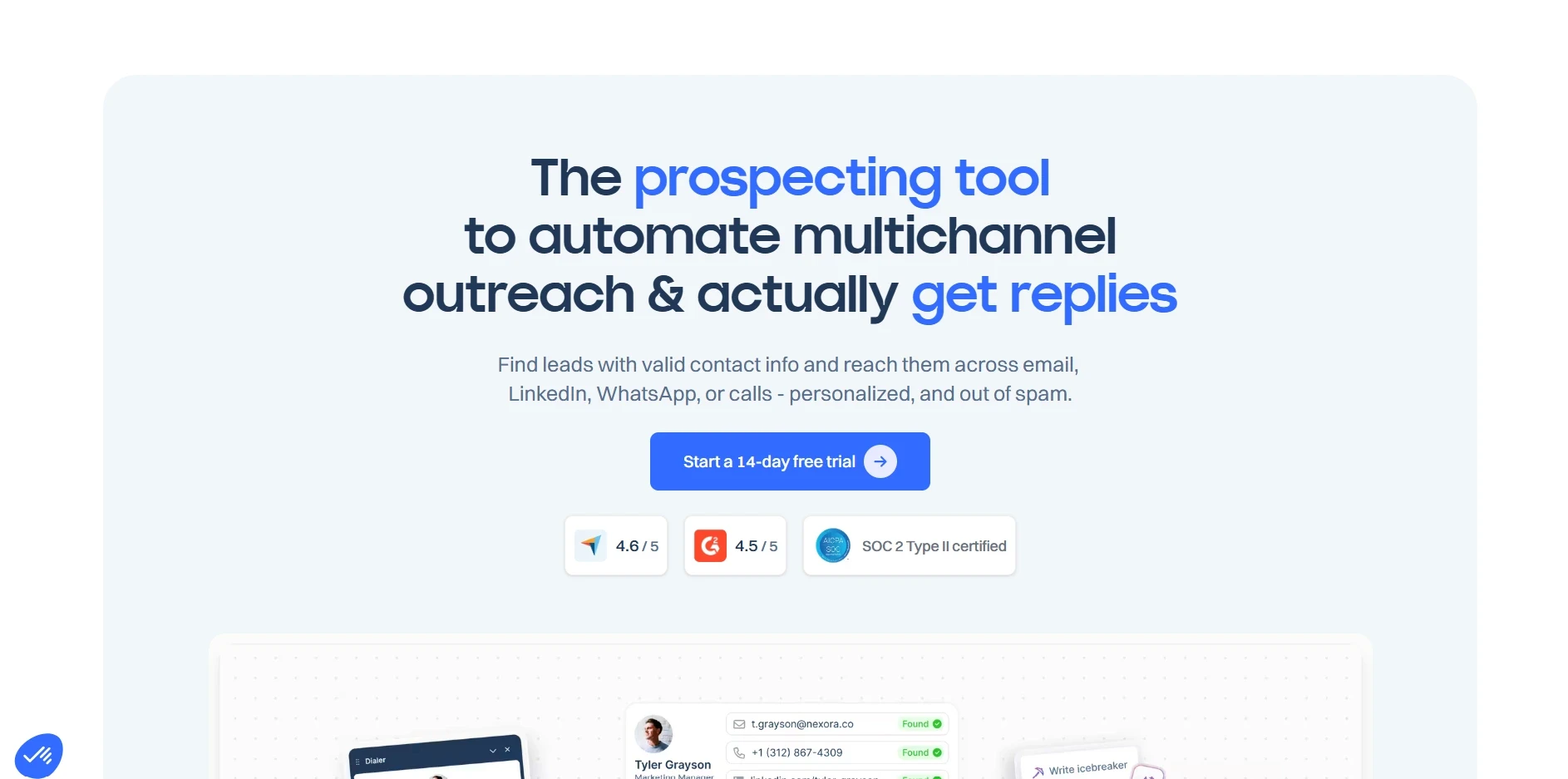
5. Lemlist
Lemlist focuses on email-centric personalization and warm outreach. Known for its visual email templates and creative follow-ups, it helps founders and SDRs create outreach that feels more human.
Best For: Startups prioritizing personalized cold-email outreach.
Pros: Highly visual sequences, great deliverability tools, easy setup.
Cons: Limited multi-channel automation beyond email.
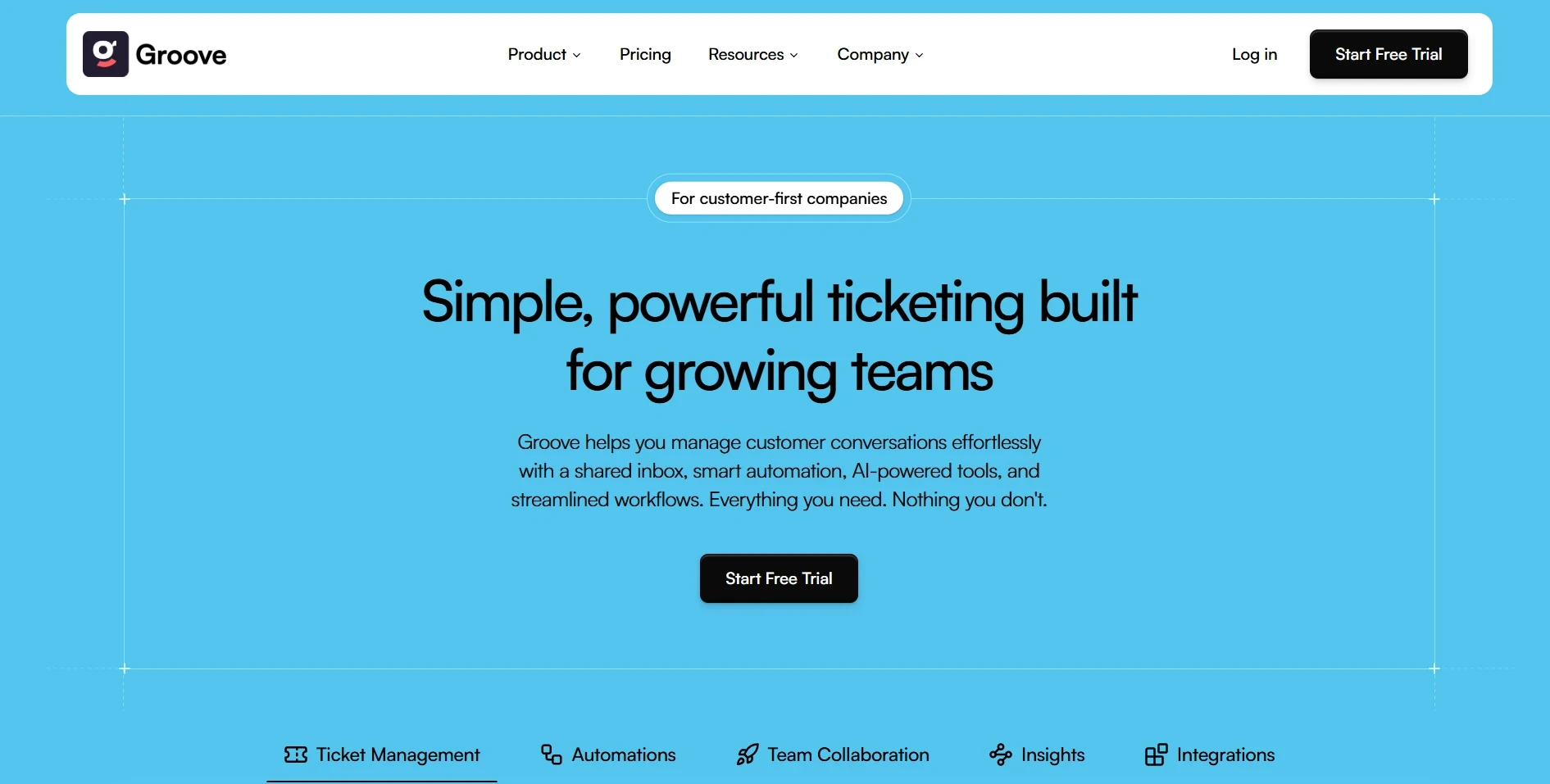
6. Groove
Groove is a Salesforce-native engagement platform offering automation, cadence management, and AI insights for teams already using Salesforce CRM.
Best For: Startups operating within the Salesforce ecosystem.
Pros: Excellent CRM synchronization, deep reporting, and scalable AI analytics.
Cons: Higher price point and best suited for Salesforce users.
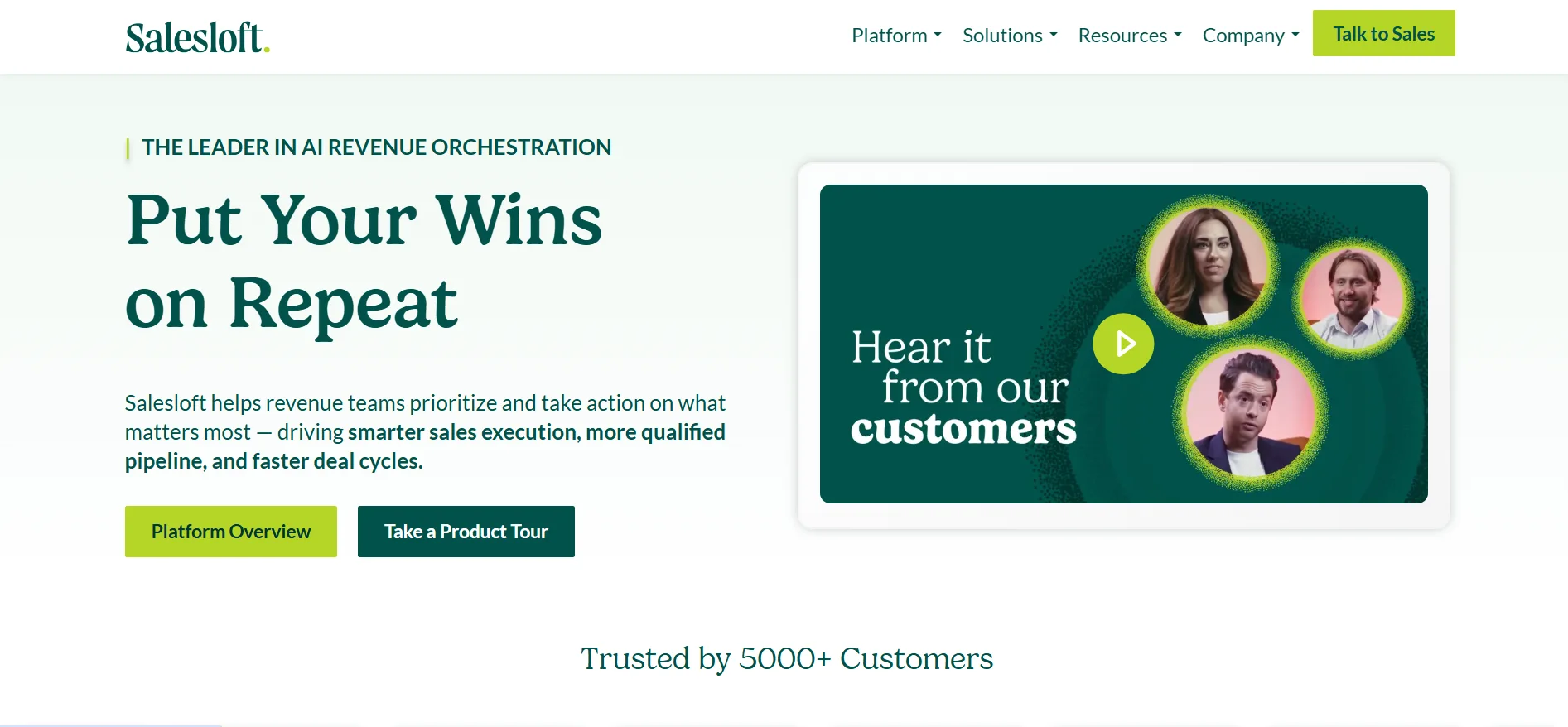
7. Salesloft
Salesloft is a leading revenue engagement platform that helps teams run structured cadences, score leads, and analyze engagement performance. Its AI features assist in identifying conversion-ready accounts.
Best For: Startups planning to scale into enterprise-grade revenue teams.
Pros: Advanced cadences, strong analytics, and integrated forecasting.
Cons: Expensive for early-stage startups; takes time to implement.
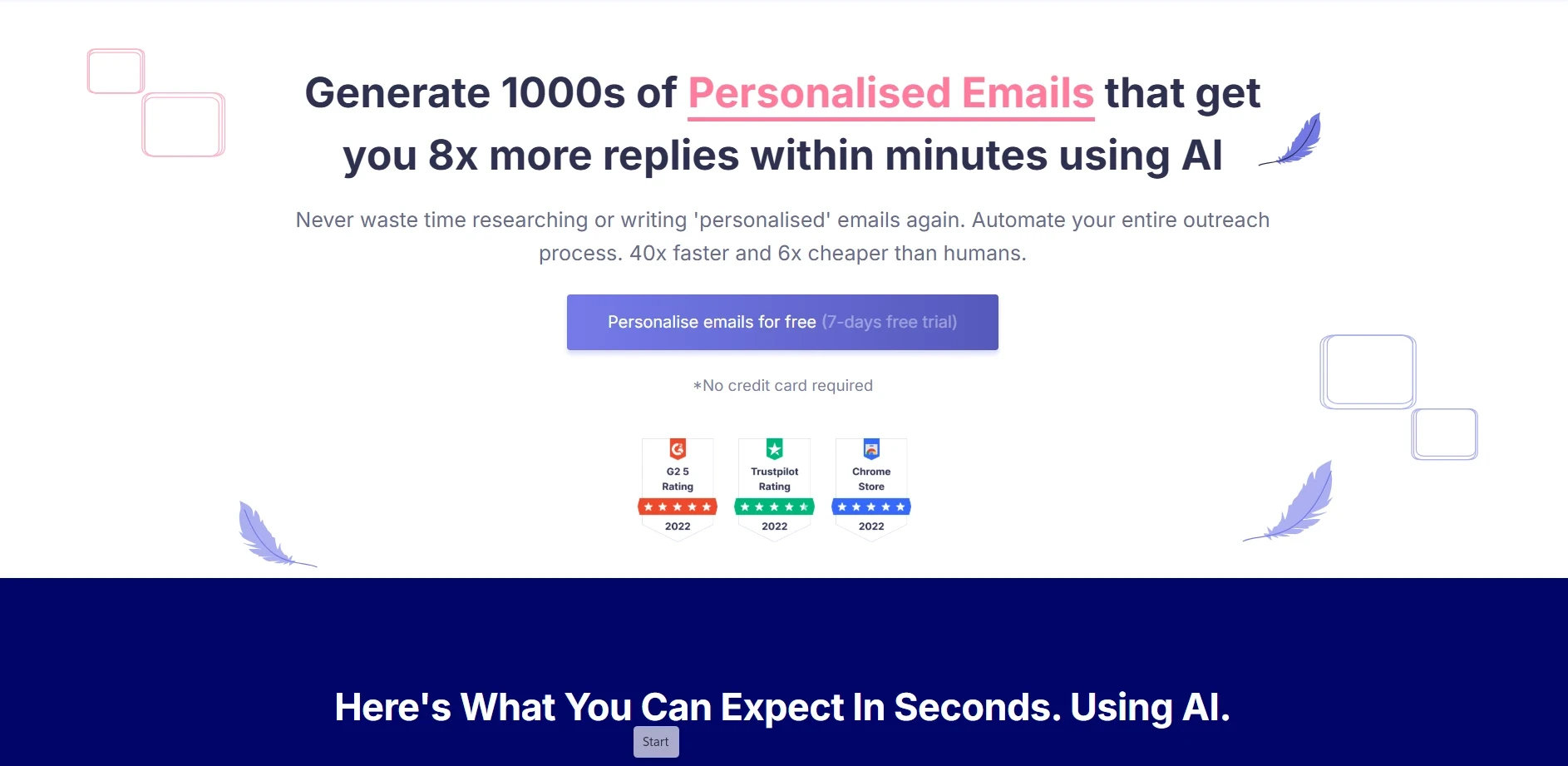
8. Smartwriter.ai
Smartwriter.ai specializes in AI-generated personalized emails and LinkedIn messages at scale. It’s perfect for startup founders who want to generate large-volume cold outreach quickly without sacrificing quality.
Best For: Teams focusing on creative, high-personalization outbound content.
Pros: AI copy generation for emails and DMs, fast personalization at scale.
Cons: Focuses more on content generation than full outreach orchestration.
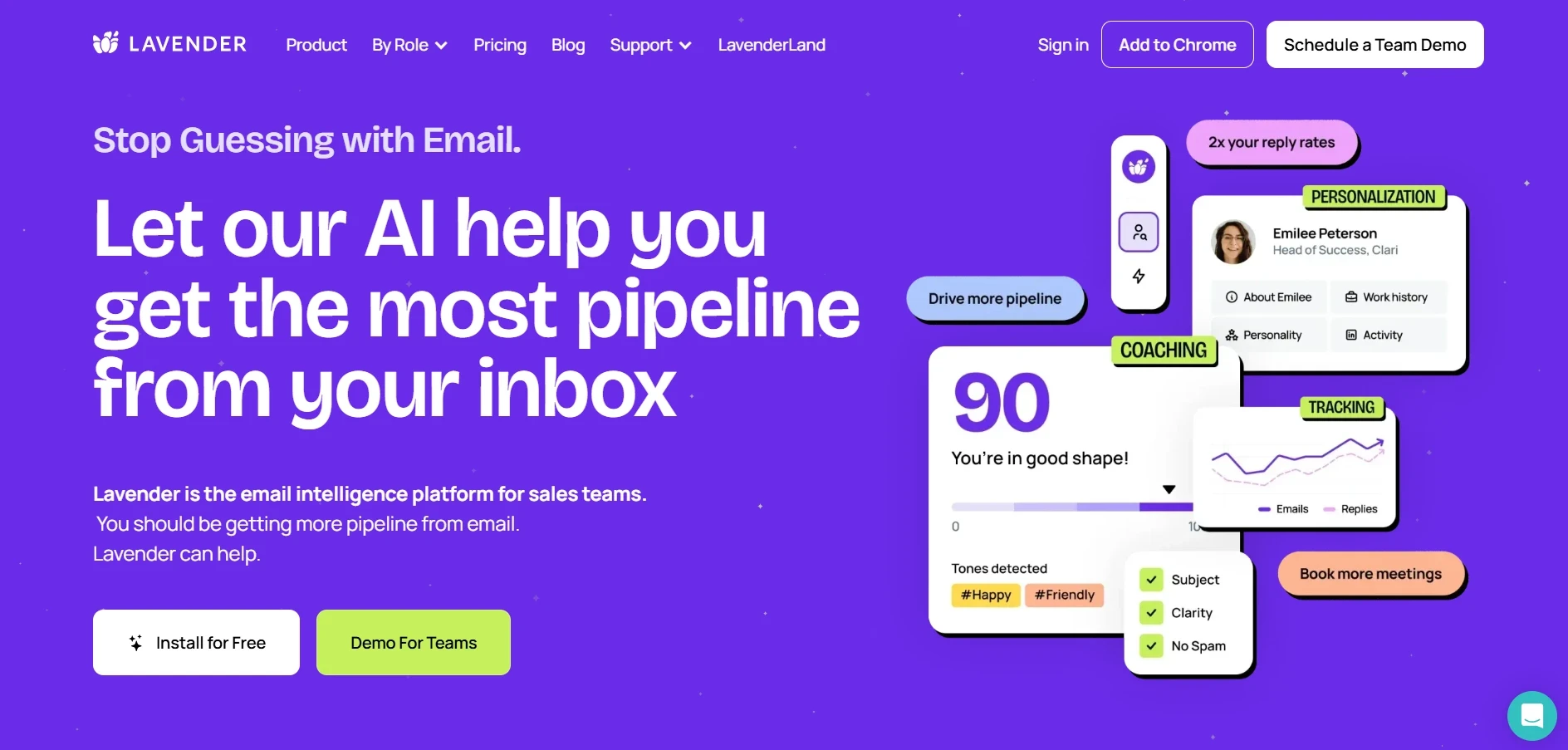
9. Lavender.ai
Lavender.ai acts as an AI coach for your email writing, improving tone, structure, and personalization. It doesn’t replace your cadence tools but enhances every message you send.
Best For: Startups aiming to refine their outbound email tone and conversion rates.
Pros: Real-time email feedback, tone suggestions, AI writing assistant.
Cons: Limited to email optimization; no cadence or CRM automation.
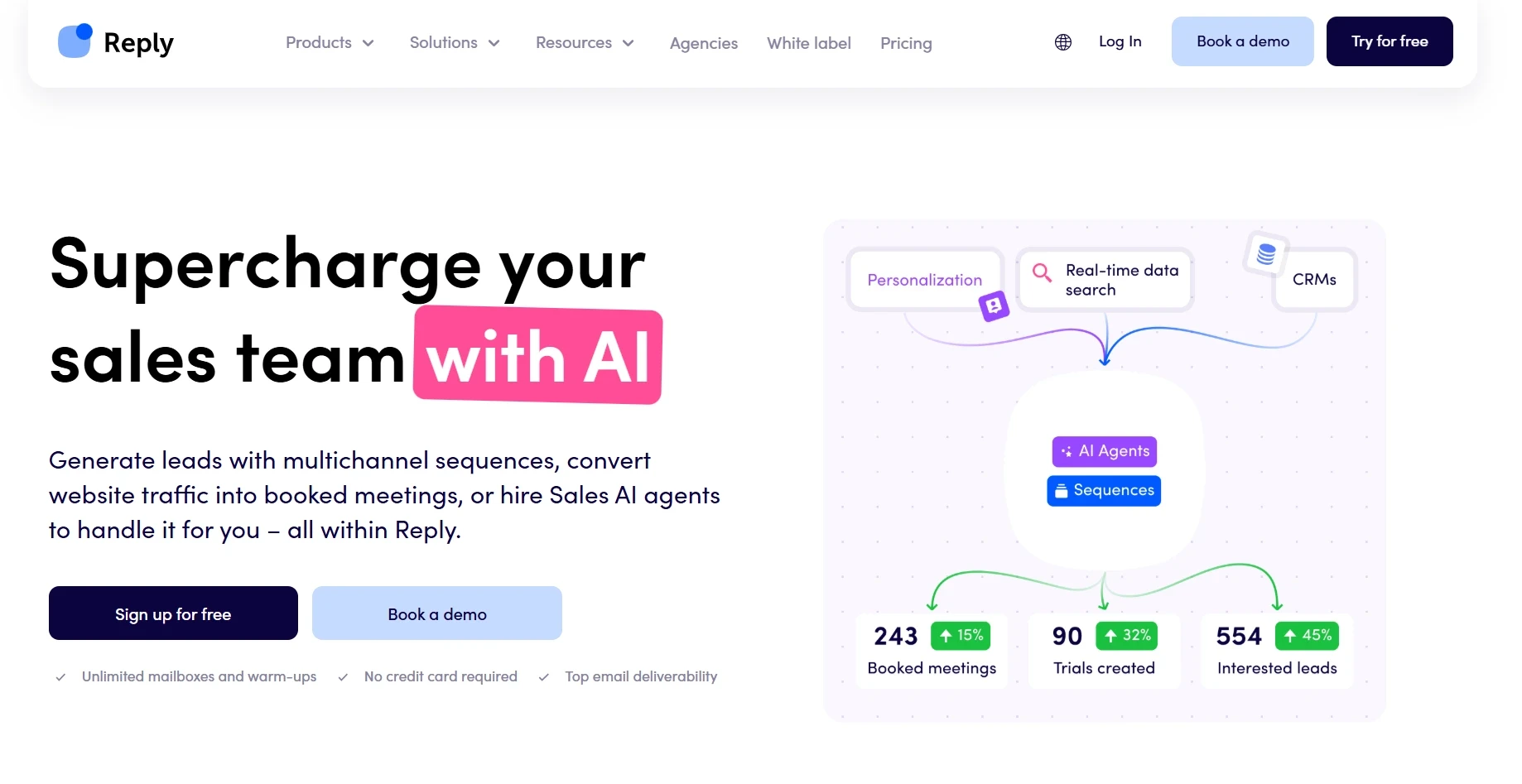
10. Reply.io
Reply.io is a lightweight sales engagement and automation platform combining email sequences, AI lead scoring, and CRM sync. It’s simple, affordable, and startup-friendly.
Best For: Startups seeking affordable multi-channel automation.
Pros: Supports email, calls, and LinkedIn; easy CRM integration; moderate pricing.
Cons: Feature depth and analytics trail behind larger competitors.
Summary
If you’re building a startup sales motion in 2026, you need tools that automate intelligently and personalize deeply.
Jeeva AI leads this transformation with its agentic AI system - replacing manual effort with autonomous reasoning and multi-channel engagement.
The rest of the stack supports niche needs like email personalization, CRM integration, and analytics - but Jeeva.AI delivers all of them in one intelligent platform.
🚀 Turn your sales engagement into an AI-powered revenue engine - with Jeeva.AI.
👉 Explore Jeeva.AI Sales Engagement
How to Define “Agentic AI SDR” vs. Legacy Cadence Tools?
Legacy tools (e.g., Outreach, Salesloft) provide structured cadences but lack AI-driven personalization. Agentic AI SDRs, in contrast, autonomously craft personalized, responsive outreach across multiple channels, including email, LinkedIn, and phone calls.
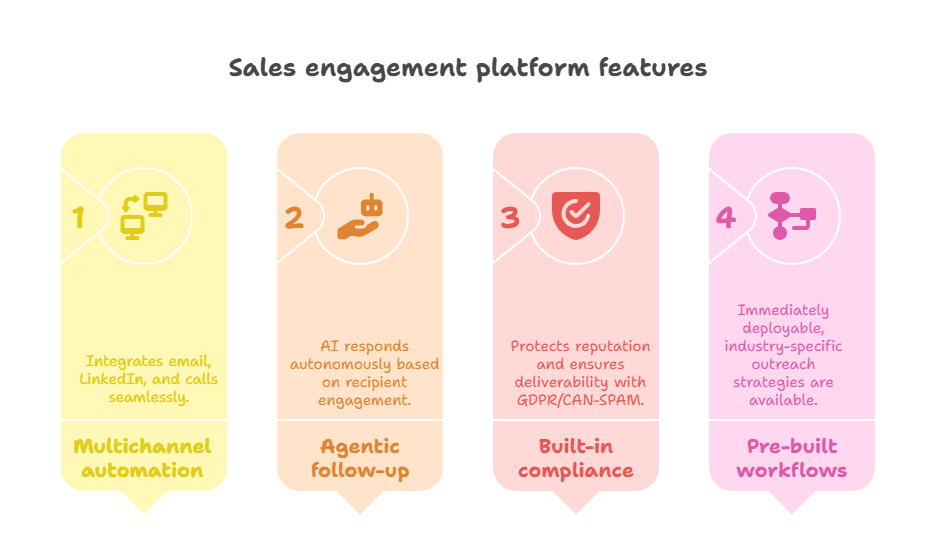
Feature | Legacy Cadence Tools | Agentic AI SDR (Jeeva AI) |
Multichannel outreach | ✅ Limited | ✅ Fully Integrated |
Automated personalization | ❌ Manual | ✅ AI-Driven |
Data Enrichment | ❌ Limited | ✅ Native Enrichment |
ROI Transparency | ❌ Vague | ✅ Clear, measurable |
Market Map: Top AI Sales Tools Under $1K/mo
Comparing cost-to-capability is critical. Here's how top affordable AI sales tools stack up:
Tool | Pricing/mo. | Multichannel | Agentic Logic | Pre-built Workflows |
Jeeva AI 🌟 | <$1,000 | ✅ | ✅ | ✅ |
Clay | $149 | ❌ Email-only | ❌ | ❌ |
Apollo | $99–$149 | ❌ Basic | ❌ | ❌ |
Lusha | $49–$199 | ❌ | ❌ | ❌ |
From Copilots to Autonomous Growth: How Jeeva AI’s Multi-Agent Sales Engine Works
The next phase of sales AI is not assistance - it is execution. The market is rapidly shifting from copilots that support reps to autonomous agents that own outcomes. By 2026, leading organizations are moving toward systems where AI does not wait for instructions, but actively drives pipeline forward.
Jeeva AI is built for this shift.
What Is Jeeva AI’s Multi-Agent Sales Engine?
Jeeva AI operates as a multi-agent sales engine, where specialized AI agents collaborate to execute the entire sales engagement lifecycle from lead discovery to demo booking without manual coordination.
Each agent has a clear role, but they operate as a unified system rather than isolated tools.
How Jeeva AI’s Multi-Agent System Drives Pipeline Autonomously
Prospecting and Intent Agents : These agents continuously scan enriched data and live signals to identify which accounts and contacts show real buying intent. They prioritize prospects dynamically instead of relying on static lists.
Writing and Personalization Agents: Messaging agents generate human-like outreach tailored to role, industry, and context. Tone, structure, and calls to action adjust automatically based on prior engagement.
Engagement and Timing Agents: These agents decide when to send messages across channels, optimizing send times based on historical reply behavior, time zones, and interaction patterns.
Follow-Up and Qualification Agents: Rather than fixed cadences, Jeeva’s agents adapt follow-ups in real time pausing, escalating, or re-qualifying leads based on live responses.
Learning and Optimization Agents: Every interaction feeds back into the system. Agents continuously refine messaging, cadence spacing, and channel mix to improve reply rates and meeting conversions over time.
Why Multi-Agent Execution Matters for Revenue Teams
Traditional sales tools still depend on humans to orchestrate workflows. Jeeva AI removes this bottleneck by allowing agents to coordinate among themselves deciding next actions without human hand-holding.
This delivers three compounding advantages:
Always-on lead velocity: Agents prospect, engage, and follow up around the clock, including nights and weekends
Faster revenue cycles: Shorter time from first signal to demo booked frees reps to focus on closing
Consistent brand presence: Personalized, multi-channel engagement ensures your team shows up first and most relevant
Where Jeeva AI Is Headed Next
Jeeva AI continues to deepen its agentic architecture with:
Greater autonomy: Agents independently decide who needs outreach and how to engage
Predictive intelligence: Dashboards forecast reply likelihood and recommend next actions
Continuous self-improvement: Every campaign sharpens agent performance across tone, channel, and cadence
Early adopters gain a structural advantage. As autonomous agents become the default execution layer in sales, teams already running multi-agent systems will not need to retool—they will already be operating at the new standard.
Key Takeaways
AI-first sales engagement is now a baseline requirement, not a differentiator
Agentic, multi-channel execution defines the next generation of sales platforms
Jeeva AI’s multi-agent sales engine uniquely combines autonomy, affordability, compliance, and measurable ROI making it especially well-suited for modern startups and lean revenue teams
Conclusion: AI Sales Engagement Is the Startup Advantage in 2026
AI sales engagement tools are essential for startups in 2026 because they enable scalable, personalized outreach that drives pipeline growth without increasing sales headcount.
AI sales engagement tools have moved from optional enhancements to essential infrastructure for modern startups. As buyer attention narrows and sales teams remain lean, success now depends on the ability to engage prospects with precision, speed, and relevance at scale.
In 2026, the most effective startups are those replacing static sequences and manual follow-ups with adaptive, AI-driven engagement systems. These tools personalize outreach, optimize timing, and automate follow-ups based on real buyer behavior, allowing small teams to generate consistent pipeline without increasing headcount.
Platforms like Jeeva AI demonstrate how AI-first engagement can unify data, automation, and intelligent decision-making into a single execution layer. By shifting from effort-based outreach to outcome-driven engagement, startups gain faster sales cycles, higher-quality conversations, and more predictable growth.
The bottom line: In a competitive B2B market, AI sales engagement is no longer about doing more it’s about doing what matters, at the right moment, with intelligence guiding every touch.
FAQ
How is agentic AI different from sales copilots?
How does a multi-agent system improve sales pipeline velocity?
Can agentic AI personalize outreach at scale?
How does agentic AI decide when to follow up?
How does agentic AI measure ROI in sales engagement?