Introduction to Lead Enrichment
Lead enrichment has become one of the highest-impact capabilities in modern B2B sales. Today’s go-to-market teams can no longer rely on static spreadsheets or outdated CRM records. To compete effectively, they need real-time, accurate, and continuously enriched data that improves targeting, enables relevant personalization, and increases conversion rates.
As buyer attention becomes more fragmented and response rates continue to decline, data quality increasingly determines sales performance. Companies that use lead enrichment tools consistently outperform competitors by generating stronger pipelines, engaging buyers at the right moment, and moving deals through the funnel faster.
In 2026, leading enrichment platforms go far beyond filling in missing fields. They actively validate contact details, identify true decision-makers, track job and company changes, surface buying intent signals, and power AI systems that personalize outreach with precision and timing.
This article highlights the top lead enrichment tools that help B2B teams turn raw leads into qualified opportunities and measurable revenue impact.
What Are Lead Enrichment Tools?
Lead enrichment tools are platforms that enhance raw lead data with accurate, up-to-date firmographic, demographic, and behavioral information. In B2B sales, they help teams target the right prospects, personalize outreach, and improve conversion rates by ensuring every contact record is complete and verified in real time.
Quick Summary on Lead Enrichment:
Fill gaps in prospect data for higher targeting precision.
Use real-time enrichment to keep data fresh and accurate.
AI-driven platforms like Jeeva AI combine enrichment with outreach and follow-up.
Select tools based on data freshness, integrations, and compliance.
Track KPIs like conversion lift, time-to-contact, and bounce rates to measure ROI.
What Are Lead Enrichment Tools and Why Do They Matter in B2B Sales?
Lead enrichment tools gather, update, and verify contact and company data to ensure your outreach efforts are accurate, targeted, and clean. These platforms eliminate bad data, reduce bounce rates, and enable smarter segmentation for outbound and inbound marketing.
Fact: 40% of B2B lead data becomes outdated every year without enrichment.
How Lead Enrichment Tools Work
They collect verified data points that strengthen decision-making and personalization.
Validate emails & phone numbers
Update job titles and roles
Add company size & revenue
Identify buyer intent and activity
Provide tech stack intelligence
Sync enriched data with CRM
Fact: Accurate data enrichment can increase outbound conversion rates by up to 60%.
How Do Lead Enrichment Tools Improve B2B Sales Conversions?
Lead enrichment tools improve B2B sales conversions by ensuring sales teams engage the right buyers, with relevant context, at the right time. When prospect data is accurate and complete, outreach becomes more targeted, qualification improves, and follow-ups align with real buyer intent.
Fact: Personalized outreach powered by enriched data generates 4–7× higher reply rates.
Why Lead Enrichment Directly Drives Conversions
Lead enrichment strengthens every step of the sales funnel by replacing guesswork with data-backed precision.
Key Conversion Drivers Enabled by Enrichment
Eliminates outdated contact information → fewer wasted touches
Reduces spam and bounce rates → better deliverability and sender reputation
Improves ICP accuracy → reps focus only on high-fit accounts
Enhances message personalization → higher relevance and engagement
Cuts SDR research time → faster speed to first touch
Surfaces high-intent accounts → better prioritization and timing
Fact: Sales teams using enrichment tools book 2–3× more qualified meetings.
Conversion Impact (Cause → Effect)
Higher reply and engagement rates
More qualified meetings booked
Shorter sales cycles
Improved pipeline conversion rates
Lower cost per lead and per meeting
More predictable and scalable revenue growth
Outcome for B2B Sales Teams
Lead enrichment turns raw contacts into sales-ready prospects. Instead of spending time validating data or guessing relevance, teams engage buyers with confidence, speed, and context resulting in higher conversion rates and more predictable revenue.
Top Five Lead Enrichment Tools for B2B Sales Teams in 2025
Below are the best tools used across SaaS, B2B tech, and enterprise GTM teams with strengths, weaknesses, and ideal use cases.
1. Jeeva AI
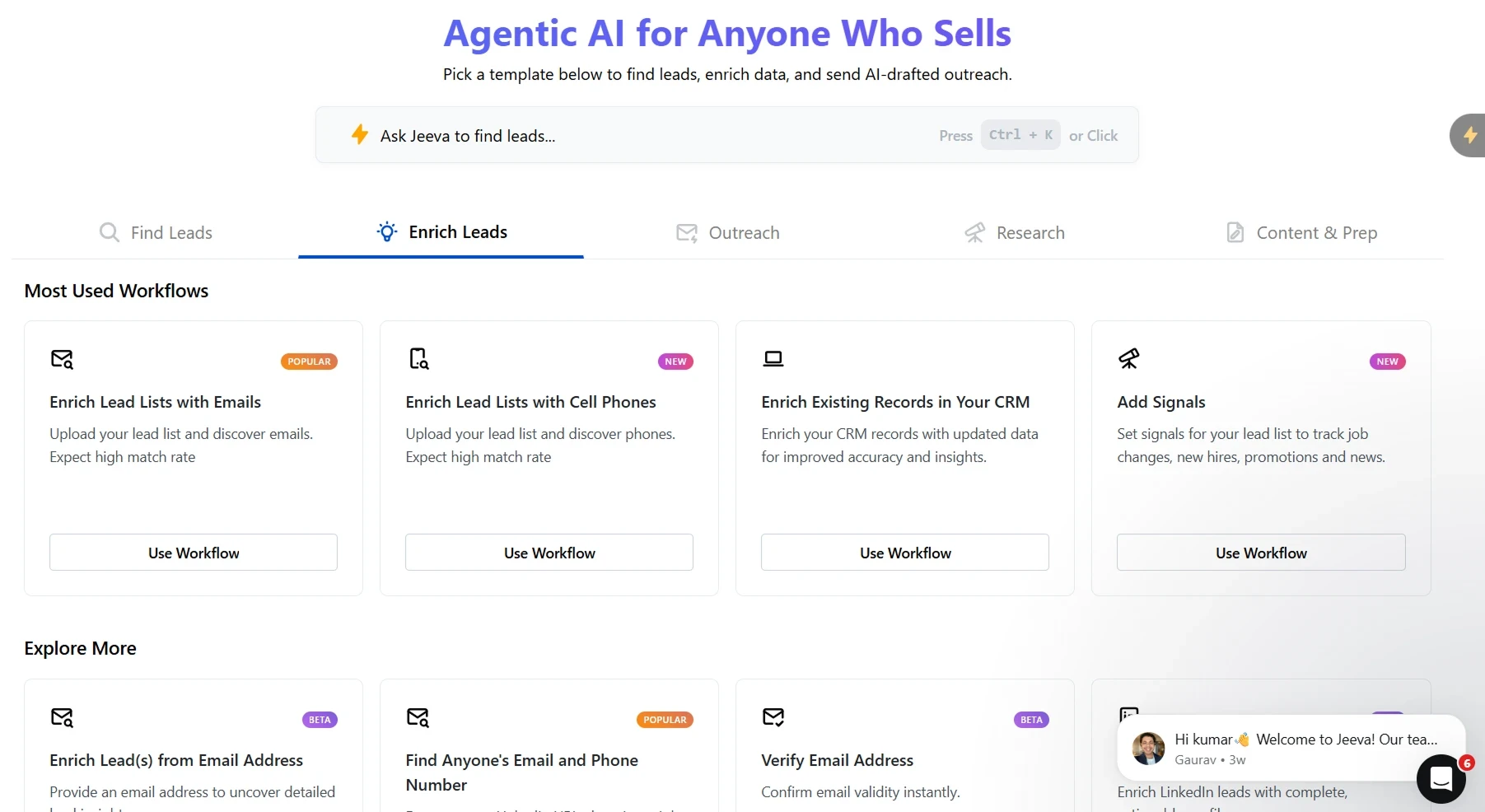
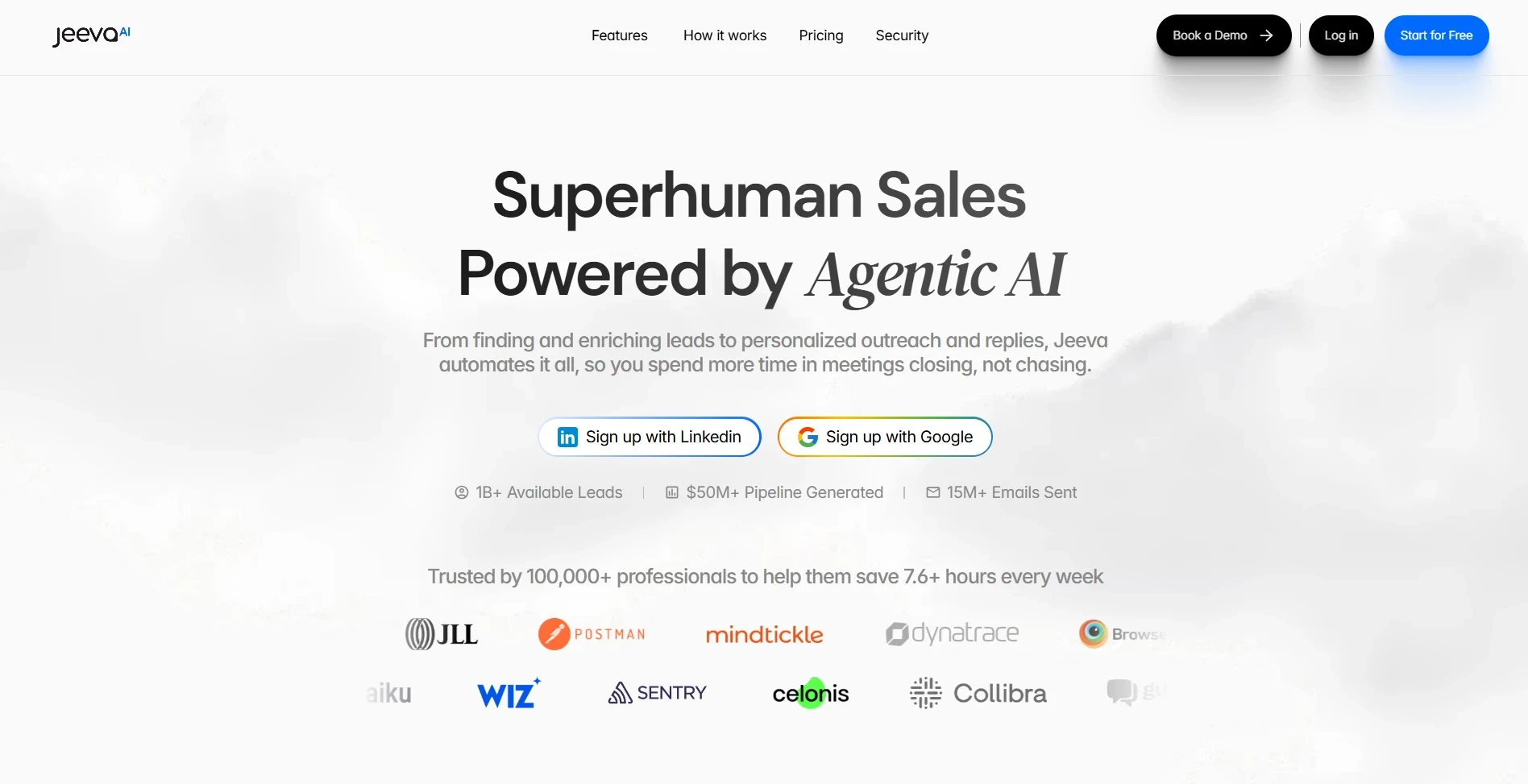
Jeeva AI is a multi-agent autonomous sales platform that enriches leads in real-time using AI. It provides continuous data updates, decision-maker insights, validation, and dynamic scoring making it ideal for teams who want fully automated enrichment and outbound.
Fact: Jeeva AI users see 3–5x improvement in engagement within 30 days.
Why Jeeva AI Stands Out as Best AI Sales Agent?
Autonomous agents enrich and validate data 24/7.
Real-time contact validation
Role, seniority & ICP scoring
Technographic + firmographic enrichment
Multi-agent reasoning for accuracy
Automated outbound sequencing
AI-led qualification
Fact: Jeeva AI reduces SDR manual data work by 80%.
Source: Jeeva AI
2. ZoomInfo
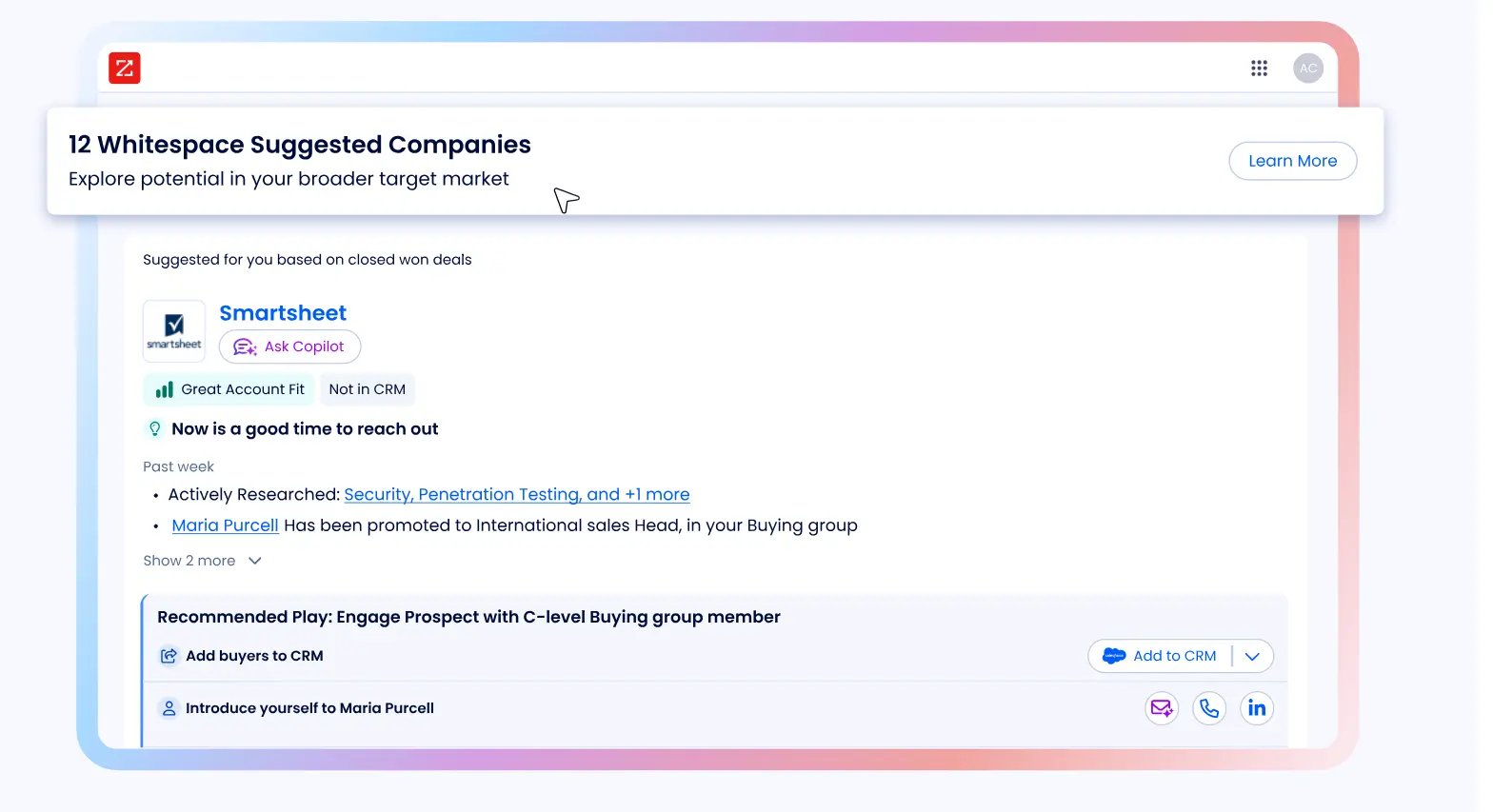
ZoomInfo is known for its large database of B2B contacts and company information. Its strength lies in breadth of data and intent intelligence.
Best For
Teams needing deep database access.
Pros
Strong intent signals
Large verified database
Good technographic data
Cons
Expensive for smaller teams
Requires manual workflows
3. Apollo.io
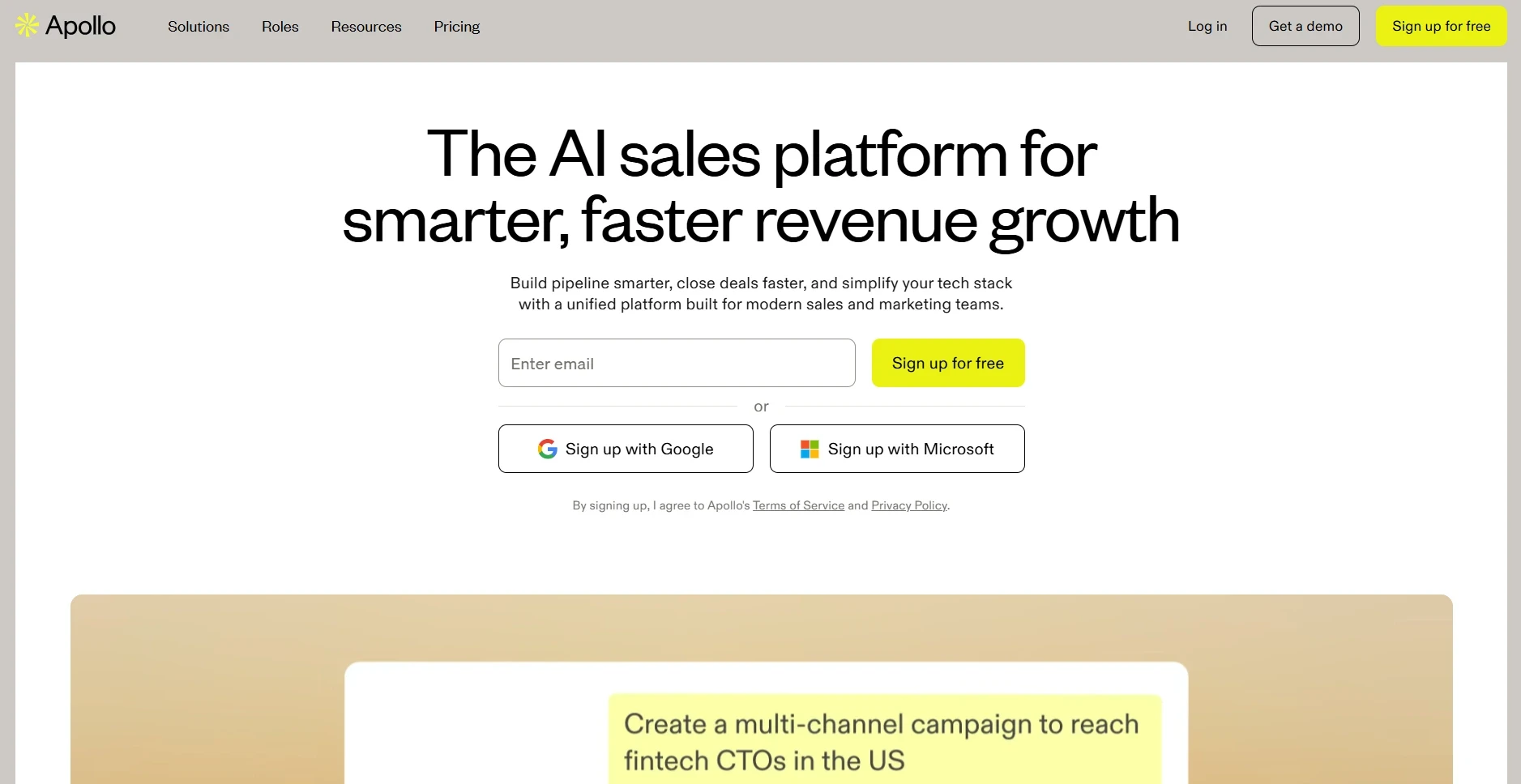
Apollo combines a verified database with outreach sequencing. Great for SMB and mid-market teams needing integrated lead discovery.
Best For
Startups and mid-market sales teams.
Pros:
Budget-friendly
Chrome extension
Sequencing built-in
Cons:
Data consistency varies
4. Clearbit
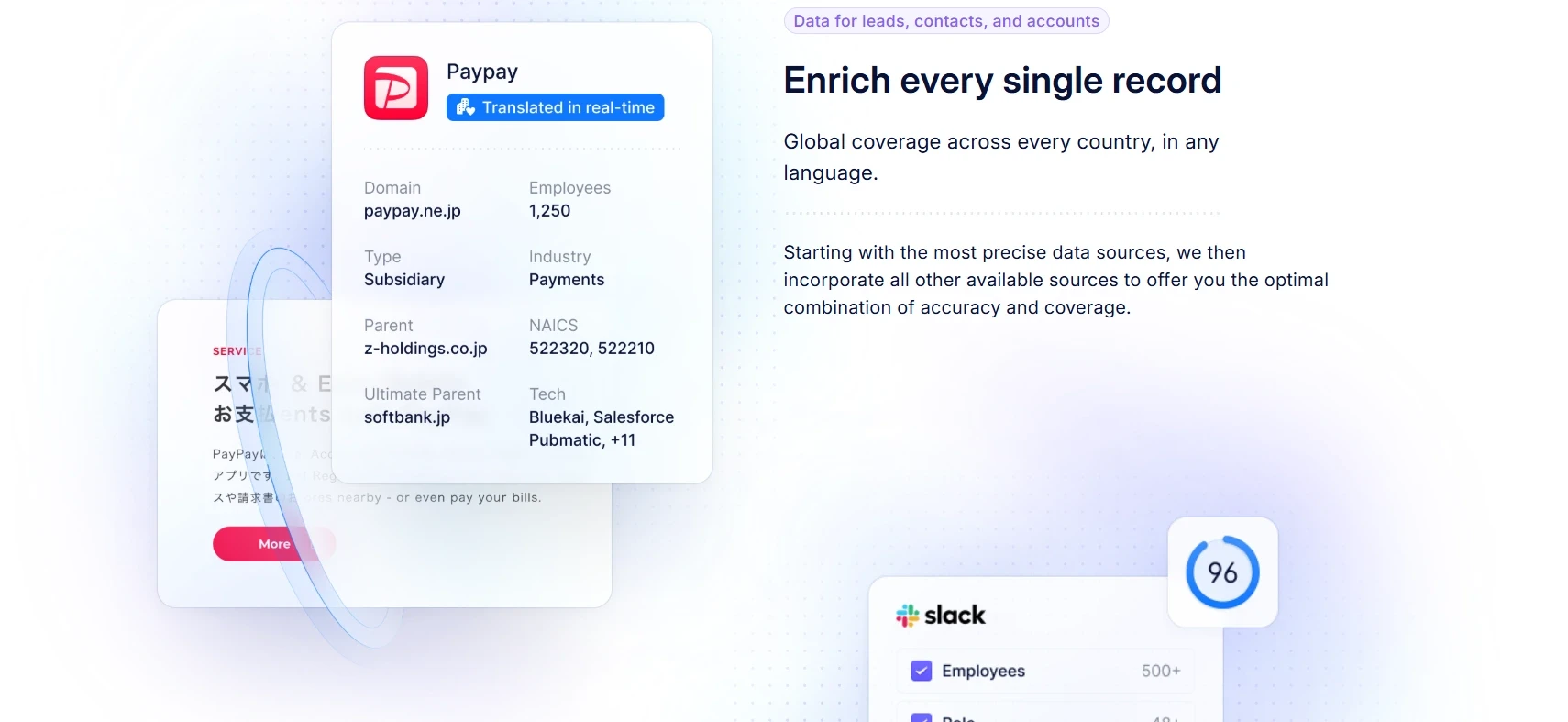
Clearbit focuses on real-time firmographic and technographic enrichment, especially for marketing teams and inbound funnels.
Best For
Marketing automation, inbound lead enrichment.
Pros
Strong firmographic data
Great for inbound scoring
Integrates well with HubSpot
Cons
Limited outbound features
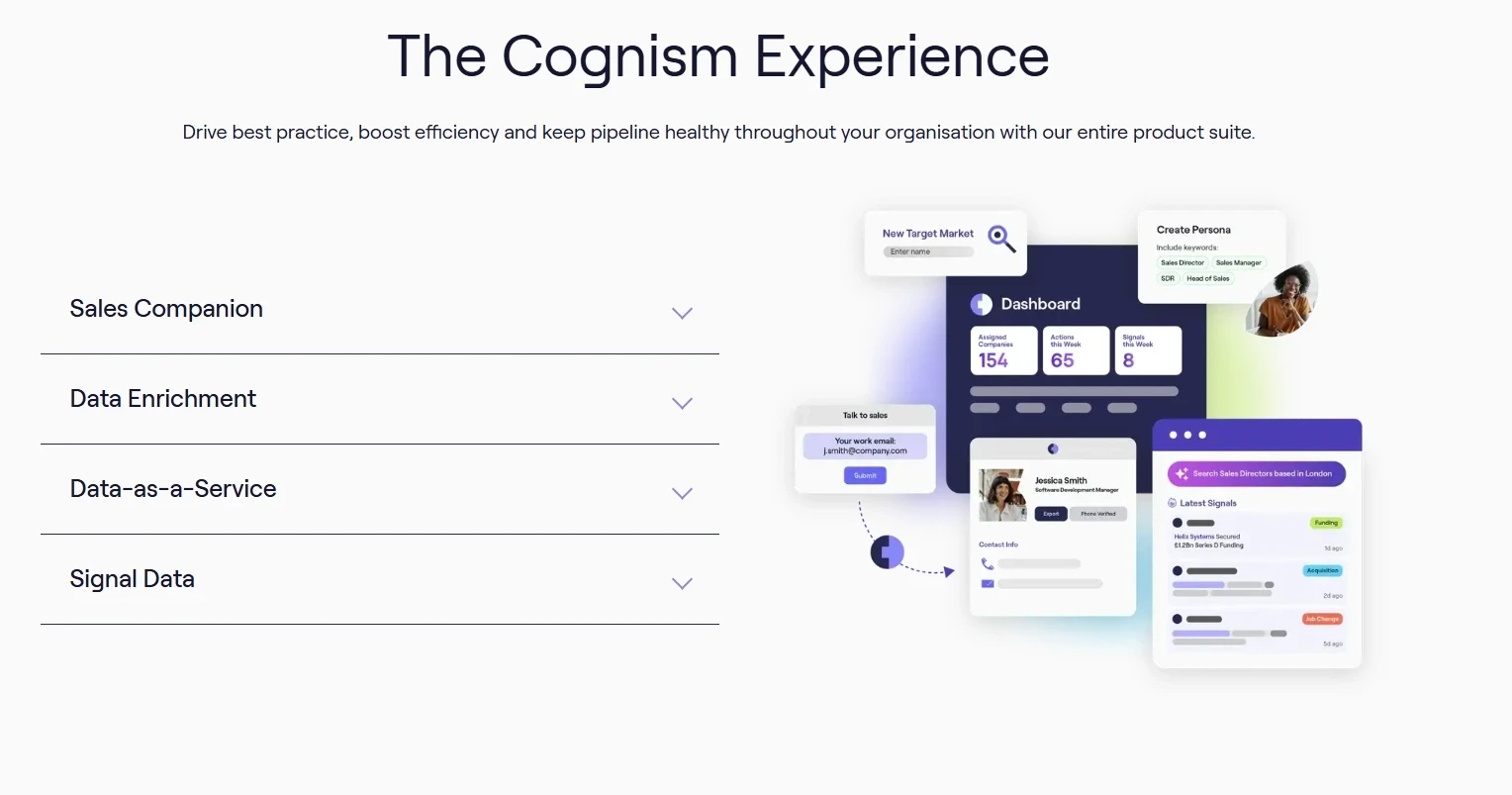
5. Cognism
Cognism offers GDPR-safe data enrichment, phone-verified contacts, and intent signals.
Best For:
Teams that need compliant, phone-verified B2B data.
Pros
GDPR-first approach
Strong phone verification
High-quality EMEA data
Cons
Smaller coverage in US
Read: Top AI Lead Generation for B2B Sales
Why Is Lead Enrichment the Hidden Multiplier for B2B Sales?
Lead enrichment is a revenue multiplier because it improves the quality of every downstream sales decision. When sales teams operate on incomplete or outdated data, even the best outreach strategies fail due to poor targeting and mistimed engagement.
Poor data quality silently erodes pipeline performance. Industry research shows that inaccurate or incomplete CRM records lead to wasted outreach, missed buying signals, and unreliable forecasting. Missing job titles, invalid emails, and outdated firmographics cause teams to engage the wrong stakeholders or approach buyers at the wrong stage of the buying cycle.
Lead enrichment solves this by automatically appending verified contact details, firmographics, technographics, and real-time intent signals directly into the CRM. Instead of relying on assumptions, sales teams act on accurate, current buyer context.
Result: Better data leads to better targeting, which drives higher conversion rates and stronger pipeline velocity.
What Does Lead Enrichment Fix in Real B2B Sales Scenarios?
In real sales workflows, the impact of enrichment becomes immediately visible. For example, a sales team may identify a VP of Sales as a target account contact but lack a verified email address or awareness that the company recently closed a Series B funding round.
Without enrichment, outreach remains generic, poorly timed, and less relevant. With lead enrichment, verified contact details, role accuracy, and recent company signals appear automatically within minutes. This enables sales teams to tailor messaging to the buyer’s current priorities and engage at the right moment.
Result: Context-aware outreach replaces guesswork, increasing reply rates, meeting conversions, and deal progression.
Core Capabilities of Modern Lead Enrichment Tools
1. Real-Time Data Enrichment
Modern lead enrichment tools continuously update contact and account records as changes occur, rather than relying on static databases. Through direct CRM integrations and APIs, updates to job titles, company size, funding status, and contact validity are reflected in near real time.
Primary KPI: Percentage of CRM records updated within 24 hours of a data change.
Why it matters: Faster updates reduce mis-targeted outreach and prevent revenue loss from stale data.
2. Multi-Source Data Matching
High-quality enrichment platforms aggregate data from multiple verified sources instead of depending on a single provider. This improves match accuracy, increases coverage, and significantly reduces email bounce rates and incorrect firmographic details.
Why it matters: Cross-validated data improves deliverability, targeting precision, and downstream conversion performance.
3. B2B Contact and Account Intelligence
Modern enrichment goes beyond basic contact fields by providing deeper account-level context that supports smarter sales decisions. Core intelligence typically includes:
Verified business emails and phone numbers
Company revenue, employee count, and growth signals
Technology stack and tool adoption
Buying intent and engagement indicators
Why it matters: Rich context enables sales teams to prioritize the right accounts, personalize messaging, and engage buyers at the correct stage.
4. AI Sales Prospecting Integration
Advanced enrichment tools integrate directly into AI-driven sales workflows rather than operating as standalone data utilities. Enrichment occurs automatically during prospecting, outreach personalization, and meeting scheduling without manual exports or handoffs.
Why it matters: Embedded enrichment ensures every outbound action is informed by accurate, current data, improving efficiency, reply rates, and pipeline velocity.
Top Lead Enrichment Tools in 2025
Tool | Best For | Strengths | Limitations |
B2B teams needing enrichment + outreach | Real-time enrichment, AI SDR agents, CRM sync | Not a standalone DB—focused on AI automation | |
Clearbit | SaaS & tech | Real-time API, firmographics | Higher price point |
Apollo.io | SMB sales | Email sequencing + enrichment | Limited for enterprise |
ZoomInfo | Enterprise | Large dataset, robust search | Expensive, long contracts |
People Data Labs | Developers | Flexible API | Needs technical setup |
How to Implement Lead Enrichment for Maximum ROI
Step 1: Audit Your Current CRM Data
Start by measuring the quality of the data already in your CRM. Lead enrichment delivers the highest ROI when it targets the most damaging data gaps first.
Run a CRM health check to identify:
Percentage of records missing job titles, emails, or phone numbers
Accounts with outdated company size, industry, or location data
High-value segments (ICP accounts, in-market leads, active pipeline) that should be enriched first
Why it matters: Fixing data gaps in priority segments produces faster conversion gains than enriching the entire database at once.
Step 2: Choose the Right Integration Model
Select an enrichment setup that fits how your revenue systems operate.
Most B2B teams use one of two models:
Native CRM integrations with platforms like Salesforce or HubSpot for plug-and-play enrichment
API-first enrichment for custom workflows, data warehouses, or multi-tool GTM stacks
Why it matters: The closer enrichment sits to your core systems, the faster enriched data can influence sales actions.
Step 3: Enable Real-Time Data Updates
Avoid batch or monthly enrichment cycles. Modern lead enrichment should trigger automatically when new data appears or changes such as job moves, funding events, or role updates.
Real-time enrichment ensures sales teams always act on current buyer context rather than outdated snapshots.
Why it matters: Timely data prevents missed buying windows and improves outreach relevance at the moment intent is highest.
Step 4: Combine Enrichment with AI-Driven Outreach
Lead enrichment delivers maximum ROI when paired directly with execution. When enriched leads are activated immediately, the gap between discovery and engagement disappears.
With Jeeva AI, enriched leads flow directly into AI-powered prospecting, personalized outreach, and automated meeting booking without manual handoffs.
Why it matters: Faster activation turns data accuracy into measurable outcomes like higher reply rates, more meetings, and improved pipeline velocity.
Key Metrics to Track
KPI | Why It Matters | Target Benchmark |
Email Bounce Rate | Indicates accuracy | <2% |
Time-to-First-Contact | Faster response = more conversions | <1 hour |
Conversion Lift | Shows enrichment ROI | +15–30% |
Match Rate | % of leads successfully enriched | 80%+ |
How Do Lead Enrichment Tools Improve Lead Qualification?
Lead enrichment tools improve lead qualification by adding accurate, real-time context to every lead before it enters scoring and routing workflows. Instead of qualifying leads based on incomplete form fills or assumptions, sales teams evaluate prospects using verified firmographic, demographic, and behavioral data.
By enriching leads with job role accuracy, company size, industry, technology stack, and intent signals, qualification models become more precise. This ensures that only high-fit prospects are prioritized, while low-quality or irrelevant leads are filtered out early in the funnel.
Result: Sales teams spend less time disqualifying leads and more time engaging buyers who match their ideal customer profile.
How Enriched Data Strengthens Qualification Accuracy
Modern lead qualification relies on multiple signals working together. Lead enrichment tools strengthen this process in three key ways:
Role and seniority validation: Ensures outreach targets real decision-makers rather than generic contacts
Firmographic alignment: Confirms company size, industry, and growth stage match ICP criteria
Intent and activity signals: Identifies which leads are actively researching or entering a buying window
Why it matters: Qualification improves when scoring reflects real buyer readiness, not just surface-level engagement.
Lead Enrichment vs Traditional Lead Qualification
Dimension | Traditional Lead Qualification | Lead Enrichment–Driven Qualification |
|---|---|---|
Data source | Manual research, form fills, static CRM data | Real-time enrichment from multiple verified sources |
Job role accuracy | Often incomplete or outdated | Continuously validated role, seniority, and department |
Firmographic depth | Basic company name and industry | Revenue, employee size, growth stage, funding, location |
Buying intent visibility | Limited or unavailable | Intent signals and engagement indicators included |
Qualification speed | Slow, manual, rep-dependent | Automated and instant at lead creation |
Lead scoring accuracy | Prone to false positives | Higher precision due to richer data inputs |
Sales rep effort | High manual validation required | Minimal manual work; focus on engagement |
CRM data freshness | Decays quickly | Continuously updated in real time |
Pipeline quality | Inflated with low-fit leads | Higher MQL-to-SQL conversion |
Revenue impact | Slower cycles and wasted outreach | Faster deal velocity and higher close rates |
How Real-Time Enrichment Enhances Multi-Channel Outreach?
Modern B2B buyers interact across multiple touchpoints, including email, LinkedIn, website visits, and inbound forms. Real-time enrichment ensures that lead data stays consistent and up to date across all these channels. This allows sales teams to deliver synchronized, context-aware messaging instead of fragmented outreach. When enrichment updates instantly, personalization remains accurate regardless of where engagement occurs.
Fact: Multi-channel outreach powered by real-time enrichment can increase conversion rates by up to 2.8×.
Why Multi-Channel Needs Rich Data
Consistent data ensures aligned messaging.
Personalized email angles
Customized LinkedIn scripts
Trigger-based calls
Real-time follow-ups
Persona-based segmentation
Timing based on buyer signals
Fact: Cross-channel accuracy boosts brand trust and response rates.
Data Types Lead Enrichment Tools Provide
Data Type | Why It Matters | Impact on Sales |
|---|---|---|
Email Verification | Reduces bounce | Protects sender reputation |
Job Title & Role | Personalization | Better outreach targeting |
Firmographics | ICP match | Faster qualification |
Technographics | Tech insights | Pitch relevance |
Intent Signals | Buying readiness | Higher conversions |
Company Updates | Trigger events | Stronger reply rates |
Jeeva AI’s All-in-One Agentic Architecture
Jeeva AI is built as a unified, multi-agent system that runs the full GTM motion autonomously. Each agent has a clear role, and all agents coordinate in real time to eliminate handoffs, delays, and data gaps.
This architecture allows teams to manage outbound, inbound, enrichment, scheduling, and intelligence capture from one platform. Every action is context-aware, compliance-ready, and CRM-synced. The result is continuous pipeline execution without manual orchestration.
Core Agents in the Architecture
Outbound Agent: Runs personalized, multi-channel outreach sequences
Inbound Concierge: Qualifies inbound leads instantly and routes them correctly
Enrichment Agent: Keeps contact and company data fresh in real time
Calendar Agent: Automates meeting scheduling without back-and-forth
Notes Agent: Captures, summarizes, and logs meeting intelligence
Explore Full Solutions: Sales | Marketing | RevOps
Conclusion
Lead enrichment is no longer optional in modern B2B sales. It is a foundational capability that determines whether sales teams engage the right buyers, at the right time, with the right message. Without accurate and continuously updated data, even the most advanced sales strategies fail to convert.
Modern enrichment tools ensure outreach is accurate, personalized, and context-aware. Whether teams use AI-driven platforms like Jeeva AI to activate enriched data instantly, or database-led solutions such as ZoomInfo and Clearbit to strengthen account intelligence, enriched data directly improves qualification, engagement, and conversion outcomes.
In 2026, high-growth B2B companies will be defined by the quality of their data and how intelligently it is applied across the sales funnel. Teams that treat lead enrichment as core infrastructure not a downstream add-on will build faster pipelines, stronger conversations, and more predictable revenue.
FAQ
What is a lead enrichment tool?
Why do B2B teams need enrichment?
How does enrichment improve outreach?
Which tool is best for automated AI enrichment?
Is the data GDPR and CCPA compliant?