Introduction : Automated vs Manual Outreach
Outreach is the engine of every B2B sales team. But the way sales teams run outreach has changed dramatically in recent years. Manual outreach writing every email, researching prospects one-by-one, and following up manually is slow and inconsistent.
Automated outreach, powered by AI and workflow tools, helps teams scale messages, improve personalization, and deliver results with much lower effort.
This article explains the ROI differences between manual outreach and automated outreach, and why modern B2B teams are shifting to automation.
What Is Manual Outreach and How Does It Work?
Manual outreach involves human sales reps researching leads, writing personalized emails, following up manually, and tracking activity in spreadsheets or CRMs.
While this approach allows for human touch, it’s slow, inconsistent, and difficult to scale especially when dealing with high-volume pipelines.
Fact: SDRs spend 65–70% of their time on manual, non-selling tasks.
Typical Steps in Manual Outreach
Prospect research
Data verification
Writing each email by hand
Scheduling follow-ups manually
Managing replies individually
Logging information in the CRM
Manual outreach works only when volume is low, but breaks down once teams need scale.
Automated outreach delivers higher ROI across US, UK, Canada, Australia, and New Zealand because it adapts messaging, send-times, compliance rules, and channel preferences for each region. This reduces manual errors, improves reply rates, and ensures consistent, scalable outreach performance across global markets.
👉 Traditional Sales vs Sales Automation
What Is Automated Outreach and Why Is It Growing Quickly?
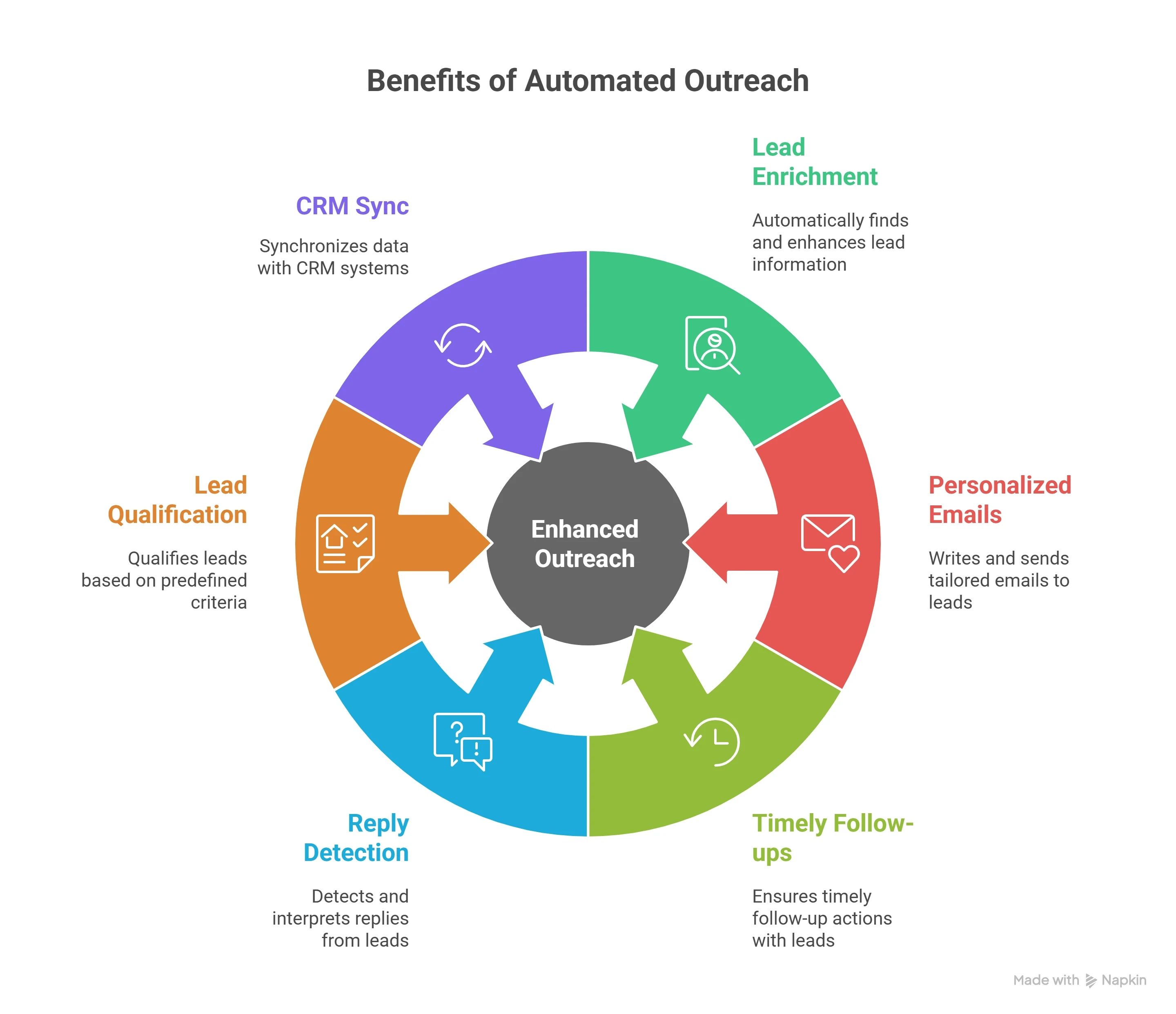
Automated outreach uses AI and workflows to send personalized messages, enrich leads, handle follow-ups, analyze replies, and sync data into the CRM without human effort. It allows reps to focus on conversations with qualified prospects instead of repetitive work.
Fact: Automated outreach increases rep productivity by 3–5×.
What Automated Outreach Can Do
Auto-find and enrich leads
Auto-write and send personalized emails
Auto-run follow-ups on time
Auto-detect replies & intent
Auto-qualify leads
Auto-sync CRM data
This makes outreach faster, cheaper, and significantly more predictable.
👉 Multi-Channel Sales Automation With Agentic AI
Automated vs Manual Outreach: What’s the Real ROI Difference?
ROI depends on speed, cost, personalization quality, and conversion impact. Automated outreach beats manual outreach in almost every metric, especially when the sales team needs scale.
Fact: Companies adopting automation see 35–50% more pipeline within 90 days.
Key ROI Advantages of Automated Outreach
Lower cost per lead
Faster outreach cycles
Fewer missed follow-ups
Higher personalization using data
Better reply handling
Improved meeting conversion rates
Automation creates predictable, measurable outreach that scales effortlessly.
Table: Automated vs Manual Outreach ROI Comparison
Category | Manual Outreach | Automated Outreach |
|---|---|---|
Time per lead | 10–20 mins | 0–1 min |
Cost per lead | High | Low |
Follow-up consistency | Low | 100% |
Personalization | Limited | Data-driven |
Errors | High | Low |
Scalability | Poor | Unlimited |
Meetings booked | Unpredictable | Stable & higher |
How Outreach ROI Changes Across Regions (US, UK, Canada, Australia, NZ)
Outreach performance and ROI vary by region because buying behavior, regulations, response habits, and compliance rules differ country to country. Automated outreach helps teams adapt to each region faster by adjusting send times, message styles, data rules, and channel preferences automatically.
Fact: Localized automated outreach increases reply rates by 20–40% across US, UK, CA, AUS, and NZ.
Why Geography Matters in Outreach ROI
Regional differences impact:
Email reply behavior (US replies are faster; UK is more formal)
Compliance laws (CCPA, GDPR, CASL)
Preferred channels (LinkedIn strong in UK, AUS; email dominant in US)
Time zones & send-time optimization
Industry expectations (US SaaS fast-paced; UK finance more cautious)
Data requirements (Canada CASL requires explicit consent)
Automated outreach adapts faster than manual teams, helping companies stay compliant and improve conversions across all markets.
👉 Agentic AI for Lead Qualification: Growth Playbook 2026
Does Automated Outreach Reduce Personalization?
Many teams worry automation sends generic, template-based messages. Modern AI tools solve this with real-time data enrichment, behavioral signals, and dynamic personalization.
Fact: AI-personalized emails increase reply rates by up to 300%.
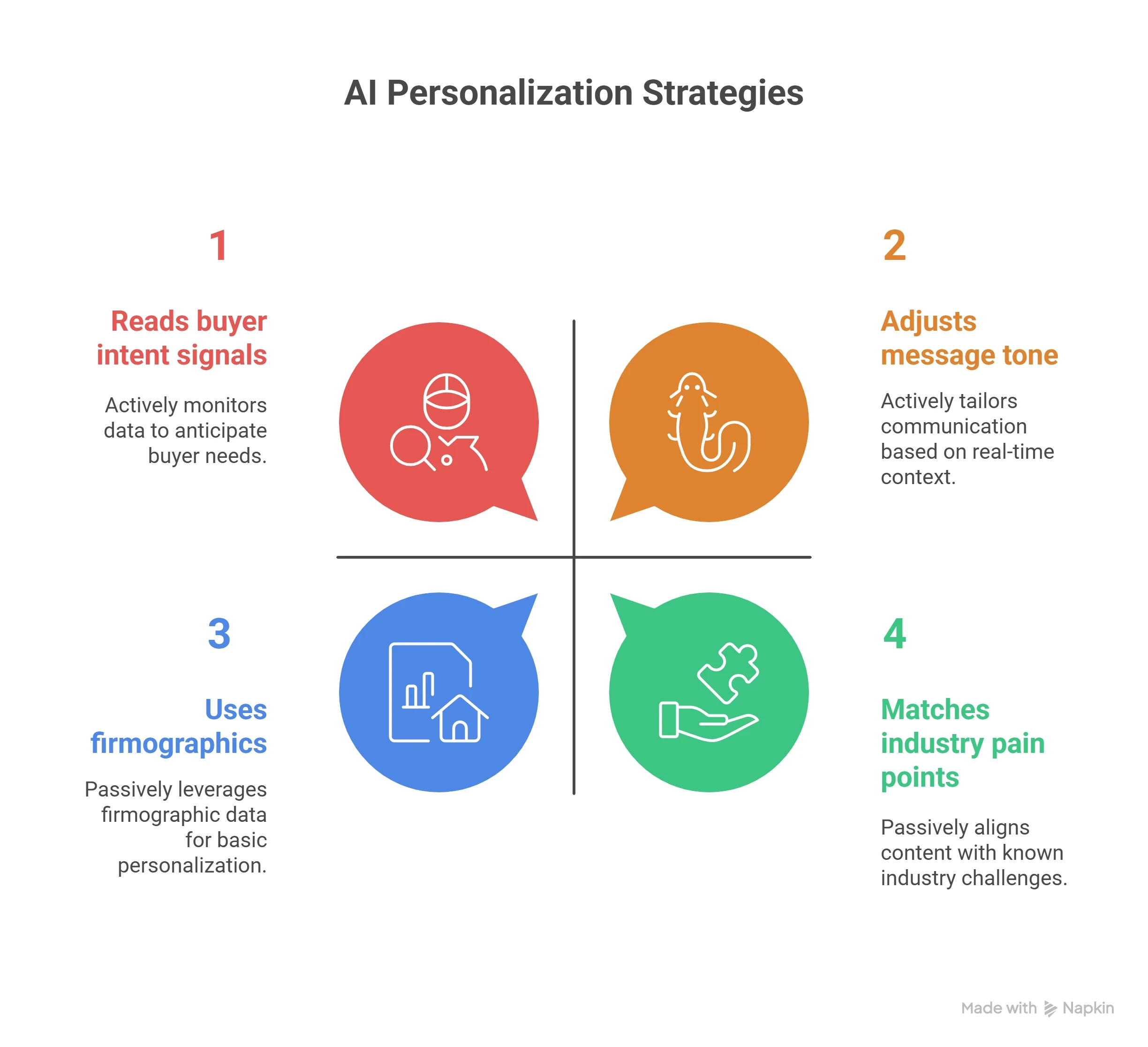
How AI Maintains Personalization
Uses firmographics
Checks technographics
Reads buyer intent signals
Adjusts message tone
Inserts relevant insights
Matches industry pain points
The result feels more human than most manual emails.
How Much Time Does Automation Actually Save?
Manual outreach requires hours of repetitive tasks. Automation cuts this dramatically by running tasks in parallel.
Fact: A single AI sales agent can perform the work of 3–5 SDRs.
Tasks Automated Outreach Removes
Manual data entry
Lead research
Rewriting similar emails
Tracking follow-ups
Reply sorting
CRM updates
SDRs regain time for conversations and demos not admin work.
👉 How to Clean & Validate Your B2B Email List (US Requirements)
Where Does Automation Provide the Biggest ROI Advantage?
Automation is strongest when teams need high-volume outreach across multiple industries, buyer personas, or geographies.
Fact: High-volume outbound teams see ROI increase 2-4× with automation.
Automation Wins Most In
Cold outbound
Follow-up sequences
Lead qualification
Meeting booking
Email & LinkedIn outreach
Pipeline acceleration
These improvements impact revenue, not just efficiency.
Table: Cost Efficiency - Manual vs Automated Outreach
Metric | Manual Outreach | Automated Outreach |
|---|---|---|
Monthly SDR cost | $4,000–$7,000 | AI agent ($199–$499/mo) |
Emails per day | 40–80 | 300–1,500 |
Follow-ups sent | Inconsistent | 100% automated |
Data enrichment | Manual | Instant |
Meeting booking | Low | High |
Why Automated Outreach Works Better at Scale
Manual outreach fails once the team grows or pipeline expands. AI thrives at scale because it never slows down or loses consistency.
Fact: Automated systems achieve 100% follow-up accuracy, compared to 20–35% in manual workflows.
Why Automation Scales Better
No burnout
No missed follow-ups
Always-on operation
No performance drop
Faster execution
Supports thousands of leads
Scale is where automation delivers the highest ROI.
Why Jeeva AI Delivers the Highest Automation ROI
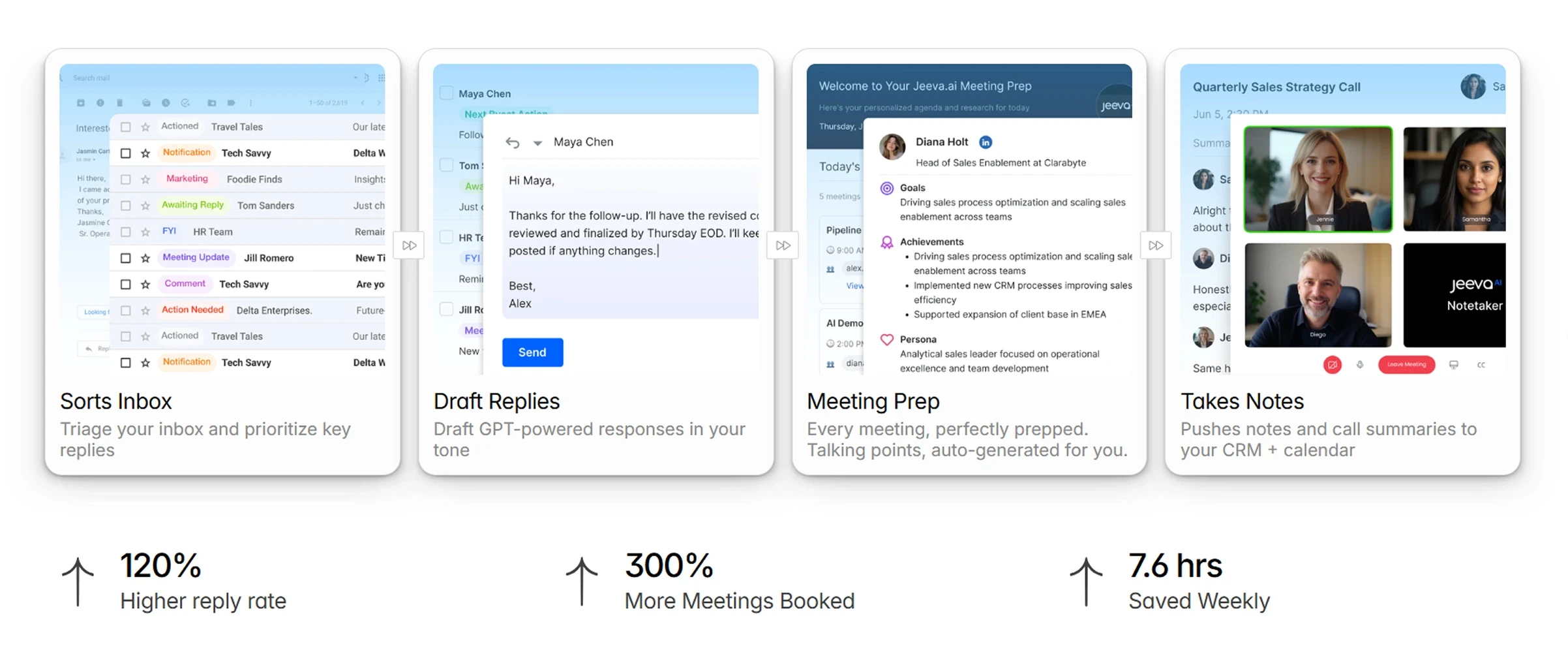
Jeeva AI uses a multi-agent system: Prospector, Writer, Engagement Agent, Smart Inbox, and Calendar Agent. It doesn’t just send emails - it handles replies, enriches leads, qualifies prospects, and books meetings automatically.
Fact: Jeeva AI users report 3× more qualified meetings within the first 30 days.
What Makes Jeeva AI the Highest-ROI Platform
Real-time lead enrichment
Human-like personalization
Autonomous reply management
Multi-channel outreach
Zero manual follow-up
Automatic meeting booking
Jeeva AI replaces 60–80% of manual SDR tasks with fully autonomous operations.
Conclusion
Manual outreach still works in small batches, but it cannot keep up with the speed and scale required in modern B2B sales. Automated outreach delivers higher ROI, better consistency, more meetings, and lower costs - all while saving hours of manual work.
With multi-agent systems like Jeeva AI, sales teams can run completely automated outreach across email, LinkedIn, and inbox replies - resulting in predictable, scalable, and high-performing pipeline growth.
FAQ
Is automated outreach more effective than manual outreach?
Does automation reduce message quality?
What is the biggest ROI benefit of automated outreach?
Can automated outreach replace SDRs completely?
Which tool provides the best automated outreach ROI?