TD;LR : AI helps companies generate B2B leads by automating prospect research, enriching contact and company data in real time, writing personalized outreach, and qualifying leads instantly. With multi-agent systems, businesses in the US, UK, Canada, Australia, and New Zealand can scale outbound faster, reduce manual work, and target the right buyers using firmographic, technographic, and intent signals. AI improves accuracy, boosts reply rates, and creates a predictable sales pipeline making it the most effective method for B2B lead generation in 2026.
Introduction
AI has changed how B2B companies find leads, reach prospects, and build pipeline. Instead of manual research, time-consuming outreach, and slow qualification, AI now automates every stage of lead generation.
From identifying ICP - aligned leads to enriching data and writing personalized messages, AI helps sales teams scale faster across the US, UK, Canada, Australia, and New Zealand.
This guide breaks down exactly how AI works, how to use it effectively, and the tools that deliver the best results.
What Is AI-Powered B2B Lead Generation?
AI-powered B2B lead generation uses machine learning and automation to find ideal prospects, collect data, personalize outreach, and qualify leads around the clock. It replaces slow, manual work with fast and accurate systems that scale effortlessly.
Fact: AI reduces prospecting time from 2 hours to under 10 minutes.
What AI Does in Lead Generation?
Finds ICP-matched leads - Identifies companies and buyers that fit your target profile
Enriches profiles instantly - Adds accurate company and contact data in real time
Writes personalized emails - Creates tailored messages for each prospect
Detects reply intent - Understands interest, objections, or disinterest automatically
Scores and segments leads - Prioritizes prospects based on fit and intent
Books meetings - Schedules calls without manual coordination
AI turns prospecting into a predictable and scalable workflow. Teams get consistent results without relying on manual effort.
Why Should You Use AI to Generate B2B Leads?
AI-based lead generation is faster, more accurate, and more consistent than traditional methods. It processes large volumes of data and helps teams do more with fewer resources.
Fact: AI-driven lead-gen teams see 35–50% more qualified meetings.
Benefits of AI Lead Generation
Faster research - Finds prospects in minutes, not hours
Better targeting - Focuses only on high-fit accounts
More personalization - Messages adapt to role and context
Automated follow-ups - Ensures no lead is forgotten
Higher efficiency - Less manual work, more output
Lower cost per lead - Fewer wasted touches and resources
AI allows teams to spend more time talking to buyers. Administrative work is reduced, and productivity increases naturally.
How AI Helps Find the Right B2B Prospects?
AI scans millions of public and private data signals to identify ideal customers with high accuracy. It does this far faster and more reliably than any manual approach.
Fact: AI improves lead matching accuracy by 40–60%.
Signals AI Uses to Find Prospects
Firmographics - Company size, industry, and location
Technographics - Tools and software a company uses
Industry signals - Market and sector-specific data
Hiring trends - Growth and expansion indicators
Intent signals - Actions that show buying interest
Social activity - Engagement on platforms like LinkedIn
AI ensures your prospect list contains high-fit, relevant accounts. This leads to better conversations and stronger pipeline quality.
How to Use AI for List Building and Enrichment
AI tools can automatically collect and enrich lead data such as email, job role, company size, revenue, and tools used. Instead of manual research, AI pulls accurate information from multiple sources in real time, giving sales teams cleaner and more complete lists.
Fact: Enriched leads convert 2.4× better than non-enriched leads.
Data AI Adds Automatically
Verified email - Ensures emails are valid and deliverable
Phone number - Adds direct contact details when available
LinkedIn URL - Connects prospects to their professional profiles
Company tech stack - Identifies tools and platforms the company uses
Funding news - Detects recent funding or growth signals
Decision-making role - Confirms seniority and buying authority
Enriched data allows AI to personalize messages more accurately. It also improves lead scoring and prioritization.
👉 Deep enrichment guide → Real-Time Lead Enrichment to Improve Sales Accuracy
How to Define Your Ideal Customer Profile (ICP) with AI
AI helps identify the exact traits of your best customers by analyzing past wins, losses, and engagement data. It then finds similar companies that are more likely to convert.
Fact: Clear ICP definitions increase lead quality by 3×.
ICP Criteria AI Analyzes
Industry - Focuses on sectors where you win most often
Company size - Matches employee count and scale
Revenue - Targets companies within your ideal revenue range
Tech stack - Identifies compatible tools and platforms
Geography - Aligns with regions you sell into
Pain points - Matches problems your product solves
AI continuously refines your ICP based on performance data. This keeps targeting accurate as markets change.
How to Use AI for Sales Prospecting
AI automates the entire prospecting process, removing the need for spreadsheets, manual searches, and guesswork. It scans data sources quickly and builds ready-to-use prospect lists.
Fact: AI-based prospecting increases outbound volume by 5–10×.
What AI Automates
Email lookup - Finds verified contact emails automatically
LinkedIn research - Pulls role and profile data instantly
Website scanning - Analyzes company pages for signals
Revenue estimation - Estimates company size and revenue
Intent signals - Detects buying interest and activity
CRM data matching - Aligns prospects with existing records
AI finds prospects faster and with higher accuracy. Teams spend less time searching and more time engaging.
👉 AI for prospecting → AI Lead Enrichment
How AI Writes Personalized Outreach at Scale
AI uses context, enrichment data, and buyer signals to write personalized outreach messages automatically. Each message is tailored without manual effort.
Fact: Personalized AI messages improve reply rates by 65%.
Personalization Inputs AI Uses
Job role - Adjusts tone and value proposition
Industry news - References relevant market context
Tech stack - Aligns messaging with tools they use
Pain points - Speaks directly to known challenges
Recent activity - Reacts to engagement and behavior
Keywords from customer website - Mirrors the buyer’s language
AI makes every message feel handcrafted at scale. Personalization stays consistent without slowing teams down.
Multi-Channel AI Outreach (Email + Channel Outreach + Chat)
AI can run coordinated outreach across multiple channels to reach buyers where they are most active. Instead of isolated messages, AI keeps context consistent across email, Channel Outreach, chat, and follow-ups.
Fact: Multi-channel outreach increases responses by 3×.
Channels AI Automates
AI emails - Personalized emails sent at optimal times
LinkedIn messages - Connection requests and follow-ups
Chat follow-ups - Website or in-app conversations
SMS reminders - Short nudges for replies or meetings
Calendar booking - Instant scheduling without back-and-forth
Lead nurturing - Ongoing engagement over time
Multi-channel AI builds trust through consistent touchpoints.Prospects respond more when outreach feels timely and relevant.
👉 Multi-channel AI outreach → Multi-Channel Outreach & Automation Engines
AI Qualification: Turning MQLs into SQLs Automatically
AI can read messages, understand intent, and qualify prospects in minutes instead of days. It removes delays caused by manual review and scoring.
Fact: AI reduces qualification time from 48 hours to under 5 minutes.
What AI Checks for Qualification?
Buying intent - Signals that show readiness to purchase
Budget signals - Clues around pricing or spending power
ICP match - Fit with your ideal customer profile
Engagement history - Past interactions and responses
Sentiment - Tone and interest level in replies
Timing - Urgency and readiness to move forward
AI speeds up handoffs by qualifying leads instantly. Sales teams focus only on conversations that matter.
Measuring Success in AI Lead Generation
To improve AI-driven lead generation, performance must be tracked consistently. AI enables deeper measurement beyond basic opens and clicks.
Fact: Teams using AI track 40% more performance signals.
Metrics to Track
Lead match rate - How many leads fit your ICP
Enrichment completeness - Accuracy and depth of lead data
Reply rate - Overall response percentage
Positive intent rate – Replies showing real interest
Qualification rate – Leads that become sales-ready
Meetings booked – Confirmed conversations
Clear metrics reveal what’s working and what’s not. Better visibility leads to faster optimization.
Challenges of AI-Powered B2B Lead Generation
AI delivers strong results only when the foundation is right. Poor data or unclear targeting can limit performance.
Fact: 30% of teams struggle with data quality issues.
Main Challenges
Inaccurate inputs - Bad data leads to poor outreach
Poor ICP definition - Wrong targeting reduces quality
Old CRM data - Outdated records confuse AI systems
Over-automation - Too much automation can feel robotic
Weak personalization - Generic inputs produce weak messages
Compliance issues - Regional rules must be respected
Fixing data and targeting improves AI outcomes quickly.
Strong inputs lead to strong results.
Best AI Tools for B2B Lead Generation in 2026
The best AI tools combine automation depth with high lead quality. They reduce manual work while improving targeting and timing.
Top 10 Best AI Tools for B2B Lead Generation in 2026
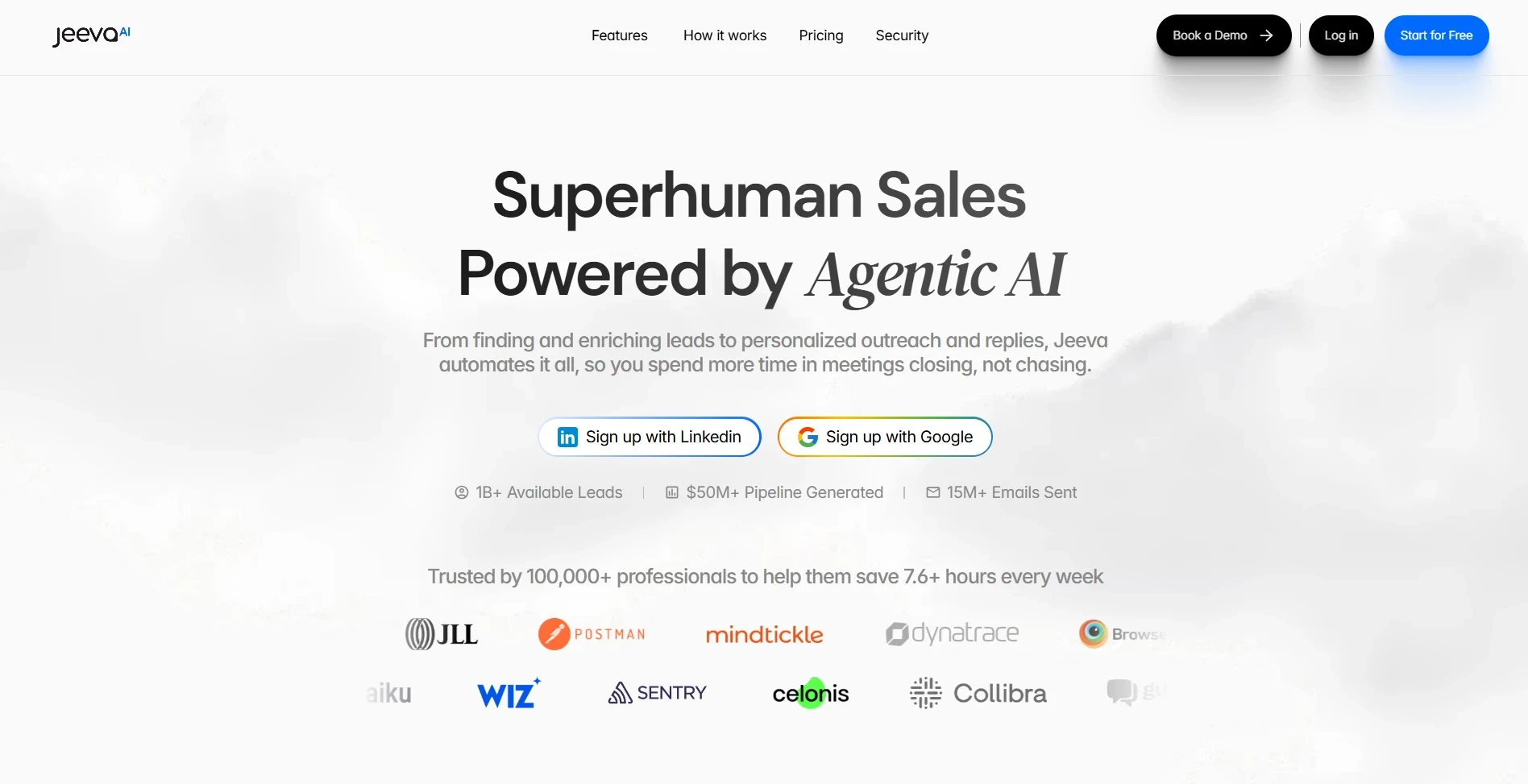
1. Jeeva AI - Best Overall AI Sales Agent Platform (Multi-Agent System)
Jeeva AI leads the market with a true multi-agent architecture that runs the entire sales workflow autonomously. Its AI agents handle prospecting, enrichment, writing, inbox management, qualification, and meeting booking without manual effort.
Fact: Jeeva AI users report a 3× increase in qualified meetings.
Key Features of Jeeva AI
AI Prospector - Finds ICP-matched leads automatically
AI Enrichment - Keeps contact and company data fresh in real time
AI Writer - Creates personalized outreach messages
AI Smart Inbox - Reads and classifies replies instantly
AI Qualification - Decides sales readiness automatically
AI Calendar - Books meetings without back-and-forth
Jeeva AI is the most complete, autonomous AI sales engine for 2026.
2. Salesforce Sales Cloud
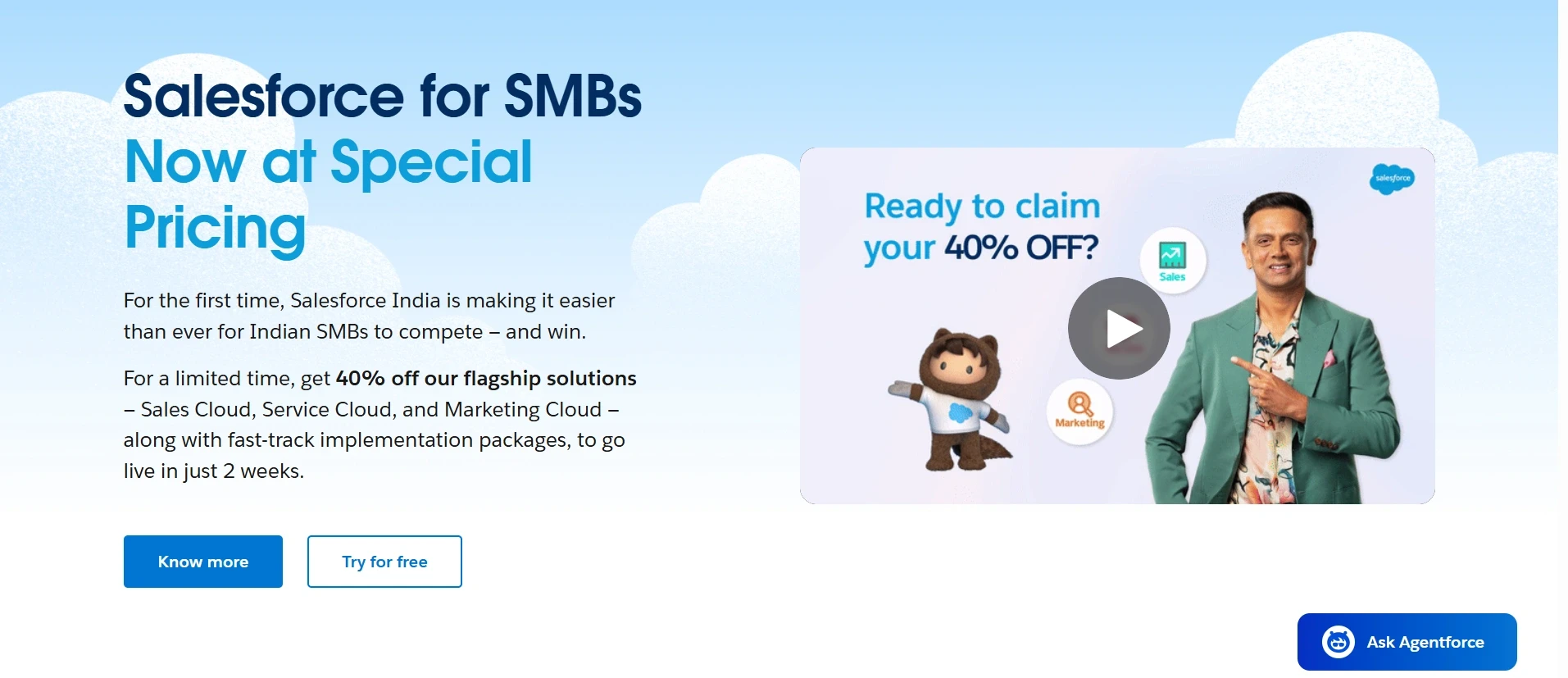
Salesforce Sales Cloud is designed for large organizations that require deep control, reporting, and governance. Its AI features enhance decision-making but still rely heavily on manual configuration and operations teams.
Key Features of Saleforce
AI predictions and recommendations
Workflow automation
Lead scoring
Deal insights and forecasting
Enterprise-grade CRM
Best suited for complex, global sales environments where control matters more than speed.
3. HubSpot Sales Hub
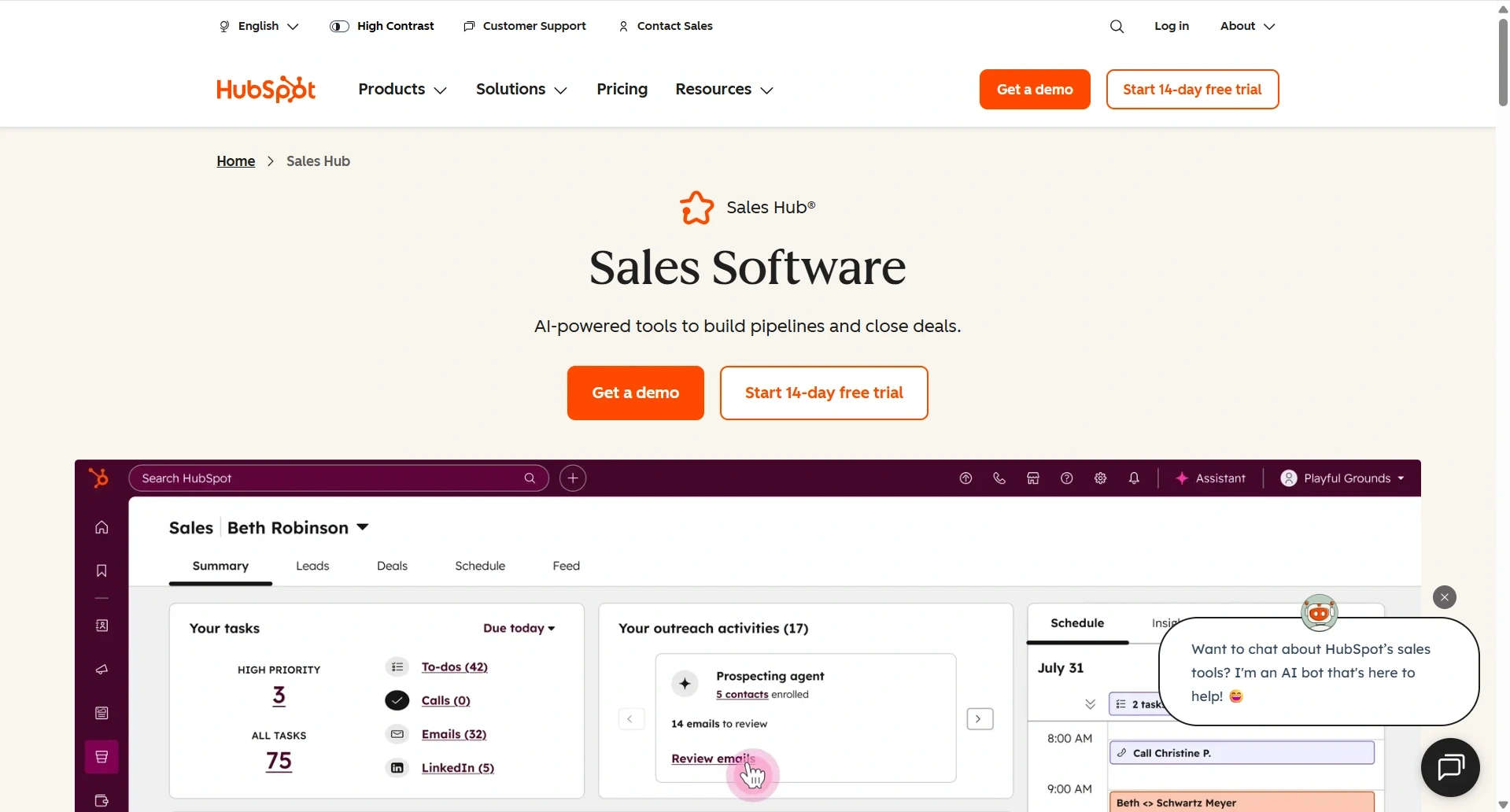
HubSpot focuses on ease of use and fast onboarding for growing teams. Its AI helps with insights and automation, but most workflows still require human setup and monitoring.
Key Features of Hubspot
AI email insights
Automation workflows
Meeting scheduling
Pipeline management
Predictive scoring
Unified CRM data
A strong option for teams that want simplicity over deep automation.
4. Apollo.io
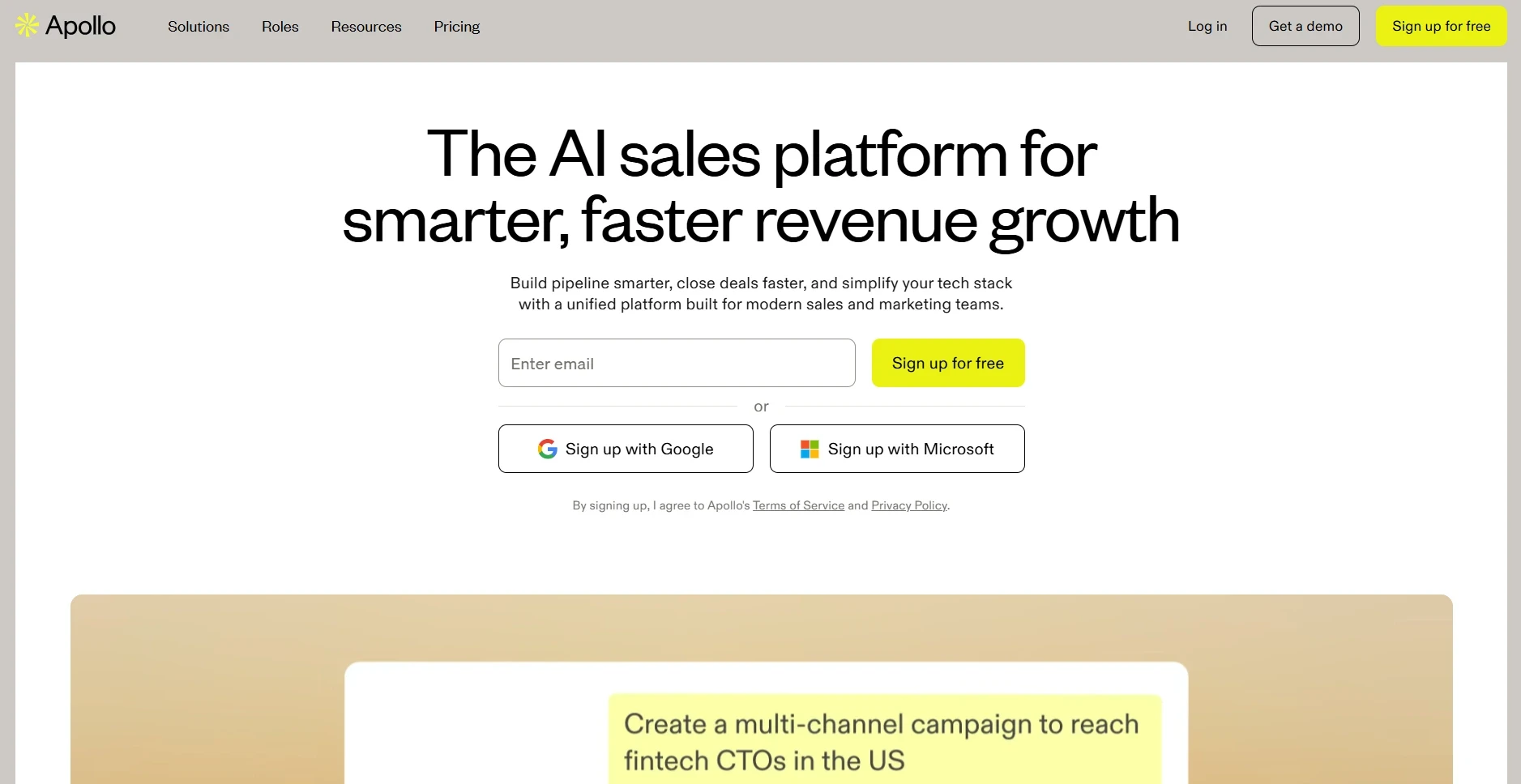
Apollo is widely used for outbound because of its large contact database and built-in email tools. It excels at volume but depends on manual follow-ups and rule-based logic.
Key Features of Apollo
Massive contact database
Buyer intent signals
Email personalization
Outreach sequences
Lead scoring
Data analytics
5. Clay
Clay acts as a powerful data layer rather than a full sales system. It’s often used by advanced teams to enrich and prepare leads before sending them into other tools.
Key Features
200+ data sources
Technographic & firmographic data
Social data scraping
Real-time APIs
Data pipelines
AI enrichment
Ideal for data-heavy teams building custom sales workflows.
Best AI Tools for B2B Lead Generation in 2026 - Comparison Table
Platform | Lead Gen Coverage | Core Strength |
|---|---|---|
Jeeva AI | Prospecting → enrichment → outreach → replies → qualification → meetings | Fully autonomous multi-agent system that runs the entire lead generation workflow end to end (3× more qualified meetings) |
Salesforce Sales Cloud | CRM, pipeline management, lead scoring | Enterprise-grade reporting, security, and AI-assisted workflows |
HubSpot Sales Hub | CRM, email automation, meeting booking | Easy onboarding with unified CRM and basic AI automation |
Apollo.io | Prospecting, email outreach, sequences | Large contact database with outbound email and intent signals |
Clay | Data enrichment and lead preparation | Deep technographic and firmographic enrichment from 200+ sources |
Jeeva AI is the only platform that covers the entire B2B lead generation lifecycle autonomously.
All other tools support specific stages, while Jeeva replaces manual execution from first touch to booked meeting.
The Future of AI in B2B Lead Generation
AI is moving from assistive tools to fully autonomous systems that run entire workflows. Human teams will focus more on strategy and relationships.
Fact: By 2028, 80% of outbound sequences will be fully AI-generated.
What’s Coming Next?
Agent-to-agent automation – AI systems working together
Predictive pipeline forecasting – Real-time revenue insights
Hyper-personalization – Highly tailored messages at scale
Real-time scoring – Instant prioritization of leads
Autonomous nurturing – Ongoing engagement without manual work
Multi-language AI – Global outreach made easy
AI will become the core engine of B2B pipeline growth. Early adopters will scale faster and more efficiently.
Conclusion
AI is transforming B2B lead generation by automating prospecting, enrichment, outreach, and qualification. Businesses can now generate better leads, reduce manual work, and build predictable pipelines across regions.
With platforms like Jeeva AI, Apollo, and HubSpot, teams gain the speed and intelligence needed to compete and win in 2026.
FAQ
How does AI help generate B2B leads?
What is the best way to use AI for sales prospecting?
Which AI tools are best for B2B lead generation?
Can AI fully automate email outreach and follow-ups?
Is AI lead generation compliant with GDPR or CCPA?